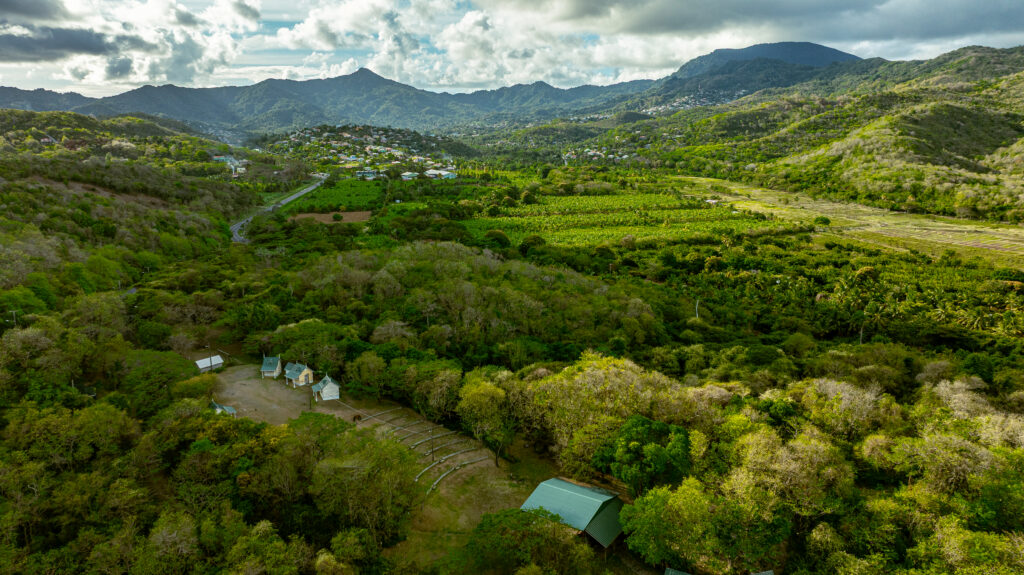
A new community-led conservation and development initiative is pushing forward plans to designate three communities in Saint Lucia — Babonneau, Mabouya Valley, and Monchy — as UNESCO Biosphere Reserves under the global Man and the Biosphere (MAB) Programme. If approved, the designation would equip local stakeholders with targeted resources to balance environmental conservation with inclusive community growth, by strengthening the interconnected relationship between people and their natural surroundings.
The MAB Programme operates on a voluntary, collaborative framework, centered on launching location-specific projects that advance equitable sustainable development through customized local economic initiatives, uplift resident livelihoods, safeguard unique cultural heritage, and foster cross-community knowledge exchange. Unlike UNESCO’s World Heritage designation, the biosphere reserve status is not a legally binding designation; it instead empowers local stakeholders to take ownership of their environmental stewardship efforts.
The exploratory process is being led by the Saint Lucia National Commission for UNESCO (SLNCU), which has already launched a series of public consultation sessions to gather input from local residents and ensure the initiative aligns with community needs. The first round of consultations was recently completed in Babonneau, with sessions scheduled to begin shortly in Mabouya Valley, and planned for Monchy in the coming weeks.
Speaking on a government podcast last month, SLNCU Secretary-General Marcia Symphorien outlined the core mission of the programme, noting that its central goal is advancing harmonious coexistence between humans and natural ecosystems. “The programme advocates for the harmonious coexistence of man and nature; how we as human beings can protect our environment so that our environment can also provide for us,” Symphorien explained. She added that the designation would also help the island nation address pressing climate change-related challenges, including growing water scarcity, while supporting progress on both global sustainable development goals and local community development targets.
Local stakeholders in Babonneau have already expressed strong support for the initiative. Aldric Edward, a Babonneau resident and owner of local tour operator Exotic and Leisure Adventures, highlighted the unique ecological and cultural value of the region that makes it an ideal candidate for the status. “I believe this is very welcoming for Babonneau considering the vastness and richness in biodiversity within the area,” Edward told local outlet St. Lucia Times. “Babonneau is extremely rich in culture and heritage, including wide varieties of endemic species of plants and animals. The area also has non-timber items of great economic value and can contribute to sustainable livelihoods.”
Beyond conservation, Edward noted that the programme would create meaningful new opportunities for the community, including expanded education on sustainable agricultural practices and the creation of new local employment opportunities. “We are all pleased with this initiative and fully endorse this MAB project,” he added.
Currently, the MAB Programme counts 797 established biosphere reserves across 145 countries worldwide. In the Caribbean region, existing reserves are already located in Aruba, Cuba, the Dominican Republic, Puerto Rico, Haiti, Saint Kitts and Nevis, Trinidad and Tobago, and Guadeloupe. If approved, Saint Lucia’s designation would join this regional network, opening up new opportunities for cross-regional knowledge sharing and collaboration on sustainable development and climate adaptation.