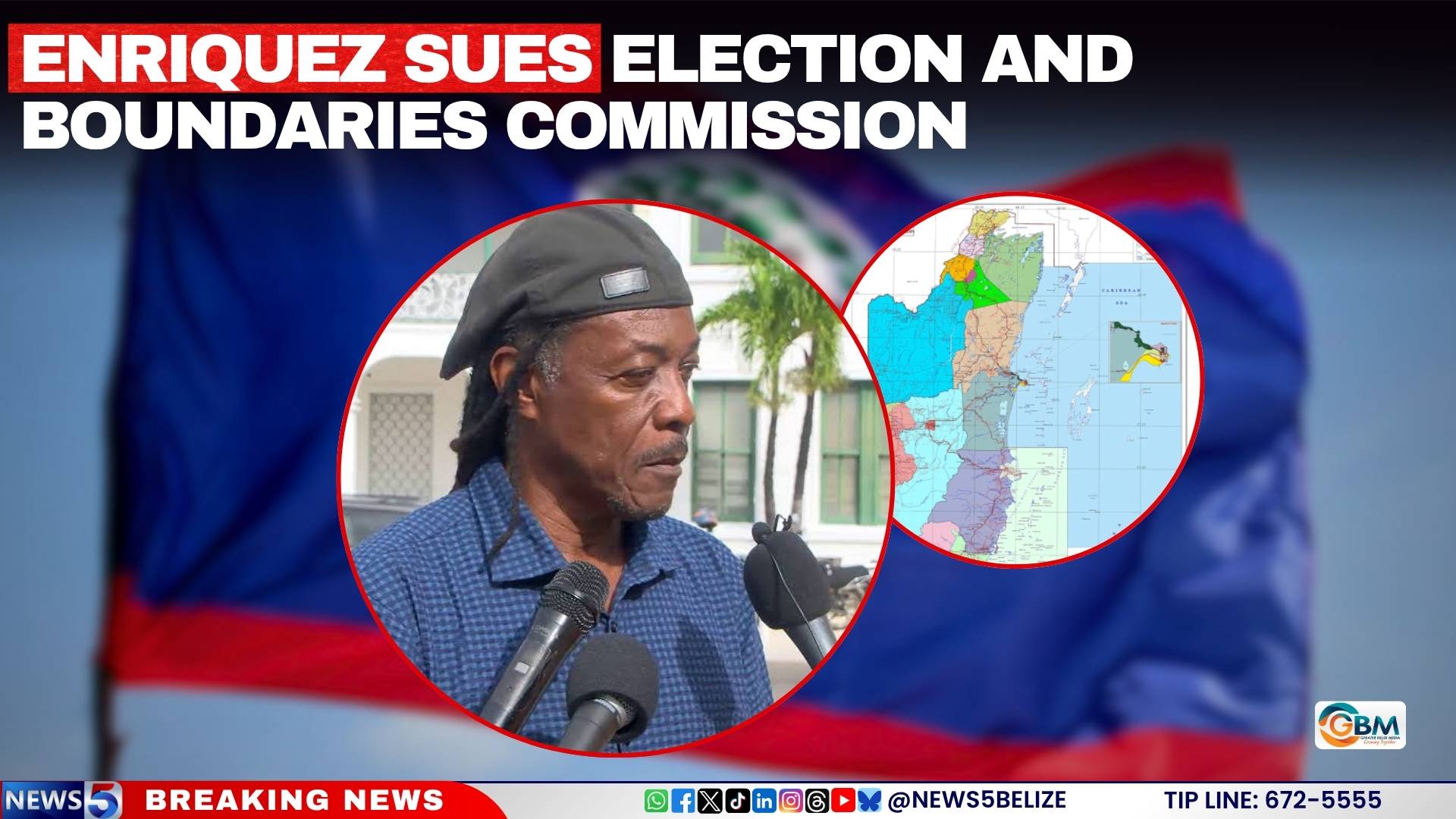
A high-stakes legal battle over government transparency and electoral redistricting has been launched in Belize, with local advocate Jeremy Enriquez bringing the nation’s Elections and Boundaries Commission (EBC) before the High Court. The claim was formally filed on Thursday, capping off a three-month standoff that began when Enriquez first sought public details on the long-delayed redistricting process.
At the heart of the dispute is a fundamental question: whether the EBC qualifies as a public authority bound by Belize’s Freedom of Information Act (FOIA) to release records of its ongoing work to reshape electoral district boundaries. Enriquez argues that as a state body carrying out a core public function, the commission has an inescapable legal obligation to share updates on its redistricting progress with ordinary citizens.
The conflict traces back to June 2026, when Enriquez submitted a formal FOIA request seeking granular details about the redistricting exercise. His request covered four key areas: completed steps in the process, outstanding tasks that have not yet been addressed, the root causes of ongoing delays, and a clear projected timeline for final completion.
According to Enriquez’s public statement issued the same day he filed suit, the EBC rejected his request just two weeks later, on June 22. The commission gave two primary justifications for the denial: first, that the scope of Enriquez’s request was too broad to fulfill, and second, that the EBC itself does not fall under the definition of a public authority subject to FOIA requirements.
After Enriquez made clear he intended to pursue legal recourse over the denial, the EBC softened its stance slightly on considering the request, but refused to back down from its core position that FOIA does not apply to the commission. That left no path to an out-of-court resolution, pushing the dispute into the High Court for a binding legal ruling.
Enriquez is asking the court for two key forms of relief: first, a formal legal declaration that the EBC is indeed a prescribed public authority covered by the Freedom of Information Act, and second, a court order compelling the commission to review and rule on his original information request in full compliance with the law.
Beyond the transparency question, the lawsuit has dragged a long-promised government electoral reform commitment back into the public spotlight. As Enriquez points out, Prime Minister John Briceño made a public commitment that the entire redistricting exercise would be finalized by the end of 2025, with an absolute deadline of the end of 2026. With less than four months remaining in 2026 and no public update on progress, the legal challenge has renewed public questions about whether the government will meet its own target for the redistricting process.