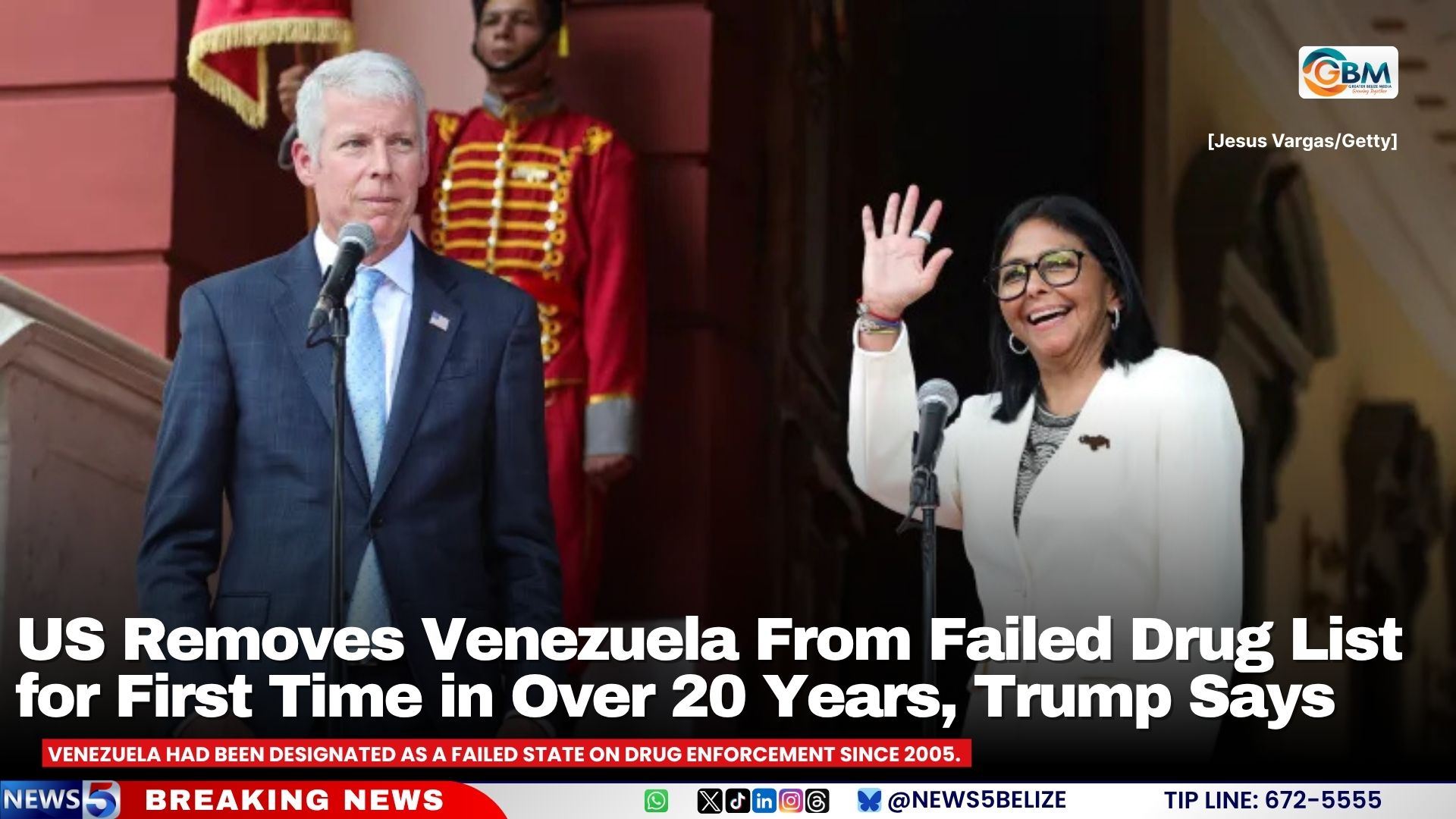
In a historic shift in United States drug policy and regional diplomacy, the Trump administration has formally delisted Venezuela from its roster of countries deemed to have demonstrably failed to combat illicit drug trafficking. This move marks the first time the South American nation has been removed from the list in more than two decades, U.S. President Donald Trump confirmed in an official notification submitted to Congress this week.
Venezuela first received the failing designation in 2005, holding the unwanted classification for 21 consecutive years until this announcement. President Trump directly attributed the policy change to strengthened counter-narcotics collaboration with Venezuela’s interim government, headed by Delcy Rodriguez, which took power after former Venezuelan President Nicolas Maduro was arrested and removed from office in January 2026. In the presidential determination published by the U.S. State Department, Trump specifically highlighted the killing of “Niño Guerrero”, the leader of notorious transnational criminal gang Tren de Aragua, as a concrete example of how this enhanced cooperation has delivered tangible results.
“I have determined Venezuela should no longer be designated as having failed demonstrably to fulfill its drug control commitments,” Trump wrote in the official statement. “I expect to see continued, measurable progress from the interim government in dismantling narcoterrorist groups and stopping drug trafficking through Venezuela.”
Since Maduro’s ouster in January, the U.S. has rapidly deepened diplomatic and economic ties with Rodriguez’s administration. Maduro, who spent years as a vocal critic of U.S. policy in Latin America, is currently standing trial on federal drug trafficking charges in a New York court. As part of the warming bilateral relations, Washington has already granted U.S. energy firms access to Venezuela’s vast untapped oil reserves, a major economic breakthrough for both sides.
The delisting of Venezuela also opens the door to further policy adjustments across the region. Trump signaled that the U.S. is open to removing Colombia and Bolivia from the failing drug list as well, although both nations remain on the roster for the time being. The president noted that the recent election of conservative, pro-U.S. leaders in both countries represents a meaningful turning point for their counter-narcotics cooperation.
The shift in U.S. classification comes amid a broader realignment of political power across Latin America. As of September 2026, eight regional nations — Venezuela, Bolivia, Ecuador, El Salvador, Honduras, Panama, Peru, and Colombia — are now led by governments aligned with the Trump administration. A large number of these countries have also joined the Shield of the Americas programme, a U.S.-led regional military and security alliance built explicitly to counter drug trafficking and transnational organized crime activity.
Even with the delisting of Venezuela and potential future changes for Colombia and Bolivia, the U.S. still identifies all three as major drug transit or producing countries. They remain on this broader watchlist alongside 20 other nations: Afghanistan, the Bahamas, Belize, Burma, China, Costa Rica, the Dominican Republic, Ecuador, El Salvador, Guatemala, Haiti, Honduras, India, Jamaica, Laos, Mexico, Nicaragua, Pakistan, and Panama.