Unprecedented drought conditions amplified by the El Niño weather pattern have thrown operations at the Panama Canal into disarray, sending global shipping costs soaring and triggering urgent warnings across the Caribbean Community (CARICOM) over threatened import supplies. Regional leaders and private sector organizations are now pushing for localized, intra-regional strategies to buffer Caribbean economies from cascading cost increases that threaten to push higher prices onto everyday consumers.
The crisis stems from far lower than average rainfall across the Panama Canal watershed between May and August 2026, with climate scientists projecting El Niño will further intensify dry conditions through the 2027 dry season. Low water levels have crippled the canal’s core lock operation system, which relies on sufficient water reserves to raise and lower vessels between different elevation levels. To conserve remaining water supplies, canal authorities have already cut the number of daily allowed vessel transits from 32 down from the usual 32, down from the original 34 slots.
Water level restrictions have also forced ships to cut their maximum cargo loads to navigate shallower channels, while competition for the limited available transit slots has sent priority access prices skyrocketing. Reports confirm one shipping line recently paid a record-breaking $5.3 million to secure a priority passage slot. For carriers unable to secure a slot, the only alternative is rerouting around South America, a change that adds thousands of miles to voyages and drives up fuel, labor, and overall operating costs dramatically.
Patrick Antoine, CEO and Technical Director of the CARICOM Private Sector Organisation (CPSO), explained that none of these added costs will be absorbed by shipping companies. “Auction premiums and low-water surcharges do not stay on the carriers’ books,” Antoine noted. “They are passed down the chain to importers, to distributors, and ultimately to the Caribbean consumer.”
The CPSO first sounded the alarm over this growing crisis at the CARICOM Heads of Government Breakfast Meeting held in Saint Lucia back in July 2026, where it unveiled a comprehensive strategic plan titled Derisking CSME Imports. The plan outlines a clear framework for expanding intra-regional production and developing alternative regional supply corridors that can replace the long-haul imports that currently rely on the Panama Canal and are now facing major vulnerabilities.
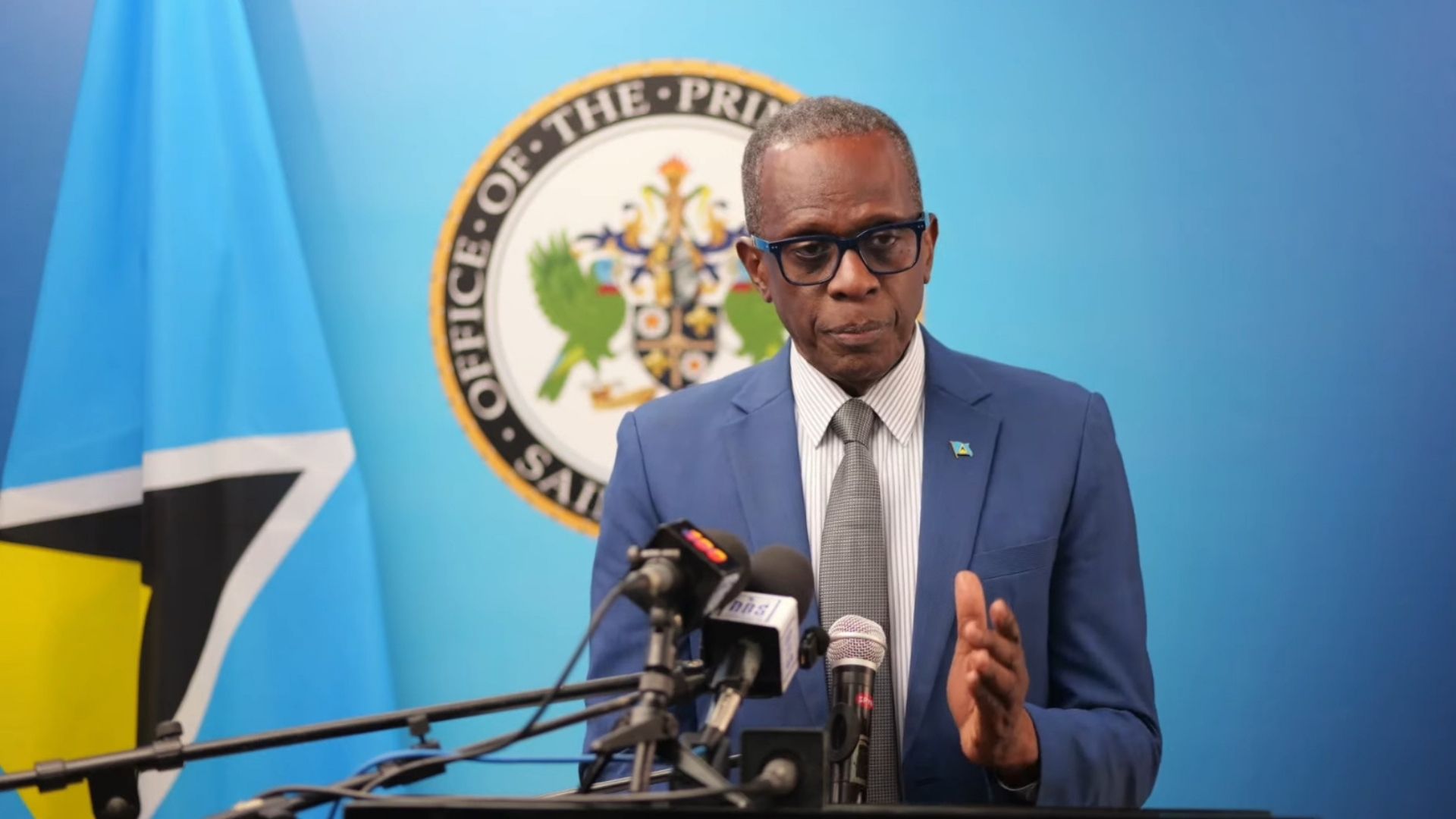
As the current Chair of CARICOM, Saint Lucia Prime Minister Philip J. Pierre has responded to the crisis by calling on all Caribbean nations to prioritize homegrown, regional solutions rather than relying on global supply chains that are increasingly exposed to climate-related disruptions. Speaking at a pre-Cabinet press briefing on Monday, in response to questions from the St. Lucia Times, Pierre emphasized that while Caribbean nations have no control over drought conditions or operations at the Panama Canal, they can take immediate action to strengthen regional trade ties that will reduce reliance on vulnerable external supply lines.
“We need to get a ferry to move our food from one island to another; that’s the first step,” Pierre said, outlining his top priority for regional action. The prime minister laid out additional targeted steps for small island nations like Saint Lucia, which already struggles with low domestic agricultural output and persistent food security challenges. He added, “We have to increase our production and we have to strengthen the linkages between agriculture and tourism; that’s where the private sector must get together with the government in terms of creating these linkages, in terms of buying local, and in terms of getting our manufacturers to produce things so that they can sell.”
Despite the significant risks posed by the ongoing Panama Canal crisis, Pierre expressed measured confidence that the Caribbean region has enough existing productive capacity to replace a sizable share of food imports through expanded intra-regional trade. “The first stage is seeing whether we can get this inter-island ferry going so that we can trade between ourselves because the region has some capacity to trade within itself,” he explained.
Alongside long-term calls for expanded regional production and connectivity, the CPSO is urging Caribbean importers to take immediate short-term action to prepare for coming disruptions. The organization is advising importers to proactively engage with carriers and logistics providers now to plan for alternative routes, potential surcharges, and inventory adjustments for the remainder of 2026 and the 2027 dry season, when conditions are projected to worsen.