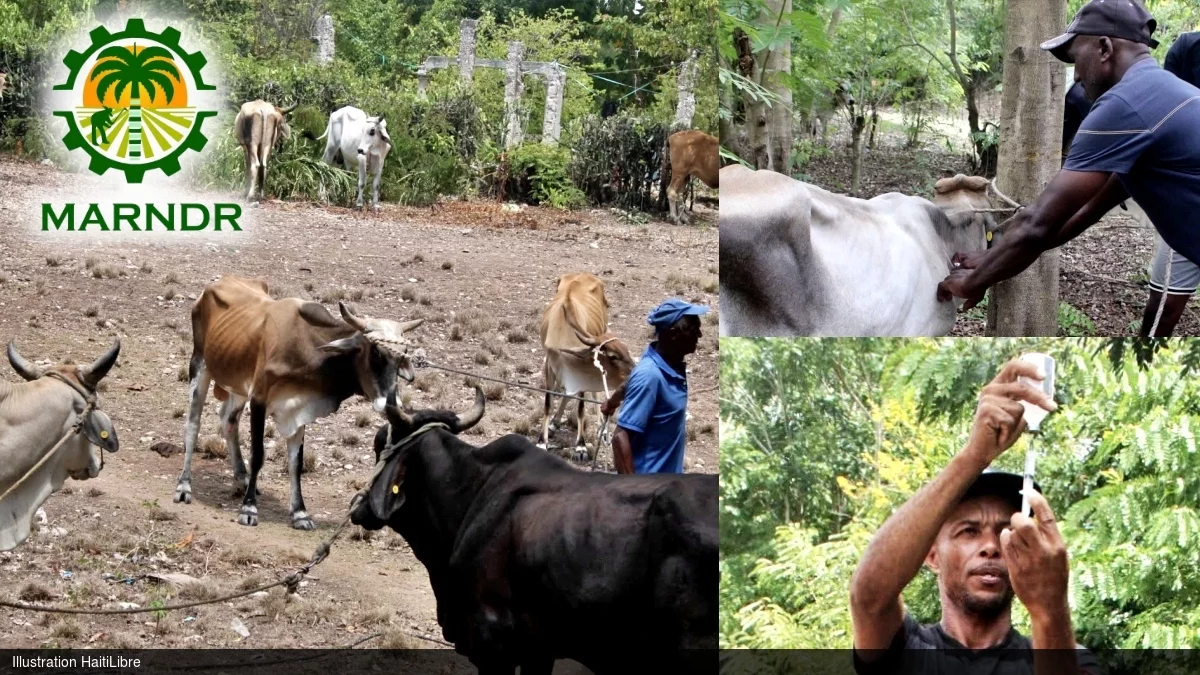
On September 15, 2026, agricultural authorities in southern Haiti kicked off a large-scale free anthrax vaccination campaign targeting domestic livestock, a public health and food security initiative designed to curb the deadly disease that threatens both animal herds and human communities across the region. The launch ceremony took place in Laborde’s 3rd communal section, within the Les Cayes commune, led by the veterinary division of the South Departmental Directorate of Agriculture (DDAS) and implemented in close partnership with the Resilient Agriculture for Food Security Project (PARSA).
Organized under the oversight of Haiti’s Ministry of Agriculture, the campaign will roll out across every commune in the department, reaching all livestock-owning households at no cost. Speaking at the opening event held in Kafou Tiboul, Dr. Atenord Oreus, lead veterinary official for the initiative, outlined that the program’s core mission is to protect local cattle, goats and sheep from anthrax—a highly lethal infectious disease that can wipe out entire herds, destabilize household incomes, and put both community food security and public safety at grave risk.
High turnout marked the first day of operations, with hundreds of local farmers bringing their animals to mobile vaccination stations deployed across the launch area. The mobilized veterinary teams administered doses to a wide range of livestock, as farmers turned out en masse to take advantage of the free public health service.
During his address to attending farmers, Dr. Oreus emphasized the critical role of routine preventive vaccination in preserving herd health and sustaining the livelihoods of the thousands of southern Haitian households that depend on livestock rearing for income and food. He went on to detail the ambitious coverage target set for the campaign: more than 100,000 head of livestock are scheduled to receive the anthrax vaccine by the end of the initiative, a goal that underscores both the scale of the effort and DDAS’s commitment to bolstering regional disease prevention systems.
Alongside announcing the vaccination goals, Dr. Oreus issued a critical public safety warning to all livestock owners: under no circumstances should anyone consume meat from animals that have died from suspected or confirmed anthrax cases. He reminded farmers that sudden, unexplained livestock death is a key red flag for anthrax, and urged anyone who observes such an event to immediately notify local veterinary services for rapid testing and safe disposal of infected carcasses to avoid transmission to humans.
Dr. Camille Joseph, PARSA’s Animal Production Assistant for the Grand Sud region, reinforced these warnings, stressing that vigilance against anthrax is a shared responsibility that protects both livestock herds and community health. Echoing Dr. Oreus, Joseph urged producers to avoid consuming or selling meat from sick animals or animals found dead under suspicious circumstances, to prevent outbreaks of the disease in human populations.
Joseph framed the campaign as ongoing support from Haiti’s Ministry of Agriculture to smallholder livestock producers and the broader animal production sector. He encouraged local producers to organize into collective groups to better communicate their needs to agricultural authorities, which would help make preventive vaccination programs a regular, sustained feature of regional agricultural health, rather than a one-time response. He added that sustained control of anthrax cannot be achieved through single campaigns, but requires continuous collaboration between livestock owners, veterinary services, and supporting institutions to maintain protection for herds and the families that rely on them.
Local livestock producers who have already accessed the campaign have expressed widespread satisfaction with the free initiative, which addresses a longstanding unmet need for anthrax prevention in the region.