On Friday, September 11, 2026, One Communications — the rebranded former GTT telecommunications provider in Guyana — revealed key details of its long-planned network expansion into the country’s low-population hinterland regions, highlighting financial sustainability as the core barrier to widespread rollout. CEO Abraham Smith shared updates on the firm’s strategy during an official press briefing, noting that the full three-year investment roadmap covering 2027 through 2029 will be finalized by the middle of 2027. At this stage, he declined to specify an exact number of underserved communities that will gain access to the provider’s services, as internal planning is still ongoing.
Right now, many remote hinterland communities located close to Guyana’s border with Venezuela, including the small settlement of Imbotero, remain almost entirely disconnected from coverage offered by the country’s major telecom firms. Local residents who can afford satellite service rely on Starlink for basic internet access, while even reliable mobile phone service remains out of reach for most. Responding to questions from Demerara Waves Online News, Smith confirmed that national security considerations are factored into the company’s expansion planning, but said that any project must ultimately pencil out financially to move forward. To unlock expansion in commercially unviable areas, he proposed a public-private partnership model, where targeted projects could be developed jointly with the Guyanese government rather than relying solely on the company’s regular capital allocation.
“In a competitive market landscape, we have to carefully assess funding structures and projected returns on every investment we make,” Smith explained. “We are open to collaborating with the current administration on one-off dedicated projects to extend service, but for our standard capital planning process, financial and operational factors have to take priority.”
Currently, One Communications and other major local providers are waiting on the Guyanese government to finalize timelines for activating the long-planned universal service obligation fund. This fund is designed to collect contributions from telecom operators to finance service rollout in low-density regions where commercial returns are too low to attract private investment on its own. Smith noted that the Telecommunications Agency is currently working to operationalize the fund, and referred questions about specific timelines to the regulatory body. As of the briefing, no active projects are utilizing the fund, and the company has not set aside contributions in an escrow account, pending the fund’s formal launch. “We are simply waiting for the fund to get up and running,” Smith confirmed.
The update comes just over a week after Guyanese President Irfaan Ali publicly criticized the country’s top telecom providers — including One Communications, Digicel, and ENet — for failing to invest sufficiently in hinterland connectivity. Speaking at the launch of Amerindian Heritage Month on September 2, Ali expressed clear dissatisfaction with the current pace of expansion. “We are unhappy with Digicel, GT&T (now One Communications), ENet and every other service provider,” the President stated. “They need to invest far more in the hinterland. They have to close the digital and communication divide, and I am calling on them to follow through on these investments.”
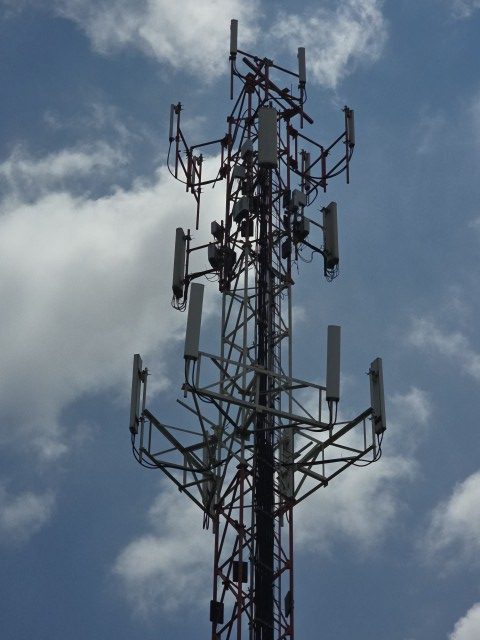
For its part, One Communications highlighted recent progress it has already made in network upgrades across Guyana. Company officials confirmed that the firm has invested $25 million to expand and upgrade mobile, fixed, and subsea infrastructure across the country. To date, 35 existing cell sites have been upgraded to support 4G LTE technology, bringing faster internet speeds to subscribers spanning a wide swathe of the country: from Moleson Creek in Corentyne on the eastern edge, to Anna Regina in Essequibo on the west, to Linden in the southeast, as well as multiple interior communities. Looking forward, Smith confirmed that the company will cease all new 2G and 3G network development in Guyana, shifting its full focus to modern 4G and next-generation infrastructure going forward.