Every year, competition for limited spots in Suriname’s medical training program exposes deep-rooted systemic gaps in educational equity across demographic groups. This year’s admission cycle, held in early September, underscores these challenges starkly: out of 135 candidates competing for spots in the 2025-2026 academic year, only 30 applicants ultimately secured admission.
Under the existing selection framework, 15 top-scoring candidates gain automatic entry based on academic performance, while the remaining 15 spots are allocated via random lottery from the pool of remaining eligible applicants. The 2025 results have drawn fresh attention to demographic representation gaps: data from the final admissions list shows more than 20 of the 30 admitted students trace their heritage to Suriname’s Hindustani community, including 13 of the 15 candidates who earned automatic entry through high test scores.
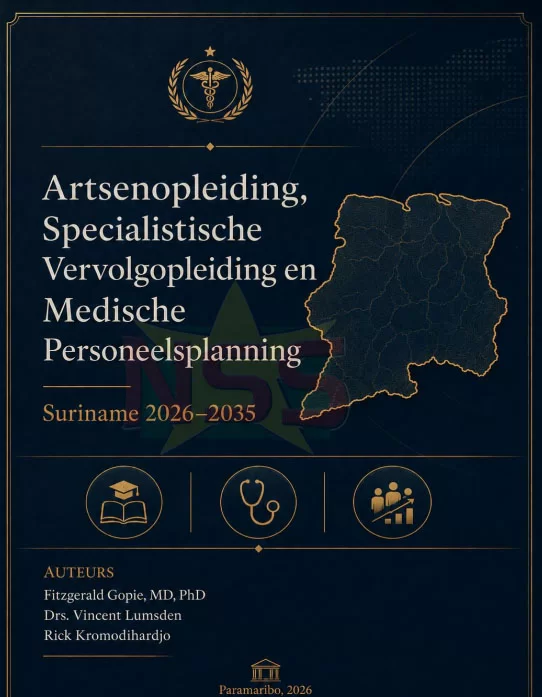
These disproportionate outcomes are analyzed in a landmark new 10-year study titled *Physician Training, Specialized Postgraduate Education and Medical Workforce Planning Suriname 2026-2035*, which examines the intersection of ethnicity, educational access and entry to medical education in the country. The study highlights a striking demographic mismatch: Maroon youth make up approximately 33.7% of Suriname’s total 17 to 20-year-old population, numbering 12,681 people, making them the largest demographic group in this age bracket. By comparison, Hindustani youth account for just 18.8% of the same age group, totaling 7,079 people.
Crucially, study authors reject calls to fix representation gaps through ethnic quotas or lowered admission standards, emphasizing that the roots of unequal outcomes emerge far earlier in the educational pipeline, not at the university admissions gate. To qualify for medical school candidacy, students must follow a rigorous academic pathway starting in secondary education, building a strong foundational knowledge base in mathematics, physics, chemistry and biology years before they apply to university. This sequential preparation process is referred to by researchers as the “science pipeline,” a multi-year journey that determines which young people ultimately reach the stage of being eligible to apply for medical training.
The study notes that academic ability and individual effort are not the only factors shaping outcomes along this pipeline. A wide range of systemic and socioeconomic barriers influence who can complete the required preparation: school quality, access to advanced science courses, geographic location, household financial resources, language proficiency, transportation and housing access, pre-application preparation, career guidance, mentorship opportunities and representation in professional role models all play critical roles in determining which young people reach the university admissions stage.
This structural context explains why random lottery selection does not automatically correct pre-existing representation gaps. If one demographic group produces far more eligible candidates who meet the baseline admission requirements to enter the lottery, that group will inevitably be overrepresented among admitted students, even when selection is random.
Rather than lowering admission standards to balance representation, researchers argue that preserving the academic and clinical quality of medical training must remain a non-negotiable priority, for both graduate outcomes and patient safety. Instead, they recommend targeted public policy investments to help more young people from all districts and demographic groups reach the required academic standard well before they apply. This means investing in science education starting at the secondary school level, providing support for subject selection, early career orientation, mentorship, and targeted interventions including extra tutoring, diagnostic testing, bridging programs and additional support for students from disadvantaged backgrounds.
In the study framework, ethnicity is not proposed as an admissions criterion, but as a diagnostic measurement tool. When a large demographic group is vastly underrepresented among medical school candidates relative to its share of the overall population, the measurement signals that systemic barriers are leaking talent out of the pipeline at some earlier stage of education, and targeted investigation is needed to identify and address those gaps.
Beyond equity issues, the 2025 admissions cycle also highlights a second, equally pressing challenge: even for qualified candidates from all backgrounds, overall capacity in Suriname’s medical training system is severely constrained. This year, 135 eligible candidates competed for just 30 spots, a ratio that leaves 105 qualified young people without a place, some of whom have applied and failed to secure entry multiple times via the lottery system.
The study explains that capacity constraints are most acute in the clinical phase of training, which cannot be expanded indefinitely. Currently, only 30 to 40 clinical clerkship spots are available across the country, with 79 current clerkship students and an additional 24 students already waiting for open placements. Without major expansion of clinical supervision capacity, increasing the number of admitted students would only lead to longer wait times for clinical placements, elevated risks to training quality, and widespread demotivation among aspiring physicians.
In sum, this year’s admission round brings two interconnected challenges for Suriname’s medical education system to the surface. On one hand, a large cohort of qualified young people is locked out by limited training capacity. On the other hand, a significant share of Suriname’s demographic potential never even reaches the admissions gate, due to early barriers in the educational pipeline. The study concludes that equal opportunity does not require every demographic group to hold an identical share of seats at every stage of training. However, outcome gaps must be measured, explained, and when they stem from avoidable systemic barriers, addressed through targeted interventions that do not compromise academic quality or patient safety.