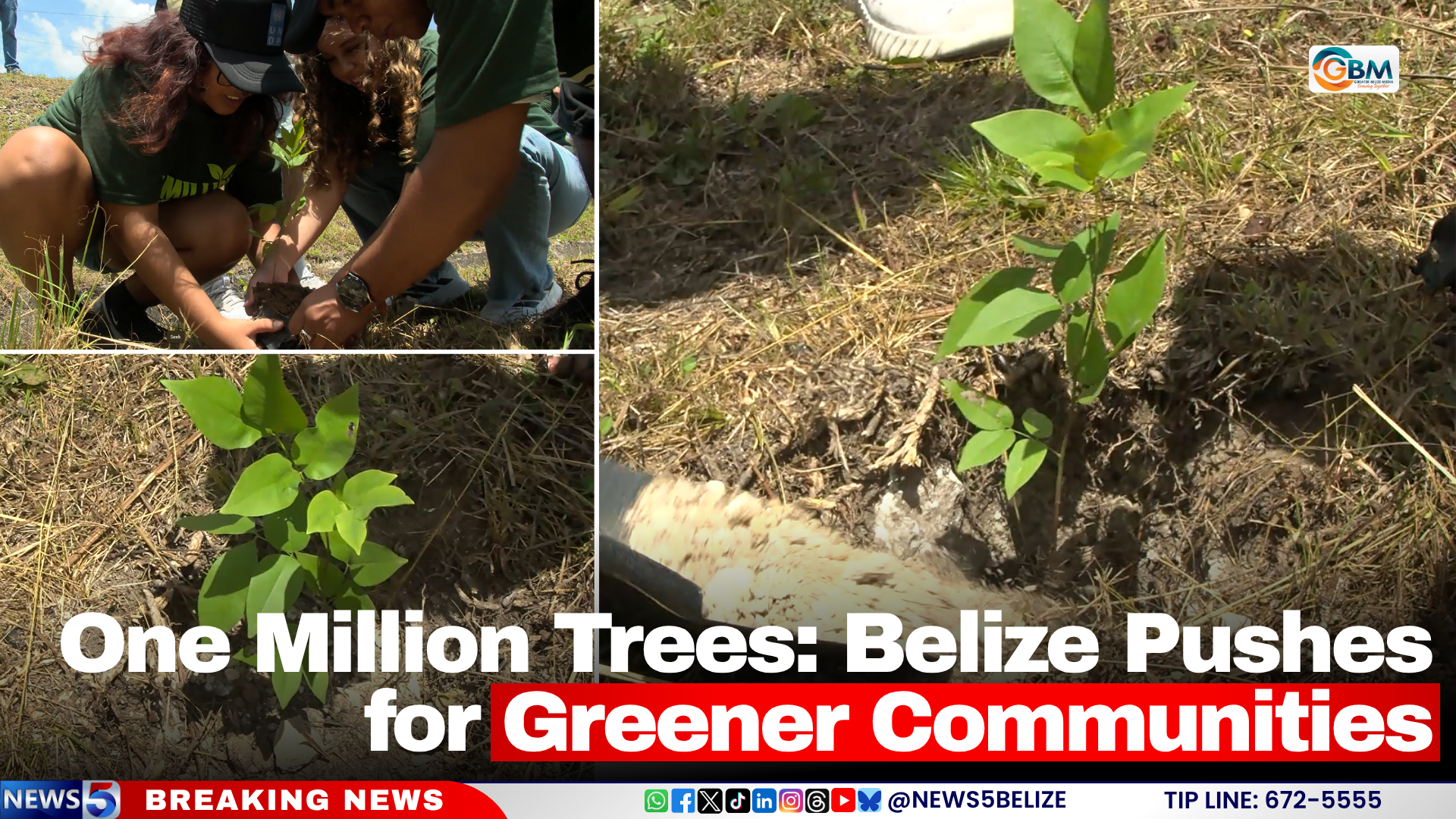
On September 9, 2026, Belize kicked off a landmark national initiative to plant one million trees, marking a critical step forward in the country’s efforts to reverse land degradation and build more resilient defenses against the accelerating impacts of climate change.
The formal launch of the project took place during a public tree-planting event hosted by Belize’s Ministry of Sustainable Development, which drew a diverse group of stakeholders, including student ambassadors from the University of Belize. As an opening act for the national campaign, 50 native trees were planted across five separate sites spread throughout Belmopan, the nation’s capital, to set a community-level example for the rest of the country.
Orlando Habet, Minister of Sustainable Development, emphasized that even small-scale local tree-planting actions deliver tangible, daily improvements to urban quality of life that add up to large-scale change. “These are the small everyday benefits of planting trees that can make a real difference in how we experience our city,” Habet noted. He added that the one million tree goal is just one component of a much broader national strategy to restore degraded ecosystems across Belize. As a party to the global Bonn Challenge, Belize has already made a formal commitment to restore 130,000 hectares (more than 276,000 acres) of degraded land by 2030, aligning its national climate goals with global restoration targets.
Habet stressed that such an ambitious goal cannot be achieved by a single government agency working alone. “One million trees will not be planted by one organisation in one day, it will happen through thousands of moments like this, one tree, one partnership, one community at a time,” he said, framing the initiative as a collective movement that relies on cross-sector collaboration and grassroots participation.
Michael Lund, Deputy Representative of the United Nations Development Programme (UNDP) in Belize, echoed this call for national unity around the project. He pointed out that the initiative also carries deep cultural and historical significance, noting that trees have long been woven into the fabric of Belizean national identity. “Planting one million trees in Belize is a nice concrete goal that we can all rally around as one country,” Lund explained.
Young people are positioned as core contributors to the campaign, with student leaders taking active roles in encouraging community participation. Sabrina Landaverde, a University of Belize student and student ambassador for the initiative, said the project creates meaningful pathways for the next generation to engage in tangible climate action. “What this project does is, we’re putting a foot forward into the one million trees project and getting the ball rolling and getting people and communities participating in this project,” Landaverde said. She added that every new tree planted brings multiple public benefits, from cleaner urban air to more robust ecosystems and healthier, more resilient communities that are better equipped to withstand climate shocks.
As the campaign rolls out across the country over the coming months, organizers expect that thousands of community groups, businesses, schools, and individual volunteers will join the effort to hit the one million tree target, advancing both Belize’s climate commitments and its goal of building greener, more livable communities for all citizens.