A political firestorm has erupted in Suriname’s parliament following incendiary comments from the chief executive of state-owned energy utility Energie Bedrijven Suriname (EBS), prompting top legislative leaders to demand official clarity on outstanding government payments to the utility.
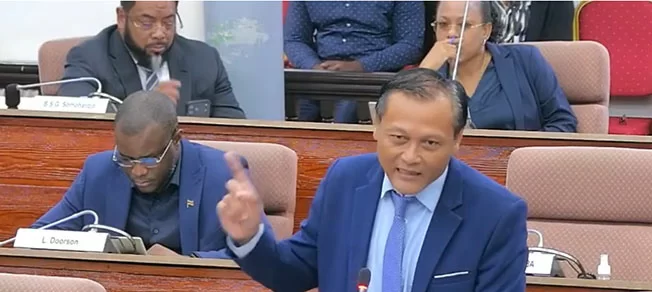
The controversy began when ruling National Democratic Party (NDP) Member of Parliament Raymond Sapoen publicly voiced his deep anger over recent remarks made by EBS CEO Leo Brunswijk directed at the country’s national legislature, De Nationale Assemblee (DNA). Sapoen told fellow lawmakers he was “extremely disturbed” by the tone and content of Brunswijk’s comments, which he claimed amounted to an order for parliament to “keep its big mouth shut” and first pay its outstanding electricity bills.
The confrontation unfolded amid ongoing parliamentary debates over Suriname’s national energy supply security. Sapoen pushed back against the CEO’s rhetoric, arguing that even the head of a state-owned enterprise is not beyond accountability. As a publicly owned company fulfilling a critical public service, Sapoen noted, EBS’s top leadership owes respect to the country’s elected legislative body, and Brunswijk’s confrontational language was entirely inappropriate.
Importantly, Sapoen clarified that he was not weighing in on whether parliament currently carries an outstanding balance with EBS. For him, the core issue is the disrespectful manner in which Brunswijk addressed the nation’s legislature, which he called a serious affront to the institution of parliament. He called on both DNA’s presiding officer and the government, as EBS’s majority shareholder, to address the situation formally.
Within days of Sapoen’s complaint, DNA President Ashwin Adhin confirmed he had already taken formal action, sending a written request to Finance and Planning Minister Adelien Wijnerman seeking full transparency on EBS billing records for government entities, including details on where outstanding invoices are being processed and tracked. Adhin said he expects a timely response from the minister, and if a reply does not arrive within the expected window, parliament will issue a formal reminder to push for a response.
The controversy soon led to confirmation of long-standing unpaid government utility debts in a subsequent parliamentary meeting. Vice President Gregory Rusland addressed the issue directly, confirming that the Surinamese government holds large accumulated payment arrears not only at EBS, but also at the national water utility Surinaamsche Waterleiding Maatschappij (SWM). According to Rusland, some of these outstanding debts date all the way back to 2020.
Rusland added that the cabinet of ministers has already discussed the backlog of unpaid utility bills, and the administration is currently working out structured payment arrangements to clear the outstanding arrears at both state-owned utility providers. “When a company provides services, you have to pay for them,” Rusland affirmed, acknowledging the validity of the core claim behind the CEO’s controversial comments.