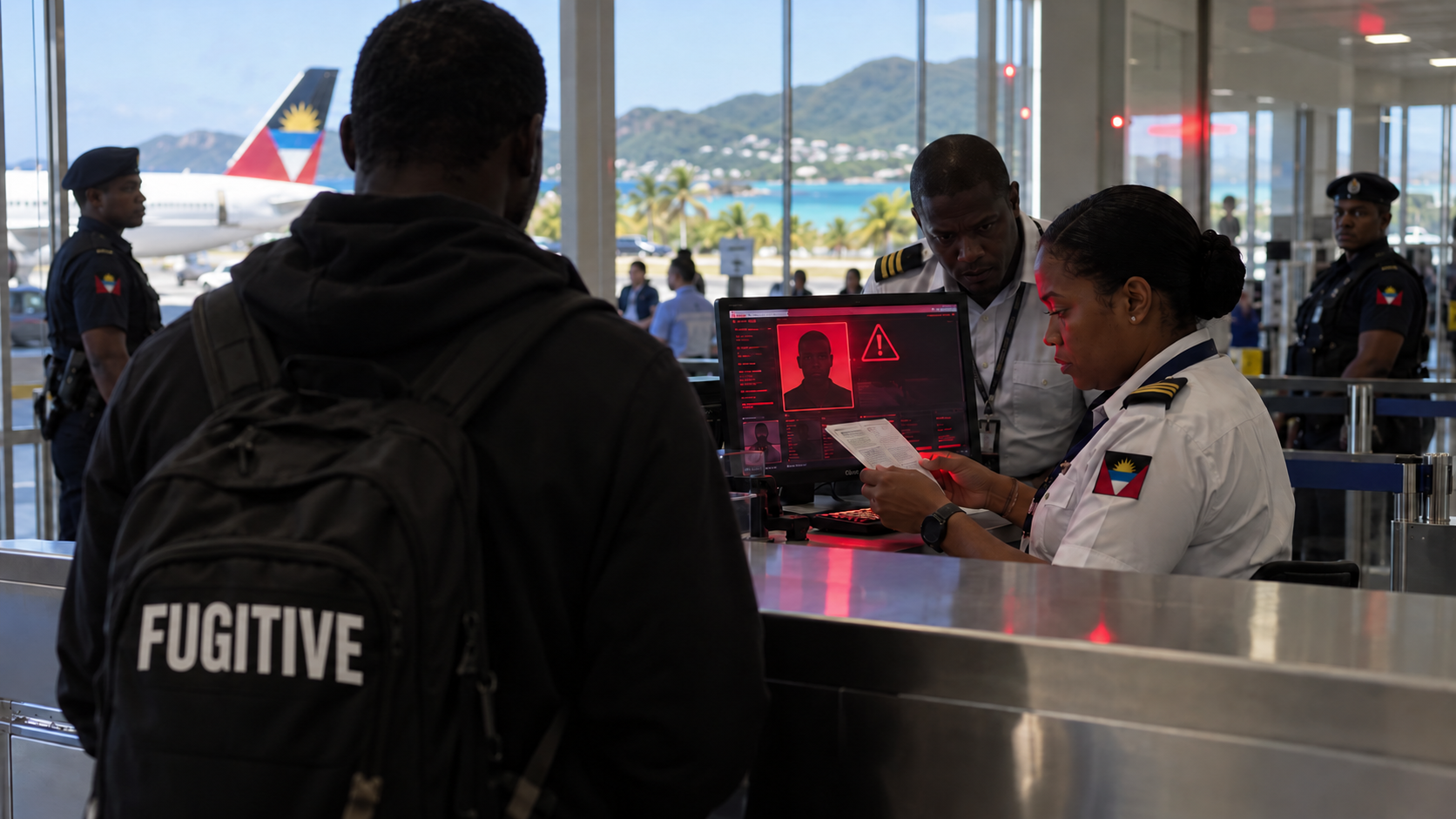
Antigua and Barbuda Prime Minister Gaston Browne has issued a stark warning that the Caribbean nation is now confronting a growing national security threat: an increasing number of foreign fugitives wanted for serious crimes in other countries are secretly entering and settling within local communities.
Speaking during the recent episode of the Browne and Browne Show, the prime minister confirmed that authorities have already uncovered multiple such individuals who are actively sought by law enforcement agencies across other jurisdictions. At this stage, Browne has not released any identifying details, including the names, nationalities, or specific alleged offenses linked to the discovered fugitives, nor has he confirmed whether any of the suspects are currently facing extradition proceedings.
The revelation comes amid a broader discussion of a recent uptick in violent crime across Antigua and Barbuda, where Browne laid out a multi-pronged strategy to shore up public safety and reinforce the country’s security framework. Browne emphasized pointedly that Antigua and Barbuda will not tolerate becoming a safe haven for criminals fleeing prosecution in their home countries, adding that the discovery of these hidden fugitives underscores an urgent need for tighter collaboration between immigration officials, local police forces, and regional and international security partners.
Security analysts note that the public disclosure is likely to reignite scrutiny of Antigua and Barbuda’s current border screening protocols, as well as the capacity of local law enforcement to access real-time international arrest warrants and cross-reference global criminal databases. Local authorities also face unique practical challenges, including identifying suspects who travel under false aliases or use fraudulently obtained travel and identity documents.
To address rising crime and the threat of foreign fugitives, Browne has championed what he calls an “all-of-society approach” that combines upgraded technology, enhanced inter-agency coordination, and active public participation. The prime minister urged local residents to play a critical role by reporting any suspicious individuals or unusual activity to authorities.
As an incentive for public cooperation, Browne’s administration has significantly increased financial rewards for actionable information in major criminal investigations, raising the maximum payout to 500,000 Eastern Caribbean dollars. A separate reward of 5,000 Eastern Caribbean dollars is offered for information that leads to the recovery of illegal firearms, a major driver of recent violence in the country.
Beyond engaging the public, the government is also expanding its national surveillance infrastructure. The administration has acquired new night-vision drones to extend monitoring capabilities across hard-to-reach areas and is putting the final touches on a modern digital police records management system designed to streamline information sharing and case tracking. Browne reiterated that even the most advanced technology and cross-border intelligence sharing can only deliver results when paired with stronger collaboration between domestic agencies and consistent support from local communities.