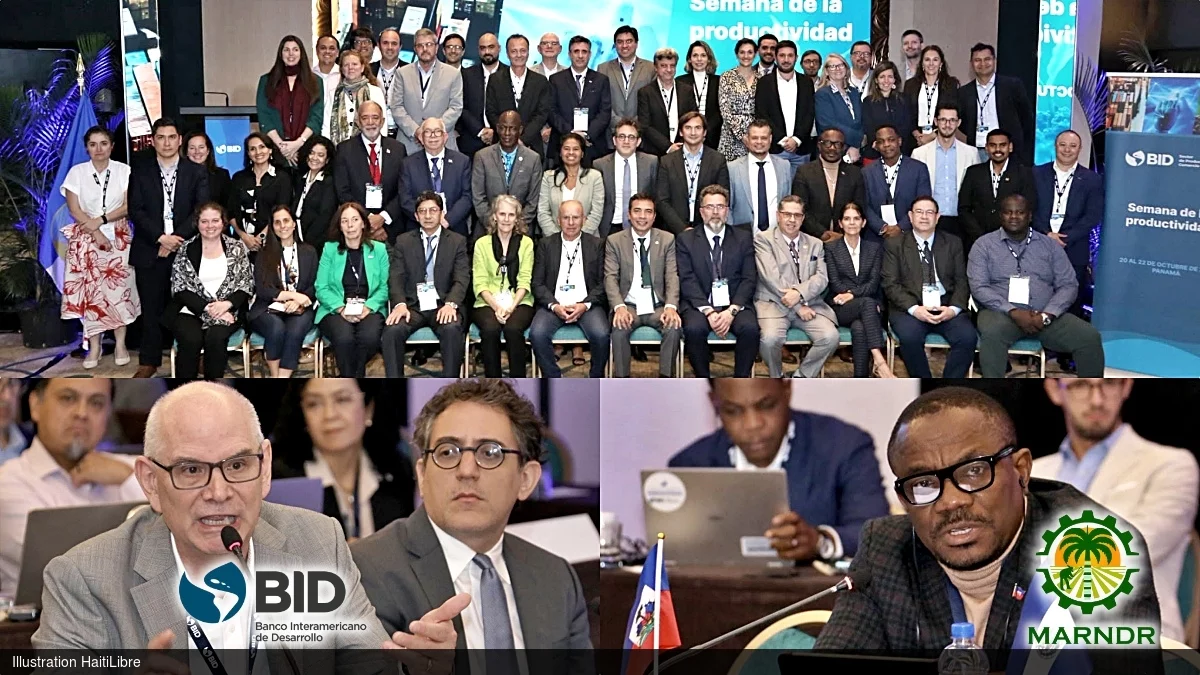
On October 22, 2026, Haiti’s Minister of Agriculture Marcelin Aubourg took the stage at the Inter-American Development Bank’s (IDB) Regional Dialogue on Public Policy for Agriculture and Rural Development in Panama, a gathering centered on advancing robust, crisis-ready agri-food systems across the Americas. Aubourg laid out a sweeping national vision to transform Haiti’s long-struggling agricultural sector into a self-sustaining engine that can feed all Haitian citizens, even amid overlapping economic, climate, and security shocks that have left large swathes of the population facing chronic food vulnerability.
A core pillar of the proposed policy framework, Aubourg explained, is shifting away from overreliance on costly food imports by centering domestic smallholder production as the foundation of national food security. While immediate emergency food aid remains a critical lifeline for at-risk communities, Haitian authorities are pushing to pair short-term humanitarian responses with targeted long-term investments that lift the sector’s total productive capacity over time.
The minister outlined a tiered set of actionable priorities to deliver on this vision: expanding equitable access for small-scale farmers to high-yield, drought-resistant quality seeds, modern farming equipment, on-the-ground agricultural extension advisory support, and context-appropriate production technologies. He also flagged urgent rehabilitation of long-neglected irrigation networks, more sustainable watershed and water resource management, and widespread farm modernization as non-negotiable steps to boost national crop yields and raise producer incomes.
Aubourg acknowledged the cascading set of overlapping pressures currently crippling Haitian agriculture: worsening climate volatility, widespread deforestation and natural resource degradation, ongoing rural insecurity, and repeated supply chain disruptions that have left communities cut off from critical inputs and markets. To counter these threats, he called for the rollout of shock-adaptive production systems designed to protect rural livelihoods, including expanded sustainable hydro-agricultural infrastructure, nationwide soil and water conservation programs, expanded crop diversification away from monoculture staples, and flexible, crisis-tailored financing schemes that can deliver fast support to producers hit by sudden disasters or unrest. He also stressed the urgent need to upgrade national agricultural early warning and disaster anticipation systems to cut the impact of future shocks on harvests and food supplies.
Beyond simply raising total food output, Aubourg emphasized that true food security requires all Haitian households to have consistent, affordable access to diverse, nutrient-rich diets. To that end, the strategy prioritizes building out full local value chains for staple food crops, native fruits and vegetables, and domestic livestock and animal products to expand consistent supply to local markets. The minister also highlighted targeted investments to slash crippling post-harvest losses, which currently waste a large share of annual harvests, by upgrading on-farm storage facilities, food preservation technologies, local food processing capacity, and rural transport networks. These upgrades, he noted, will not only protect farmers’ hard-earned harvests and raise their earnings, but also make locally grown food far more accessible and affordable for consumers across the country.
As part of the regional dialogue, Aubourg also laid out Haiti’s request for aligned, locally tailored cooperation from the IDB and other international technical and financial partners. He called for future IDB grant and loan portfolios to prioritize direct productive investments, strengthen the operational capacity of Haiti’s national agricultural institutions, and build long-term food system resilience, rather than continuing to prioritize short-term, externally designed programs that do not align with national priorities. By aligning all partner interventions with the government’s official agricultural road map, Aubourg argued, stakeholders can eliminate fragmented project coordination, create more rigorous monitoring and accountability for public and donor investments, and deliver lasting, self-sustaining results that persist long after individual programs formally end. The country now faces the critical next step of translating these agreed policy guidelines into on-the-ground, tangible investments that empower rural producers and deliver permanent improvements to quality of life for Haiti’s vast rural communities.