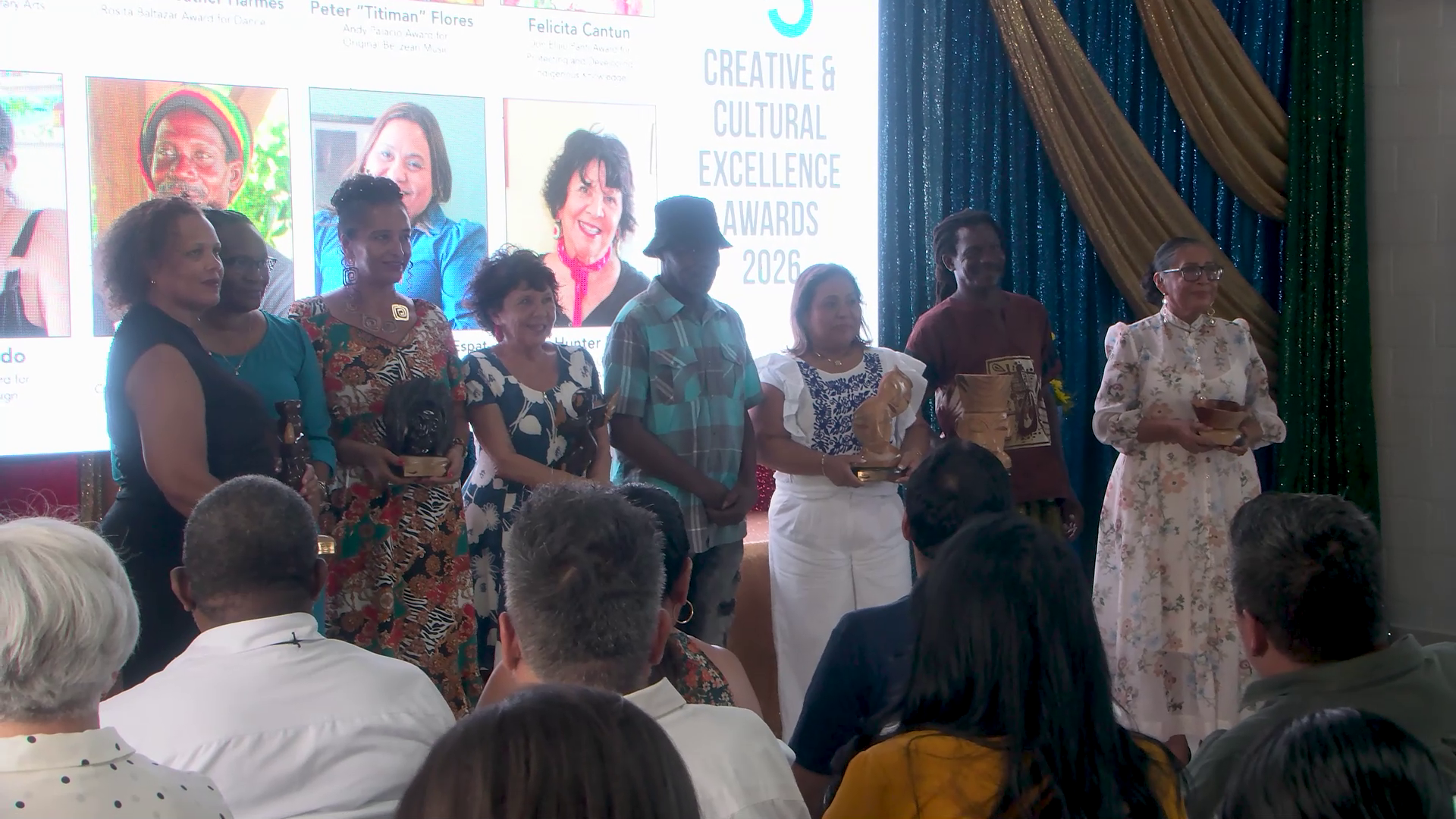
As Belize kicks off its annual September national celebrations, the country’s quiet backbone of national identity—its unsung cultural stewards and creative pioneers—stepped into the spotlight this week to receive formal recognition for decades of work shaping the nation’s artistic and cultural landscape. Eight local practitioners across fields ranging from Indigenous traditional knowledge to literary arts, music, dance, theater, and visual art were awarded the 2026 Creative and Cultural Excellence Awards, an annual honor that highlights underrecognized contributions to preserving and growing Belize’s unique multicultural heritage.
Francis Fonseca, Belize’s Minister of Culture, described the annual awards ceremony as one of the nation’s most meaningful annual traditions, noting that most of the honorees have spent decades advancing Belizean culture without widespread public or official acclaim. “Culture, creativity is really the heartbeat of our nation, the heart and soul of our nation,” Fonseca shared at the event, adding that it remains a privilege to recognize the deep personal commitment these artists and cultural leaders have given to Belize.
This year’s awardees carry distinct legacies tied to different strands of Belize’s cultural tapestry: Poet and author Margaret Reynolds received the Zee Edgell Award for Literary Arts, while Sistie Fairweather Harmes was honored for her decades of work advancing dance in Belize. Poots “Titiman” Flores took home the prestigious Andy Palacio Award for Original Belizean Music, and Felicita Cantun was recognized for her lifelong work protecting and revitalizing Indigenous traditional knowledge. The remaining four honorees—Lola Delgado, Emmeth Young, Melissa Castellanos-Espat, and Lita Hunter Krohn—were recognized for their outstanding contributions to visual art, cultural heritage preservation, theater, and cultural leadership respectively.
Yasser Musa, an advisor to Belize’s National Institute of Culture and History (NICH), emphasized that cultural heritage is not a static artifact of the past—it requires active work to survive and evolve. “Culture does not survive simply because it existed yesterday but because someone decides to teach it, perform it or celebrate it,” Musa explained. Since the awards program launched in 2021, a total of 45 Belizean cultural workers have been honored over the past six years, a legacy of recognition that Musa says can never fully capture the full scope of the impact these individuals have had on national life.
To ensure transparency and fairness, the award selection process follows an open, community-centered structure. Every year, the National Celebrations Commission issues a public call for nominations from across the country. Submissions are then reviewed by a cross-stakeholder subcommittee, which deliberates to reach a consensus on honorees before forwarding a final recommendation to the full commission. Fonseca noted that choosing from a pool of highly qualified, deserving nominees is never an easy task, and he is grateful that the decision is not left to political leadership alone.
For the eight 2026 recipients, the tangible recognition of a plaque and formal award carries deep meaning, but the greatest reward is the confirmation that their years of quiet work have left a lasting mark on Belize’s national story. This report was compiled by Shane Williams for News Five, based on a transcript of the outlet’s evening television broadcast.