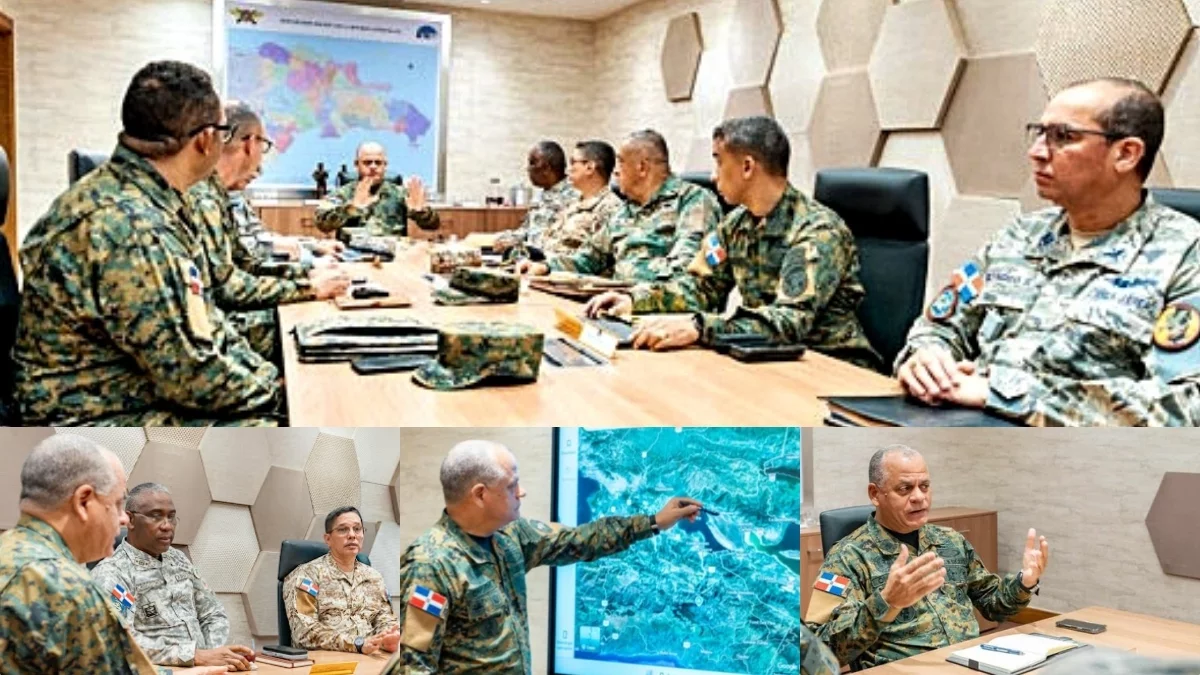
On October 22, 2026, Dominican Republic Defense Minister Lieutenant General Carlos Antonio Fernández Onofre led a high-level strategic assessment session focused on the evolving security landscape in neighboring Haiti. The gathering assembled top military leadership, including the commanding generals of the Dominican Army, Navy, and Air Force, senior intelligence and operations officials from the Joint General Staff, the head of the Specialized Corps for Land Border Security (CesFRONT), and the director of the Ministry of Defense’s Command, Control, Communications, Computers, Cybersecurity, and Intelligence (C5i) Center. After a thorough line-by-line review of the latest real-time intelligence briefings, the assembled defense leadership formally determined that current conditions along the shared Dominican-Haitian border do not meet the threshold for activating extraordinary emergency security protocols. At this juncture, no developments have emerged that would require disrupting the normal daily rhythms of border-side civilian communities, meaning no plans to shut down the international border are under active consideration. All cross-border commercial exchanges, social gatherings, and routine day-to-day movements will proceed entirely as scheduled. Even as the immediate outlook remains stable, the Dominican armed forces have sustained a robust, round-the-clock monitoring apparatus tracking every shift in Haiti’s security environment. Inter-agency intelligence sharing pipelines remain fully operational, and defense planners are continuously modeling a range of potential future scenarios to ensure they can deploy targeted, proportional preventive actions at a moment’s notice if conditions on the ground demand it. The southern stretch of the 392-kilometer shared border, where Dominican military troop deployments have already been bolstered, remains under heightened vigilance. Enhanced screening of travelers and vehicles is now standard procedure in the Pedernales and Elías Piña border sectors, while the key crossing point at Jimaní has retained all its regular commercial operating norms and baseline security frameworks, with no major adjustments made in direct response to recent outbreaks of violence inside Haitian territory. Even with the stepped-up screening measures, Haitian small-scale merchants continue to cross into Dominican territory to purchase essential supplies for resale back home. Binational cross-border trade, a longstanding lifeline for tens of thousands of residents on both sides of the frontier, has so far avoided any widespread, systemic disruptions, according to official updates.