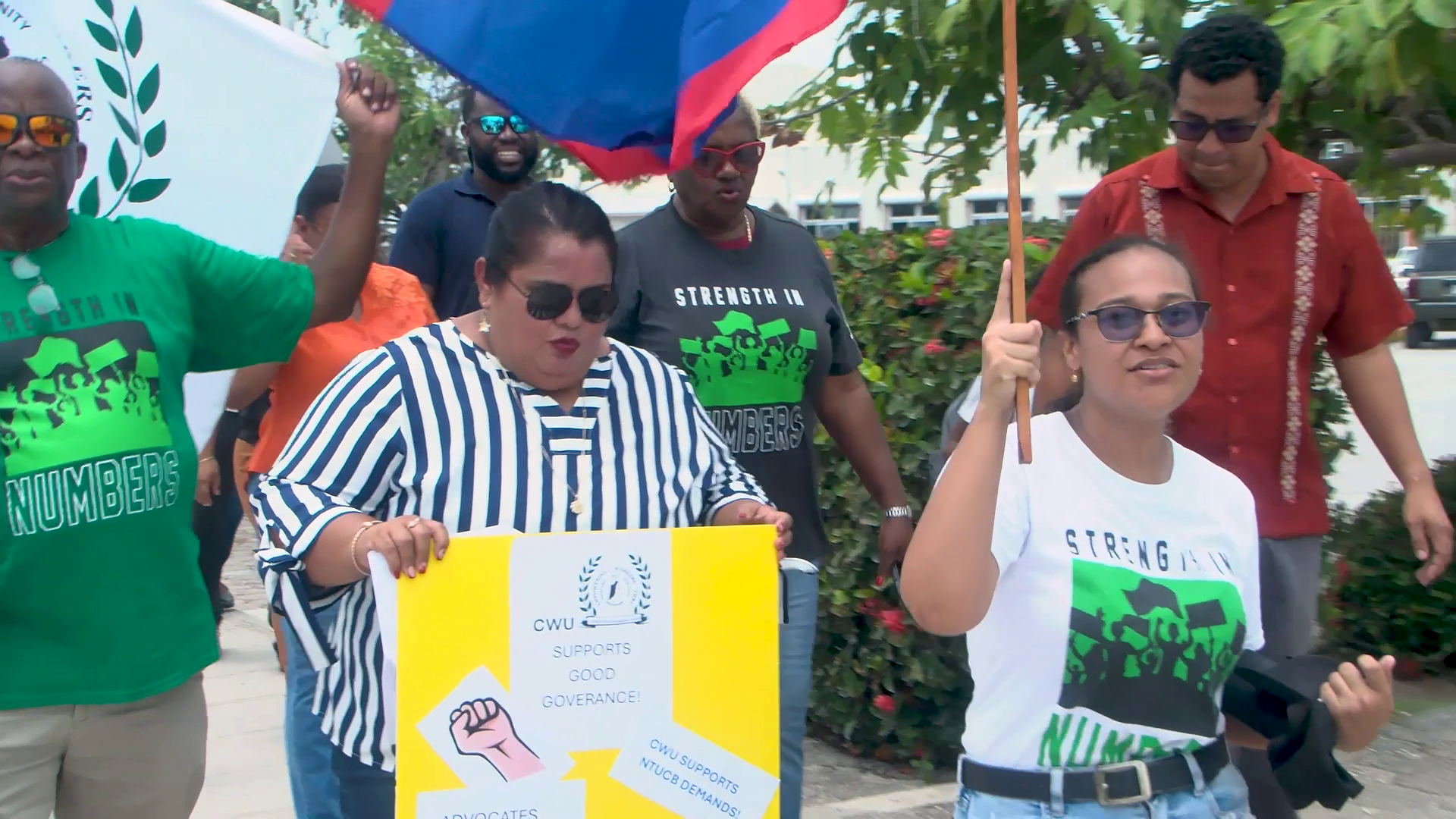
A heated public debate over the growing cost-of-living crisis in Belize has erupted between a union-aligned senator and the nation’s prime minister, turning a discussion of household financial strain into a clash over whether elected officials remain connected to the struggles of ordinary families. The exchange, which took place during a press question-and-answer session on September 2, 2026, has placed renewed focus on the government’s response to skyrocketing everyday expenses as Belizean households struggle to balance rising fuel, energy and grocery costs against stagnant salaries.
Union Senator Glenfield Dennison opened the criticism, arguing that government officials who receive taxpayer-funded fuel allowances cannot possibly grasp the daily challenges working Belizean families face when trying to stretch limited incomes to cover basic needs. “Officials insulated from these direct costs simply cannot understand what it means to choose between refilling your gas tank to get to work or paying for your child’s school supplies,” Dennison’s argument implied, framing the affordability gap as one that disconnected public officials fail to address because they do not experience it themselves.
Prime Minister John Briceño pushed back forcefully against the claims, rejecting the assertion that he and his administration are out of touch with the financial pressure weighing on Belizean households. In a tense exchange with reporter Paul Lopez, Briceño defended his deep connection to communities across the country, noting that he has traveled more extensively across Belize than most other political figures, interacting directly with residents in their homes and neighborhoods to see their challenges firsthand.
Briceño also pushed back on the narrative that his personal financial success means he has forgotten his humble origins. Recalling an interaction he had as opposition leader with a student at Galen University, he shared that the student once made a similar claim that he could not understand what it meant to rely on public transit. Briceño responded by recounting his early career, when he hitchhiked to work and ran errands before building financial stability through decades of public service. He emphasized that politicians who fail to understand the needs of constituents will eventually be voted out of office, giving leaders a direct incentive to stay connected to public struggles.
Beyond defending his connection to working families, Briceño also unveiled a concrete policy proposal to ease household financial strain: his administration will submit a cabinet proposal to eliminate the Goods and Services Tax (GST) on residential electricity bills up to $200. The measure is projected to benefit roughly 100,000 consumer accounts, delivering immediate relief to families grappling with soaring energy costs. Briceño emphasized that the government is acting as aggressively as it can with limited public resources to address the crisis.
The prime minister then issued a direct challenge to Dennison, urging the senator to spend time walking through struggling rural and urban communities, speaking with residents who lack reliable access to basic services like electricity, clean water, and passable roads. “When he can walk in our shoes, then he can talk,” Briceño said, arguing that until Dennison engages directly with the full scope of challenges facing Belizean communities, he has no standing to accuse the government of being disconnected.
When reached for comment following the prime minister’s remarks, Dennison responded via text message, acknowledging the high pressure of the prime minister’s role and noting that the emotional response was understandable. “Regrettably, he and I will have to agree to disagree, and the Belizean people will decide if he understands,” Dennison said, leaving the final judgment up to the voting public.
This report is a transcript of an evening television broadcast, with all Kriol-language statements transcribed using a standardized spelling system for accuracy.