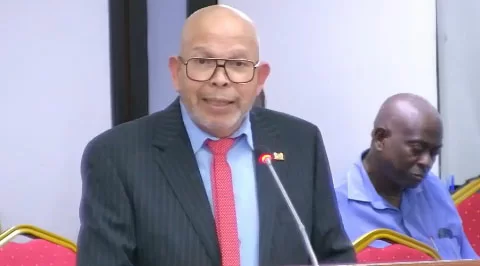
As the start of the 2024 academic year approaches on October 1, Suriname’s Ministry of Education, Science and Culture is moving forward with urgent infrastructure and digital upgrades to address long-standing systemic gaps in the country’s education sector, Minister Dirk Currie has confirmed in an address to the National Assembly.
Decades of accumulated underinvestment have left the nation’s schools grappling with two critical challenges: a lack of digital learning tools and a widespread shortage of usable classroom space. Currie outlined the ministry’s ongoing mitigation efforts while warning the public that not all issues will be resolved in time for the first day of classes, given the scale of the problems the department inherited.
One of the ministry’s top priorities is expanding access to digital learning resources. An initial needs assessment conducted earlier this year identified 400 additional computers as necessary for general secondary education, but a follow-up review that included vocational education programs pushed the total requirement to 1,000 laptops. The new figure reflects widespread gaps across all education sectors: Currie noted that some schools report having no functional computing devices at all, while others only have a small number of outdated units, and many lack qualified teachers to lead ICT instruction even when equipment is available.
The push for digital transformation also serves a second purpose: partially offsetting national shortages of specialized subject teachers. The ministry is already rebroadcasting pre-recorded educational content via Gov.tv and its official YouTube channel, and development is underway on a full remote learning platform that can deliver live digital instruction to understaffed schools. A separate digital learning pilot program is being planned for rural and interior regions of the country, with Currie confirming he has held discussions with local stakeholders to identify eligible regions and schools. Reliable broadband access is a core requirement for the pilot, and the minister named Starlink as a potential technical solution, though he acknowledged that existing national regulations may create barriers to its immediate deployment.
Alongside digital upgrades, the ministry is rushing to address a severe shortage of classroom space across the country. Currently, 76 new classrooms are under construction with support from private sector partners: some have already been completed, while others remain in active building or final finishing phases. Separate renovation projects are also ongoing at 35 schools distributed across all regions of Suriname. Looking ahead, the ministry has plans to construct an additional 100 new permanent classrooms, though Currie confirmed that not all of these will be ready in time for the October 1 school start. The department has set a final completion deadline of December for all new builds.
To minimize disruption to student learning before all new classrooms come online, Currie announced a series of temporary flexible use policies. The ministry will eliminate rigid separation between general education and vocational education classroom spaces, requiring schools to utilize every available square meter to accommodate students. If needed, temporary bus transport will be provided to move students between undercapacity schools and nearby campuses with available space.
A key priority for the minister is ending the widespread practice of students only attending school three days per week due to space shortages. Currie emphasized that if any such temporary scheduling adjustments are necessary this year, they will only remain in place until December, when the bulk of new classroom construction is scheduled to be finished.
Closing his address to the National Assembly, Currie sought to temper public expectations for the start of the school year. He acknowledged that the 2024 academic year will start off better than the 2023 term, but noted that decades of structural backlogs cannot be fully resolved in just a few months of targeted work. The ministry’s ongoing investments are designed to deliver long-term, sustainable improvement to Suriname’s education system rather than quick fixes, he added.