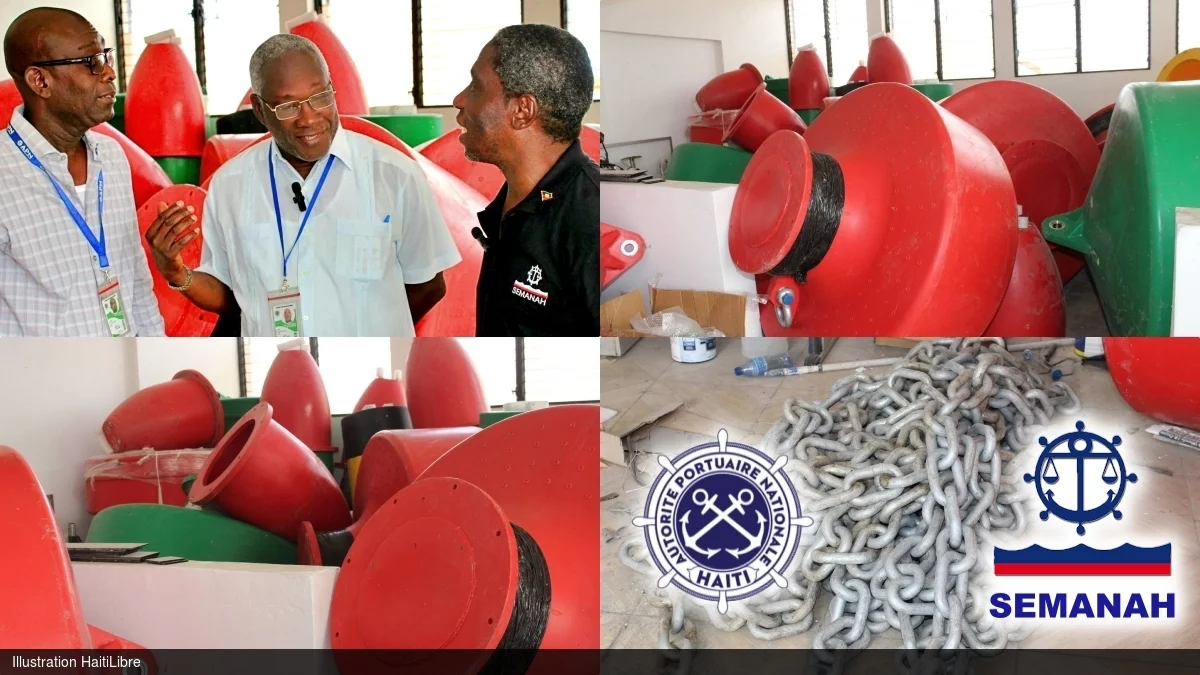
In a key step to upgrade maritime safety across Haiti’s busiest ports, the Haitian Maritime and Navigation Service (SEMANAH) handed over a new batch of navigational signaling equipment to the National Port Authority (APN) on October 14, 2026. The delivery, led by SEMANAH Director General Patrick Norzéus alongside an official delegation, forms a core part of a national initiative to mark navigation channels at the country’s international ports and select coastal commercial ports.
Speaking at the handover ceremony, Norzéus outlined his long-term commitment to advancing channel marking work across all Haitian port infrastructure, with a particular focus on the international ports that drive most of the country’s trade movement. He stressed that SEMANAH and APN hold overlapping, mutually reinforcing missions focused on elevating the safety and operational organization of Haiti’s domestic maritime navigation sector, and pledged to deepen inter-agency coordination to deliver more efficient, impactful improvements to port operations.
Jean Evens Charles, Director General of the National Port Authority, welcomed the new equipment and voiced strong appreciation for SEMANAH’s ongoing partnership and technical support. Charles noted that APN cannot deliver consistent, safe port operations without close collaboration with SEMANAH, comparing the maritime authority to a “maritime traffic police force” tasked with regulating vessel flow and embedding critical safety standards across the country’s waterways.
Norzéus also extended public gratitude to Haiti’s Prime Minister for the institutional and financial backing that allowed SEMANAH to acquire the specialized equipment required to survey and mark port navigation channels. He additionally acknowledged the coordination and on-ground support provided by APN teams that has made this large-scale safety initiative possible.
Navigational channel marking is a foundational maritime safety practice that outlines clear, safe passage routes for vessels entering and departing ports. Properly marked channels enable unimpeded vessel movement around the clock, while drastically cutting the risk of groundings, collisions, and other preventable maritime accidents that can threaten crew lives, damage cargo, and disrupt critical trade flows.