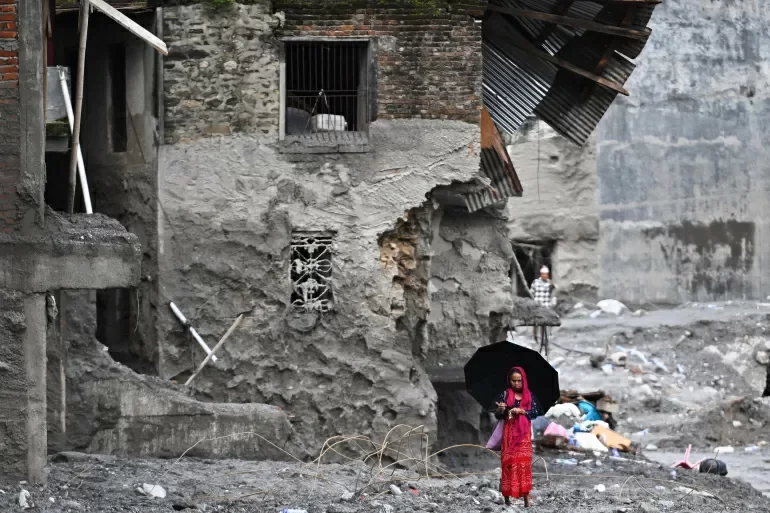
A catastrophic glacial collapse in the Himalayan mountains has unleashed devastating flash floods across Nepal and adjacent regions of southern China, leaving a staggering toll of more than 1,000 people confirmed dead and more than 4,400 others unaccounted for as of September 1, 2026. Rescue teams are now focusing their urgent search and recovery efforts on damaged hydropower projects, where hundreds of workers are feared trapped deep in construction tunnels.
According to the latest official update from Nepal’s National Disaster Risk Reduction and Management Authority (NDRRMA), the death toll in Nepal alone has climbed to 1,003, up from an earlier count of 987. A total of 3,916 people remain missing in the country, including 583 foreign nationals working on regional infrastructure projects. Across the border in southern China, official reports confirm 16 dead and 546 missing, 261 of whom are non-Chinese citizens.
The unprecedented disaster unfolded on August 26, when a large glacier collapsed into surrounding river valleys. The collapse sent a massive surge of rock debris, broken ice, and glacial meltwater rushing downstream, generating powerful floodwaters that swept through settlements and infrastructure in low-lying areas. Glaciologists and disaster researchers currently hypothesize that the collapse was triggered by structural failure of the bedrock beneath the glacier, a hazard that has become increasingly common as rising global temperatures destabilize Himalayan ice formations.
The most high-stakes segment of the ongoing rescue operation centers on Nepal’s network of hydropower projects, which dot the country’s steep Himalayan river valleys. Hundreds of construction workers are believed to be trapped in partially collapsed access tunnels at multiple project sites. Nepalese Prime Minister Balendra Shah confirmed that rescuers have so far extracted 279 workers from the affected projects, where more than 900 people were initially reported missing. Across all flood-affected regions of Nepal, a total of more than 11,000 at-risk people have been rescued and evacuated to safe shelter as of the latest update.
In recent days, slow but tangible progress has been made in restoring critical infrastructure to support relief efforts. Power grids and communication lines have been repaired in many hard-hit areas, and access routes to previously cut-off locations such as Nuwakot District, one of the worst impacted regions, have been cleared, allowing rescue teams and aid convoys to reach affected communities more easily.
The first mass burials for flood victims have already begun, as local authorities continue to recover bodies from mud and debris. In Betrabati village, Nuwakot alone, recovery teams have pulled 24 bodies from a single residential building destroyed by floodwaters. Search operations continue around the clock, with crews working through the night under artificial lighting to clear debris and locate remaining victims and potential survivors.
The Nepalese government has already received more than $42 million in international disaster aid to support response and recovery efforts, and officials expect additional pledges to arrive in the coming weeks. Neighboring countries India and China have both contributed directly to on-the-ground response, assisting with the construction of temporary emergency bridges to reconnect isolated mountain communities cut off by flood-damaged roads.
This disaster has drawn renewed attention to Nepal’s large-scale expansion of hydropower infrastructure over the past two decades. The country has heavily invested in hydropower projects to achieve energy independence and export surplus electricity to India, leveraging the Himalayas’ extreme elevation changes to generate power by routing river water through mountain tunnels. Experts warn that the region’s increasing infrastructure development in high-glacier hazard zones calls for stricter disaster risk assessment and mitigation to protect workers and local communities.