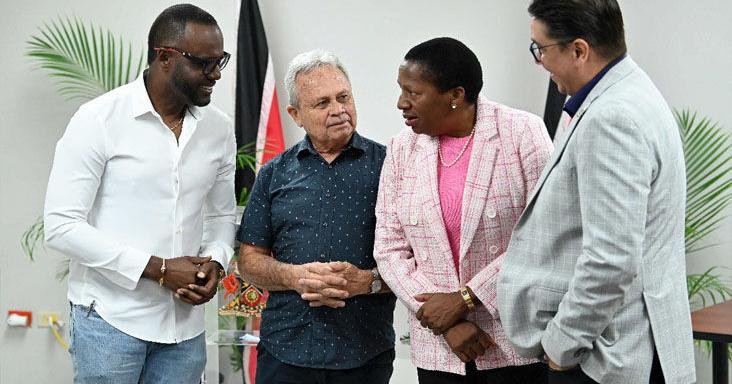
A brewing internal conflict within Trinidad and Tobago’s main opposition party, the People’s National Movement (PNM), took center stage this week as Opposition Leader Pennelope Beckles addressed public claims of inaction on alleged corruption from sitting San Fernando East MP Brian Manning. Speaking at a formal press briefing held at her Port of Spain office, Beckles confirmed she held a constructive, productive meeting with Manning earlier the same day, but chose not to disclose specific details of their closed-door discussion to reporters.
Manning recently went public with criticism, claiming Beckles had been reluctant to confront suspected corrupt actors within the party’s ranks, in the wake of a public split between the MP and his now-resigned San Fernando East constituency executive. In her response, Beckles pushed back against claims that she or the party bear primary responsibility for investigating criminal allegations of corruption. She emphasized that she is not a law enforcement official, and that the PNM operates according to its longstanding internal constitutional procedures, which cannot be bypassed for public pressure.
“If at any time there is any allegation of wrongdoing, of any corruption by anybody as it relates to the PNM, if a person is making such an allegation and you have the evidence, you must take it to the police,” Beckles reiterated during the briefing. She stressed that accusations alone do not equal a finding of guilt, and that all party members retain the fundamental right to due process and a fair hearing. While she noted that parties can review allegations brought forward to them per internal rules, Beckles made clear that the PNM lacks the statutory authority to conduct formal criminal investigations into corruption claims.
Beckles pushed back against growing criticism of her leadership style in handling the ongoing rift, noting that the PNM, a 70-year-old established political institution, is bound by its own constitution that requires sensitive internal matters to be handled through established channels rather than public spectacle. “Not everything which is happening in the PNM will be aired in the public,” she said, adding that she is choosing to focus on pressing policy issues affecting the national population rather than engaging in internal drama or unsubstantiated rumors. She also committed that the party would protect the integrity of members found to be innocent of any wrongdoing.
Addressing recent public speculation around a US$187,000 condominium purchased in Florida’s Broward County, which local Homeland Security Minister Roger Brown previously referenced when he stated public fund corruption allegations belong with police investigators, Beckles denied having any knowledge of who owns the property. She clarified that the core question is not ownership itself, but whether the property was acquired through illicit corrupt means, a question that falls to law enforcement to resolve, not the political party.
Beckles confirmed that the annual general meeting for the San Fernando East PNM constituency has been postponed, while AGMs for other PNM constituencies across the country are already underway. Internal party processes have been initiated to address the conflict, she said, but details of those processes will not be released publicly per party rules. She also confirmed that the entire former San Fernando East constituency executive chose to resign of their own accord, as they determined that step was in their best interest. On the topic of former Education Minister Hazel Manning, Brian Manning’s relative, who is seeking a position on the new constituency executive, Beckles said she has no objections, noting Hazel Manning’s decades of experience and commitment to the party.
When asked whether the PNM would consider requesting Brian Manning’s resignation over his decision to air internal party disputes publicly, Beckles dismissed the question, reaffirming the party’s longstanding norm of not washing internal dirty linen in public. She did acknowledge, however, that shifting political norms, particularly the rise of social media, have changed how internal party conflicts play out in the public space.