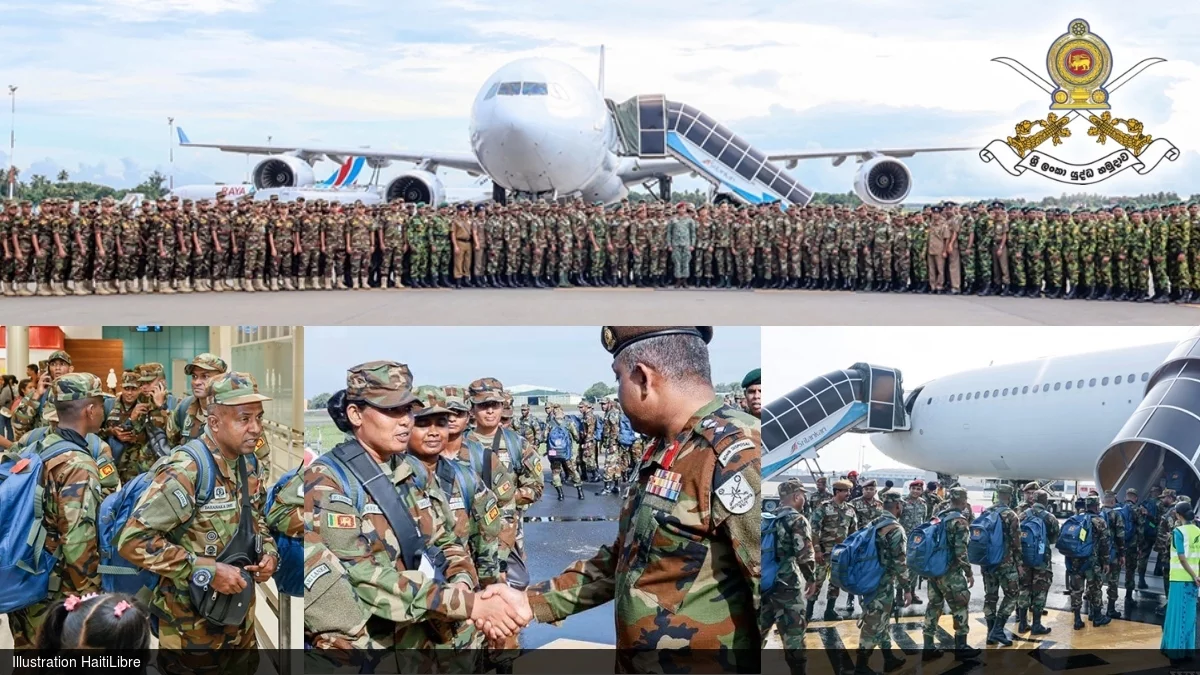
In a major step to scale up international security support for Haiti’s fight against rampant gang violence, Sri Lanka has dispatched two contingents totaling 498 military and special operations personnel to reinforce the Caribbean nation’s Gang Suppression Force (GSF) over a three-day window in mid-October 2026.
According to official statements from Sri Lanka’s Ministry of Defence, the second of the two deployments departed the South Asian nation on October 16. This contingent is made up of 173 regular army troops and 45 elite operators from Sri Lanka’s Special Task Force (STF), who are specially trained for counter-insurgency and organized crime operations. Their departure came just two days after the first contingent, consisting of 280 personnel including 21 commissioned officers and 259 enlisted service members, left for Haiti on October 14.
These new deployments expand Sri Lanka’s existing security contribution to Haiti, which already included a 300-strong contingent that arrived in the country in early July 2026. With the addition of the two new contingents, Sri Lanka’s total troop presence in Haiti now stands at 798 personnel, putting it well on track to meet its total pledged commitment of 1,120 troops to the GSF mission.
In a separate display of coordinated multilateral cooperation for the Haiti security initiative, the Sri Lankan Army also hosted and supported a 50-person advance contingent from the Bangladesh Army that transited through Sri Lanka en route to Haiti to join the same security mission. The Bangladeshi advance team arrived in Sri Lanka on October 15, and received full logistical support from Sri Lankan military authorities, including meals, overnight accommodation, ground transportation, and other critical essential services to facilitate their onward journey to the Caribbean. This collaborative logistics support highlights how regional partners are working together to advance shared global security goals in Haiti, where widespread gang activity has destabilized public order and displaced hundreds of thousands of civilians.
The international security deployment to Haiti, organized under a United Nations-backed mandate, aims to support the Haitian government in retaking control of territory held by violent criminal gangs, restore basic public services, and create the conditions for long-term political and economic stability in the crisis-stricken nation.