Starting September 1, public sector civil servants and equivalent employees in Suriname will receive an immediate 15% salary increase, following a joint announcement from the government and the country’s main trade union umbrella body, the Confederation of Suriname Trade Unions (CLO). However, the deal carries an unusual caveat: while unions do not oppose the payout of the raise, they have refused to accept the 15% figure as the final outcome of ongoing wage negotiations, leaving talks set to continue for an additional three months.
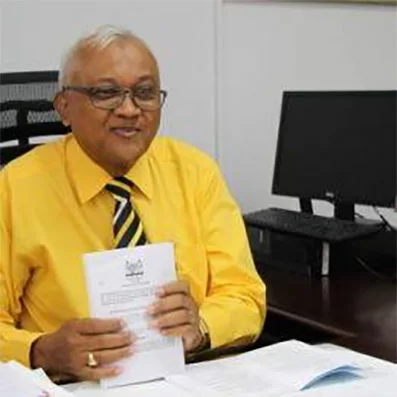
CLO President Michael Miskin clarified the unusual arrangement in an interview with local outlet Starnieuws, explaining that unions could not defend the 15% increase to their members when their original opening demands were far higher. To avoid any misunderstanding, the joint statement released by unions and the government explicitly confirms that no final collective agreement has been reached. “It would be wrong to create the impression that unions agreed to 15% after negotiations,” Miskin said. “We would have to answer to our members for a figure that is drastically lower than the demands we brought to the table.”
The gap between the government’s offer and union demands is substantial. The Ravaksur PLUS union tabled an initial demand for a 25% salary increase, while joint education unions called for a 400% rise, seeking an immediate minimum increase of 75% up front. Security sector unions have asked for 55% total, with an initial 25% first tranche. None of these demands come close to the 15% the government is currently willing to roll out, Miskin noted.
A core part of the interim arrangement is the establishment of a 15-member mixed working group, with 8 representatives from the government and 7 from the trade union movement. The group has been given a three-month mandate to develop further proposals on employment terms and sustainable long-term salary adjustments for public sector workers, cementing that negotiations are far from over. “The process continues,” Miskin emphasized. “This working group will work through all the remaining outstanding issues.”
Beyond public sector wages, unions have pushed for additional adjustments, including changes to Suriname’s tax brackets. Private sector union C-47 has specifically highlighted that workers outside the public sector do not benefit from the announced salary increase and also need urgent purchasing power support. Miskin added that the union movement remains committed to dialogue with the government to navigate the two-year transition period before projected oil export revenues begin to flow into the country’s budget, with all these broader issues set to be addressed by the joint working group.
Miskin stressed that signing the joint statement does not equal union acceptance of the 15% figure. “The statement only records what was agreed during consultations, including the creation of the working group and the government’s standalone decision to implement this increase. That is why we explicitly included language confirming no final agreement has been reached,” he explained.
The 15% increase will be rolled out in two installments to limit near-term inflationary pressure: 10% will be paid in September, with the remaining 5% following in October. The government chose the phased approach specifically to avoid triggering additional inflation, a choice unions have accepted while still maintaining that negotiations are not closed. This distinction explains why both sides were able to sign a joint statement that simultaneously confirms no final deal has been reached.
Suriname President Jennifer Simons confirmed the arrangement during a Thursday press conference, reiterating that the 15% increase takes effect September 1 and that negotiations will proceed as planned. “This is not a final agreement, we are still at the negotiating table,” Simons said, framing the immediate increase as a first step to address longstanding erosion of public sector pay.
Simons acknowledged that public sector workers have seen a significant decline in their disposable income over recent years, a situation the government is keen to remedy. At the same time, the administration is committed to avoiding overly large public spending increases that could put new pressure on the country’s exchange rate and reaccelerate inflation.
The President noted that the available fiscal space for the increase has been fully vetted and calculated in advance by the Ministry of Finance. “If this spending would disrupt the economy, I would not approve it,” she stated, adding that the government does not expect the 15% phased increase to generate meaningful inflationary pressure.