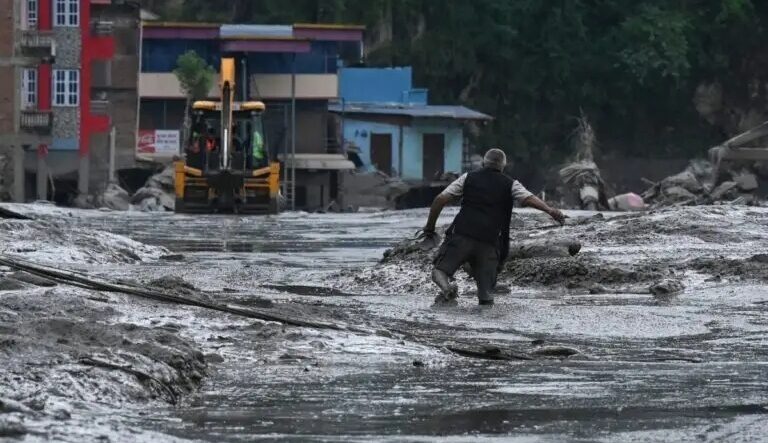
A catastrophic natural disaster has unfolded across the Nepal-Tibet border region, where flash floods and landslides triggered by a glacial collapse have left at least 362 people dead and more than 1,400 unaccounted for, as rescue crews pressed through muddy wreckage on Thursday in a frantic search for survivors.
The disaster unleashed a surging cascade of water, mud and rocky debris that scoured entire communities from the landscape. In its wake, homes were swallowed, critical infrastructure including bridges and dams was reduced to rubble, and countless vehicles were destroyed, leaving the region cut off and devastated.
Among those missing are hundreds of foreign travelers, a large group of whom are Hindu pilgrims who had just completed a journey to the sacred Mount Kailash in Tibet and were returning when the disaster struck. Official figures from Nepali police confirm 359 bodies have been recovered from the disaster zone, with 910 people still out of contact—including 517 foreign tourists. Chinese authorities have also confirmed that 100 Chinese citizens are among those missing in Nepali territory.
Across the border in Tibet’s Gyirong Port, Chinese state media reports three local fatalities, with an additional 558 people remaining missing, 260 of whom are foreign nationals.
Initial assessments briefly linked the event to a 4.4 magnitude earthquake, but the U.S. Geological Survey later clarified the disaster was initiated by a sudden glacial collapse, which sent a massive flow of ice and debris rushing down into populated valleys below.
Emergency response teams have deployed extensively across the affected areas. Nepali army units are working around the clock, using sniffer dogs to detect signs of life trapped beneath thick layers of mud and debris.
However, the threat of further catastrophe has not passed. Debris jamming the valley has created a natural dam, behind which water is steadily accumulating, raising urgent fears of additional flash floods downstream. Local authorities have issued urgent warnings to communities along the Bhote Koshi River urging extreme caution and preparedness for potential evacuation.
The disaster draws attention to a growing global risk tied to climate change. Rising global temperatures are accelerating glacial melt across the world’s mountain regions, steadily increasing the frequency and severity of glacial collapses and outburst floods from glacial lakes.