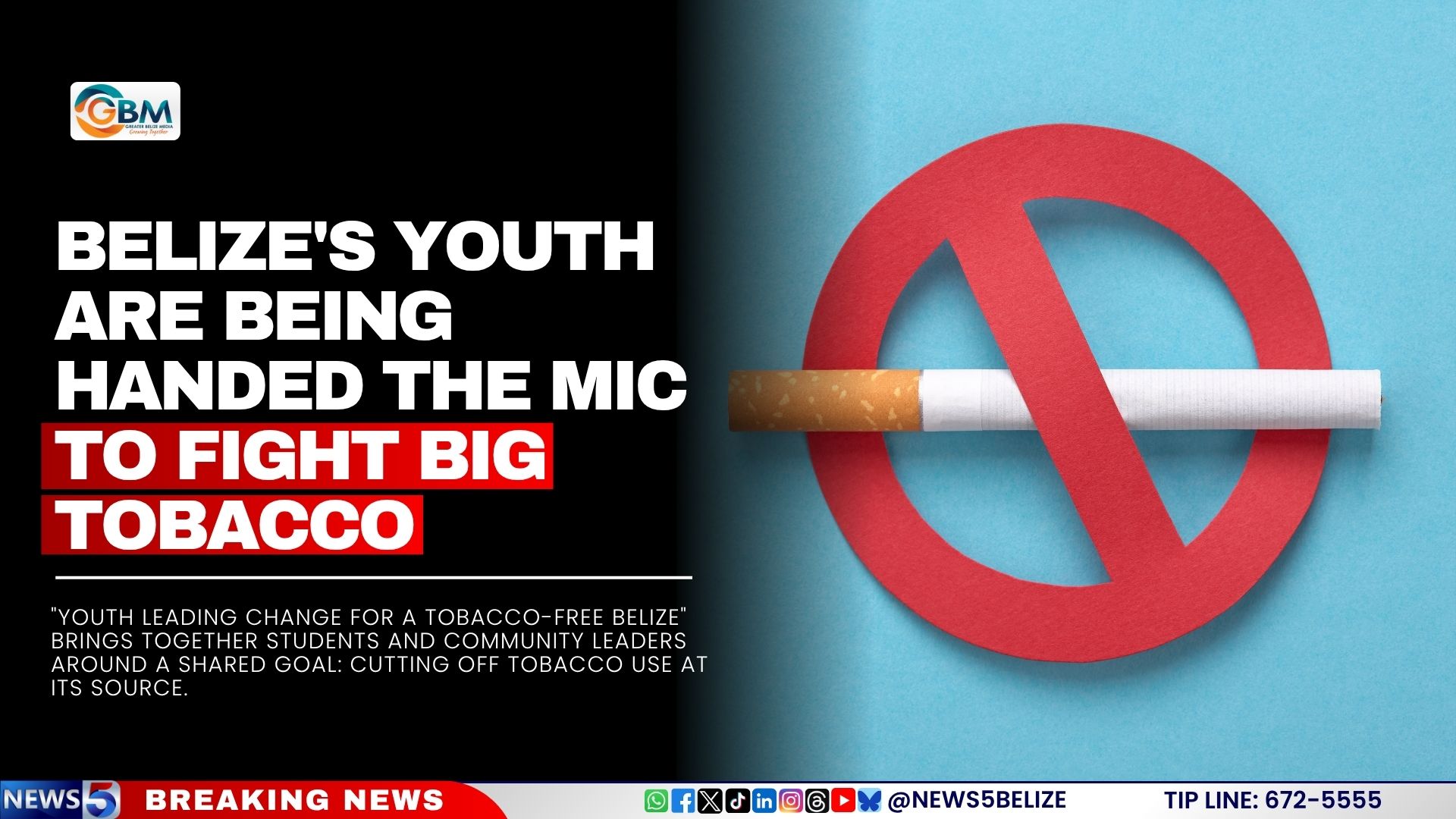
Across Central America, Belize has emerged as the site of a groundbreaking public health effort that flips the script on traditional tobacco control advocacy. Partnering together, the Belize Cancer Society and the Campaign for Tobacco-Free Kids have unveiled a new project that places young Belizeans at the center of the fight against big tobacco, with the core goal of stopping youth nicotine use before it becomes a lifelong habit.
Named “Youth Leading Change for a Tobacco-Free Belize”, the initiative unites high school and college students with local community organizers to tackle tobacco use at its root. Unlike top-down public health campaigns, this model empowers the demographic most at risk of tobacco industry targeting to design and lead advocacy efforts across the country.
Patricia Sosa, associate vice president of the Campaign for Tobacco-Free Kids, explained that the effort aligns with the World Health Organization’s Framework Convention on Tobacco Control, a landmark global public health treaty that has been ratified by 183 nations around the world. One of the coalition’s top local policy priorities is the adoption of a comprehensive ban on smoking in all indoor public spaces. Sosa emphasized that the proposal does not seek to outlaw tobacco products entirely or ban personal use in private residences; rather, it aims to reduce involuntary exposure to dangerous secondhand smoke for all Belizeans.
The intentional focus on youth leadership comes as public health experts document a deliberate shift in tobacco industry strategy. As the number of long-term older adult smokers declines globally, major tobacco companies have redirected their marketing efforts to recruit a new generation of young users, particularly through newer nicotine products such as e-cigarettes and vapes. Sosa noted that public health data confirms a stark trend: any person who begins smoking regularly before the age of 18 is far more likely to develop a lifelong nicotine addiction.
Compounding this risk, Sosa added, is the industry’s exploitation of digital platforms to reach young audiences. Tobacco and vape companies now use social media algorithms, micro-influencers, and hyper-targeted ad campaigns to connect with teens and young adults, flying under the radar of many traditional regulatory frameworks. This is precisely why young people must have a leading voice in anti-tobacco work, Sosa argued: external advocates cannot fully understand the tactics tobacco companies use to persuade youth unless they listen directly to the communities being targeted.
Kim Simplis Barrow, president of the Belize Cancer Society, added that the youth-centered initiative fits seamlessly into the organization’s core mission of cancer prevention. As the global public health community has repeatedly confirmed, tobacco use remains one of the leading preventable causes of cancer worldwide. “Tobacco is one of the main causes of cancer in the world, so this aligns squarely with the work that we do,” Simplis Barrow said.
Right now, the campaign’s long-term priorities and strategies are still being shaped by the young participants leading the movement. Through ongoing strategic planning workshops, young contributors are outlining what a tobacco-free Belize should look like, and what steps the advocacy movement should take to get there. “We have a number of young people in the room who will be guiding this campaign,” Simplis Barrow explained. “It’s youth engagement, for them to give us the direction in which they want to see a smoke-free Belize.”