A strong rule of law is not built on empty rhetoric about judicial independence. It is reinforced when the judiciary has enough qualified judicial officers, those officers can carry out their work free from external pressure, and the state guarantees proper working and compensation conditions. At a moment when tensions between branches of government are already running high in Suriname, an entirely avoidable crisis is now looming over the expansion of the country’s judicial system.
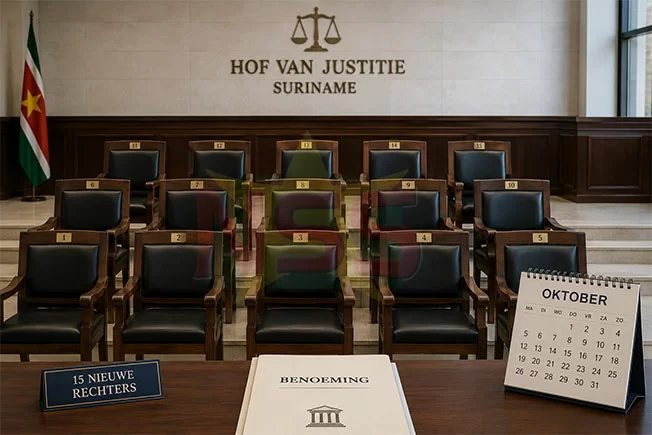
Fifteen new judges have already been selected from a pool of 75 applicants. After completing a costly, rigorous RAIO training program, these candidates are fully prepared to assume their judicial duties. They have even been assigned to court rosters for sessions scheduled to begin in October. However, their formal presidential appointment has not been finalized, and no definitive agreement has been reached on their compensation packages.
These new judges are urgently needed to strengthen Suriname’s overstretched judiciary, cut through crippling case backlogs, and reduce unsustainable workloads for sitting judges. Vice President Gregory Rusland informed the National Assembly that he signed the official notification letter on July 30 to clear the way for preparations to deploy the new judges starting in October, a move that suggested the process was nearly complete. But the critical presidential decree required to formalize their appointments has not yet been issued.
Simultaneously, Suriname’s parliament is debating a proposed amendment to the Judicial Financial Provisions Act, which aims to overhaul the country’s controversial existing system of base salaries, periodic pay increases, and benefits. While all parties agree that reform is necessary, negotiations have stalled over the exact structure of the new compensation framework. Ideally, clarity on this issue would have been reached before the 15 new judges were selected and trained, leaving candidates to wonder what financial terms they will face when they start their judicial careers.
Proposed base salaries for the new judges range from 60,000 to 80,000 Surinamese dollars, a figure that does not include additional benefits and allowances that make up total income. Even so, the base salary level matters. Society expects judges to uphold independence, integrity, legal expertise, and impartiality; they are granted the power to rule on citizens’ freedom, property, and fundamental human rights. A fair, dignified employment status is a non-negotiable requirement for upholding these standards.
This question of judicial compensation is particularly urgent as Suriname stands on the cusp of major oil and gas development. International energy companies, global financial institutions, top law firms, and other private sector actors are already competing to hire highly qualified Surinamese legal professionals. If the state invests significant public funds to select and train 15 skilled judges, but fails to offer them competitive, attractive employment terms, it should not be surprised if the private sector lures these new jurists away. That would leave public investment wasted and the judiciary still short of the judges it desperately needs.
Time is running out fast. The National Assembly is scheduled to enter recess on September 3, and the original plan called for debating and passing the Judicial Financial Provisions Act amendment before recess begins. With the limited time remaining and ongoing negotiations still required to resolve disagreements, meeting that deadline looks increasingly unlikely. This creates a deeply problematic situation: 15 judges have been fully trained, the judiciary recognizes their urgent need, they are scheduled to start work in October and already assigned to court rosters, but their formal appointments and compensation terms remain unresolved.
No one disputes that the excesses of the current compensation system need correction. The explanatory note to the proposed amendment explicitly states that the reform is intended to prevent the total compensation of senior magistrates from exceeding that of the President of the Republic. But correcting past excesses does not require swinging to the opposite extreme. A balanced middle ground is achievable: a fair, transparent compensation structure that matches the responsibility and independence of the judicial role, without letting periodic increments and benefits accumulate uncontrollably.
The executive branch, parliament, and judiciary must break this deadlock immediately. This issue is not a suitable arena for political power games: too much is at stake for Suriname’s rule of law. If the 15 new judges are needed to start work in October, their appointments and employment terms must be finalized properly and on time.
October is rapidly approaching, and the 15 trained candidates are ready to serve. All the preliminary procedural steps to add them to court rosters are complete, but disagreements over their starting terms continue to hold up the process. Much of the chaos surrounding leaked drafts and unsubmitted draft amendments ultimately boils down to disagreements over funding.
But funding disagreements should not be allowed to prevent 15 urgently needed judges from taking office on time. Suriname’s rule of law is far too important to be put at risk over this avoidable impasse.