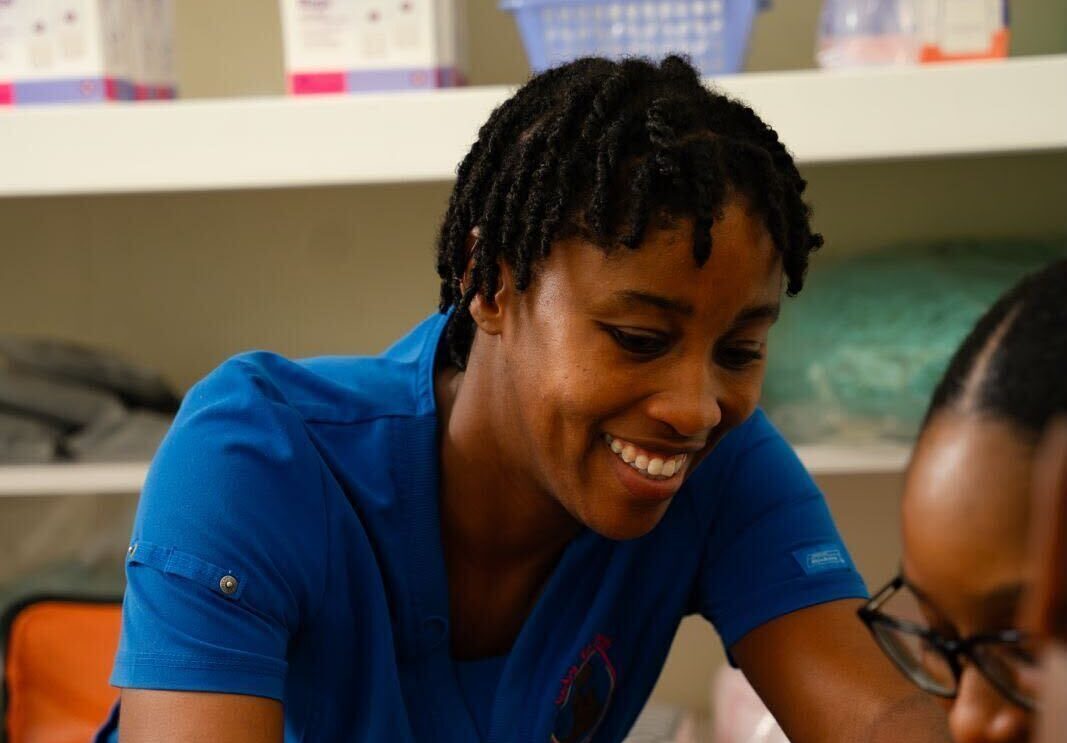
Every public health guideline around the globe touts breastfeeding as one of the most impactful ways to set an infant up for lifelong health. Packed with tailored nutrients that evolve as a child grows and antibodies that fend off common childhood infections, breast milk offers unmatched nutritional and immune support. The World Health Organization (WHO) currently recommends exclusive breastfeeding for the first six months of life, followed by continued breastfeeding alongside complementary foods until a child reaches two years of age or older. But turning these evidence-based recommendations into reality is far more complex than public messaging often makes it seem, according to certified breastfeeding specialist Sherylann James of Baby to Breast Lactation Services.
For most new mothers, breastfeeding comes with a steep learning curve and a host of unexpected challenges: persistent nipple pain, constant anxiety about milk supply, fragmented sleep, round-the-clock feeding sessions, and the added strain of navigating postpartum emotional upheaval. For infants, meanwhile, breastfeeding is far more than just a source of nutrition – it is a connection that delivers warmth, comfort, and the foundational sense of security that comes from closeness to their mother. James emphasizes that one single factor determines whether this experience feels manageable or completely overwhelming for a new mother: access to targeted, personalized support.
James notes that the vast majority of mothers she works with begin breastfeeding for a straightforward, heartfelt reason: they want to give their child the healthiest possible start. But she stresses that promoting the benefits of breastfeeding should never translate to shaming or judging women who choose an alternative feeding method, such as formula. “If a mother has decided she’s going to formula feed, I am not going to crucify her,” James says. Instead of passing judgment, she argues, care providers and loved ones should seek to understand the factors that led to that choice, which can range from a previous traumatic breastfeeding experience and persistent concerns about low milk supply to the need to return to work shortly after giving birth.
It is well-documented that breastfeeding delivers wide-ranging health benefits for both parent and child. Beyond protecting infants from common illnesses and infectious diseases, breastfeeding reduces a mother’s long-term risk of developing both breast and ovarian cancer. Financially, breastfeeding also typically costs less than purchasing formula, though James pushes back against the common claim that breastfeeding is “free.” That framing ignores the significant time, energy, and often out-of-pocket costs that breastfeeding requires – including expenses for pumps, milk storage supplies, nursing apparel, and specialized lactation support. As of 2024, a single can of Similac Sensitive formula costs $35.61 Eastern Caribbean dollars at local Saint Lucian retailers, a major expense for many families that underscores the financial tradeoffs of different feeding choices.
For many mothers, the greatest draw of breastfeeding is the emotional bond it fosters. Repeated close skin-to-skin contact during breastfeeding has been linked to higher rates of breastfeeding initiation and longer duration, and the WHO notes that infants who receive early skin-to-skin contact cry less and interact more confidently with their mothers. This built-in comfort also explains a common observation that often leaves new mothers confused: infants frequently want to nurse even when they are not hungry. James explains that this behavior is biologically normal, rooted in the nine months infants spend fully dependent on their mother’s body in utero. After birth, that deep connection does not disappear overnight – when an infant is uncomfortable, tired, overstimulated, or simply overwhelmed, nursing provides a predictable source of calm that reminds them of that safety. “They’re still looking at themselves and their mother being one,” James explains of the mother-baby breastfeeding dyad. This means breastfeeding does not only serve to satisfy hunger – it is a source of comfort and regulation for infants, and a baby wanting to nurse more frequently does not automatically mean a mother has low milk supply. Increased nursing can happen during growth spurts, or simply be a request for closeness – understanding this distinction can cut down on a great deal of the anxiety new mothers experience.
One of James’ biggest areas of advocacy is clearing up the widespread misinformation that leaves many mothers feeling like they are failing at breastfeeding. She rejects rigid, one-size-fits-all rules such as requiring babies to nurse for a set number of minutes on each breast. “If somebody is telling you your baby is supposed to breastfeed for half an hour on each side, that’s misinformation,” she says. She compares this to forcing an adult to eat for a set amount of time regardless of whether they are full or still hungry – it ignores the individual needs of the child. The same logic applies to strict feeding schedules, she argues. “One of the most important things is to learn your baby,” she says. “When you learn your baby, you start to notice their cues, their hunger cues, their sleepy cues.” This approach aligns with WHO guidance, which recommends responsive feeding based on an infant’s individual cues rather than enforcing universal timelines. Clearing up this misinformation can dramatically change how a mother experiences breastfeeding: if a woman believes she has to nurse for an hour every two to three hours, it is easy to feel like feeding has taken over her entire life, but learning to read her baby’s unique signals makes the experience far more manageable.
The mental health impacts of breastfeeding require nuanced discussion, James says. It is not uncommon for breastfeeding to feel exhausting: mothers may feel constantly needed, experience persistent pain, and feel overwhelmed by a baby who always wants to nurse. But James warns against blaming breastfeeding itself for postpartum mental health struggles. All postpartum women experience massive physical, hormonal, and emotional shifts, regardless of whether they breastfeed, pump, combination feed, or formula feed. Where breastfeeding becomes uniquely stressful is when a mother lacks adequate support during this already vulnerable period. “When there’s no support, it’s a lot more pressure on a mother who is trying to breastfeed,” she notes. Even so-called “help” can often do more harm than good: some mothers are repeatedly told their milk supply is insufficient and pushed to introduce formula, while others are pressured to continue breastfeeding at all costs even when they are dealing with unaddressed pain or other complications. In both cases, the mother’s actual concerns go unheard. Unsolicited advice that offers no practical, skilled support just adds unnecessary pressure, James explains, arguing that breastfeeding stress is rarely just about breastfeeding itself – it is shaped by broader expectations, life circumstances, and the level of support a mother receives. This applies to the common experience of feeling “touched out” or constantly demanded of by a nursing baby, which can stem from a mix of the baby’s needs and the mother’s competing responsibilities, from household work to employment – there is no one-size-fits-all explanation or solution.
One of the most extraordinary characteristics of breast milk is its ability to adapt to the changing needs of the mother and child over time. From the nutrient-dense colostrum produced in the first days after birth to transitional and mature milk, breast milk evolves over the course of lactation. Its immune components also shift in response to illness in the mother-infant pair. James notes that pumping mothers often notice visible changes in their expressed milk when their baby is sick: “When there’s interaction between the mother and the baby while the baby is not well, or sometimes even when mommy is not well, the milk will, the body will start to make the changes, send more antibodies to fight whatever the infection is or the illness is,” she explains. While the science is more complex than popular framing that claims a mother’s body instantly “detects” a baby’s illness and produces a perfectly matched remedy, multiple studies confirm this adaptive immune response. Research has found that levels of leukocytes (infection-fighting white blood cells) in mature breast milk increase dramatically when either the mother or infant has an infection, and return to baseline once the infection clears. These findings support the common description of breast milk as a living biological substance, not just food.
While the physical work of breastfeeding falls exclusively to the mother, James emphasizes that this should not mean the responsibility of postpartum and infant care falls to her alone. Many partners assume they cannot contribute meaningfully because they cannot breastfeed, but James says there are countless ways to be involved: partners can do skin-to-skin contact, burp the baby after feeds, change diapers, store pumped milk, and handle other infant care tasks to give the mother a break. But open communication is critical: what a partner thinks is supportive may not match what the mother actually needs. For example, a partner may focus on doing household chores like cooking and laundry to reduce the mother’s workload, while the mother may desperately need more hands-on help with the baby itself. Conversely, some well-meaning partners who strongly support breastfeeding may turn their encouragement into pressure for a mother who is already struggling. James says there is no universal list of helpful actions – what matters is that the people around a mother listen to her specific needs and provide meaningful support that aligns with what she actually wants, whether that comes from a partner, family member, or other loved one.
For many Saint Lucian mothers, the biggest challenges of breastfeeding extend beyond the home into the workplace, where individual determination is rarely enough to make continued breastfeeding feasible. A mother may be fully committed to breastfeeding, but face a job where expressing milk is impractical – for example, a security guard stationed at an outdoor post with no opportunity to take regular pumping breaks. Even in traditional office settings, workplace culture, job demands, and management attitudes determine whether a woman can realistically take enough time to pump, and many women are forced to choose between keeping their job and continuing to breastfeed. Even when formal break times are provided, that short window is often needed for eating, using the bathroom, and other basic needs, leaving no time for pumping. James argues that relying on individual employers to voluntarily accommodate breastfeeding mothers is not enough – systemic change is needed. “I think it really needs to be an actual policy put in place,” she says. She calls for stronger legal protections for pumping breaks for working mothers and extended maternity leave, advocating for a minimum of six months of paid leave to allow mothers to breastfeed as recommended.
Her arguments raise a critical question for Saint Lucia: if public health messaging encourages women to follow global breastfeeding guidelines, are the social, workplace, and policy systems in place to make that goal realistically achievable for women who want to breastfeed? James repeatedly circles back to one core message: successful breastfeeding depends on support, not pressure or guilt. Public conversations around breastfeeding too often become moralized, leaving women who use formula feeling like failures, women struggling with low supply facing constant unsolicited criticism, and women dealing with unaddressed pain being told to just push through without getting the help they need. James says mothers need evidence-based, accurate information to make informed decisions about their feeding choices, and she calls for a cultural shift in Saint Lucia away from the harmful attitude that “if I endured it, you should too.” While she acknowledges that local maternal and child health has seen progress in recent years, there is still significant room for improvement.
At its core, breastfeeding cannot be examined in isolation from the broader context of a mother’s life. It is connected to postpartum physical and mental health, family support structures, employment policies, maternity protections, access to qualified lactation care, and the accuracy of information women receive before and after birth. National Breastfeeding Month is an opportunity to celebrate the unique gift a mother’s body can give her child, but celebrating the benefits without addressing the barriers that make breastfeeding so stressful for many women ignores the real work that mothers do. Breastfeeding does not happen in a vacuum: most new mothers are simultaneously healing from childbirth, learning their baby’s cues, coping with fragmented sleep, adjusting to massive hormonal shifts, worrying about milk supply, and preparing to return to work – all at the same time.
The key question we should be asking this Breastfeeding Month is not just whether more mothers are breastfeeding. It is whether society is doing enough to make breastfeeding possible for women who want to do it, without forcing them to endure unnecessary pain, misinformation, loneliness, and pressure. In Saint Lucia, this conversation stretches from hospital maternity wards to family homes, from office workplaces to national policy chambers. Perhaps the most important takeaway this Breastfeeding Month is this: supporting breastfeeding starts with supporting mothers.