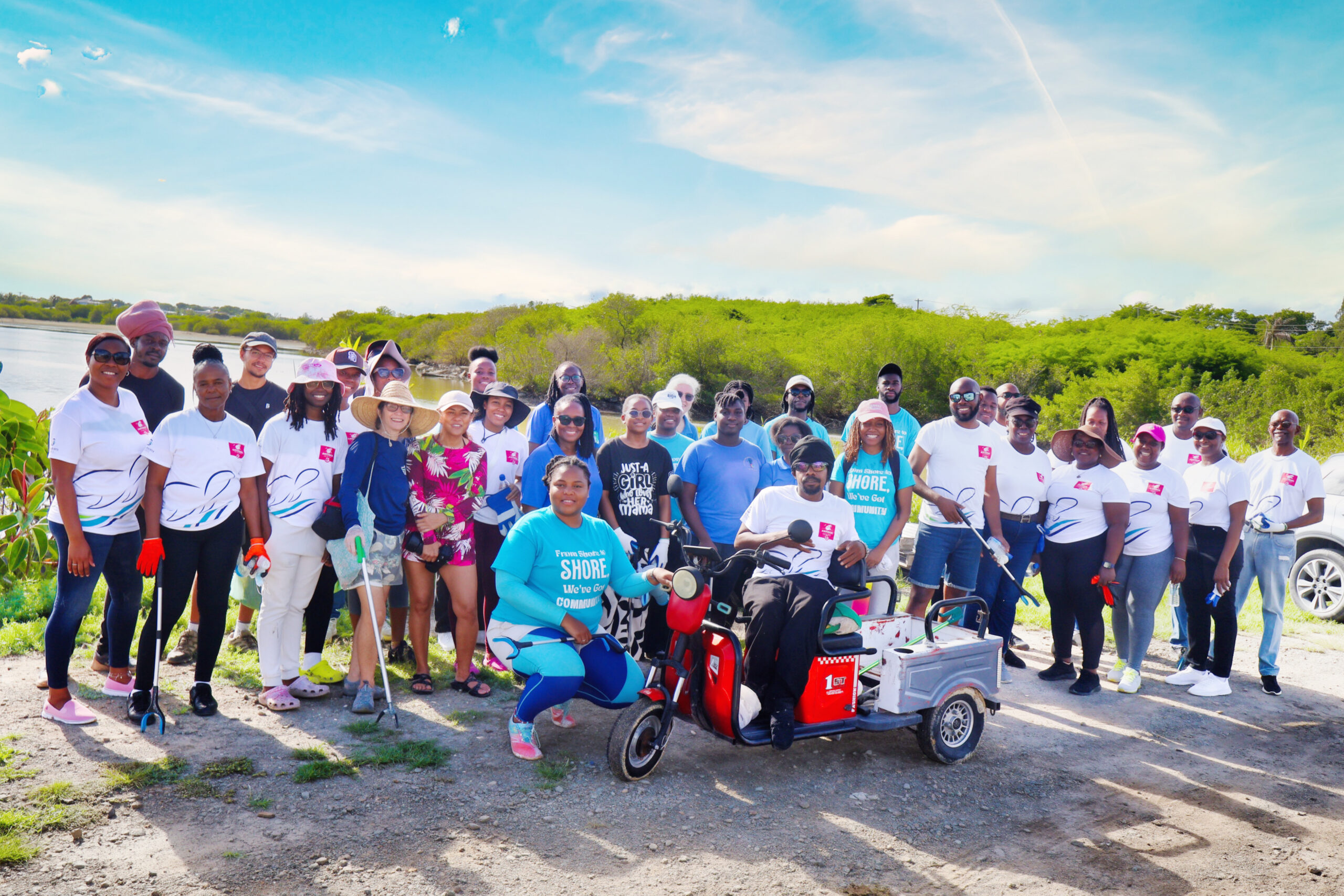
A community-led environmental initiative has made major progress in restoring one of Antigua and Barbuda’s critical coastal ecosystems, with the EcoShores Sustainable Futures Network (ESFN) announcing that its “Do It Twice” cleanup campaign has pulled 2,156 pounds of accumulated waste from McKinnons Wetlands.
This second major cleanup follows an initial 462.8-pound waste collection held last September for International Coastal Cleanup Day, bringing the total volume of waste removed from the ecologically sensitive site to more than 2,618 pounds across both events. More than 50 local volunteers joined forces with corporate, non-profit and government partners to pull waste from the wetland, with participating organizations including Antigua Cruise Port, CIBC Caribbean, the Antigua and Barbuda Agricultural Forum for Youth (ABAFY), the Antigua and Barbuda Girl Guides Association, IHO Nature Rangers, CANARI, and the Critical Ecosystems Partnership Fund, alongside independent members of the general public. The successful effort underscores the tangible impact of collective community action to preserve Antigua and Barbuda’s unique coastal and wetland landscapes.
Volunteers retrieved a diverse array of discarded materials from the wetland ecosystem, ranging from small plastic debris and clothing to coconut shells, car mats, and bulk household and industrial waste. The cleanup revealed the deep extent to which large, heavy waste items and plastic pollution have become embedded in the wetland’s soils and vegetation over years of accumulation. Among the most problematic finds were full-size bed frames, mattresses, and household stoves — items too large for volunteers to remove manually, requiring specialized heavy-duty equipment and additional resources to extract safely without damaging the surrounding ecosystem. To address these remaining large waste items and continue advancing McKinnons Wetlands restoration, ESFN is actively seeking new partnerships and additional support from stakeholders across the region. Volunteers also encountered the remains of deceased animals that had been discarded in plastic bags within the wetland.
ESFN has publicly thanked the National Solid Waste Management Authority for its critical support of the initiative. The government agency collected more than 100 bags of sorted waste and large items for proper, regulated disposal at the local landfill, a contribution that streamlined cleanup operations across both weekends of community service.
While the volume of waste already removed represents a significant win for ecosystem protection, the campaign also highlighted that full restoration of McKinnons Wetlands will demand long-term, sustained action. Over decades of accumulation, embedded waste becomes intertwined with native wetland plants and soil, making removal far more difficult and resource-intensive over time. This reality underscores the urgent need for upstream waste prevention strategies to stop pollution from reaching sensitive ecosystems in the first place, rather than only addressing it after it has caused damage.
For ESFN, the “Do It Twice” Campaign is far more than a one-off cleanup effort. It is a core component of the organization’s broader mission to advance environmental education, youth empowerment, community-led climate action, sustainable agriculture, and the recognition of wetlands as essential natural infrastructure that supports both people and wildlife.
Wetlands deliver a wide range of irreplaceable ecosystem services: they provide critical breeding, feeding, and nesting habitat for native wildlife, support pollinator populations that underpin local food security, and act as natural flood management infrastructure that helps communities absorb excess water during heavy rainstorms and tropical cyclones. Protecting and restoring these spaces therefore directly advances three interconnected goals: biodiversity conservation, increased community climate resilience, and long-term sustainable development for small island states like Antigua and Barbuda.
ESFN continues to open invitations to all interested organizations, businesses, community groups, and individual members of the public to contribute to ongoing work across the region. Stakeholders can support ongoing efforts through donating resources, heavy equipment, specialized expertise, or volunteer time for wetland restoration, mangrove replanting, environmental education programming, and future cleanup activities.
As Antigua and Barbuda prepares to host civil society delegates from all 56 Commonwealth countries for the Commonwealth Heads of Government Meeting (CHOGM) and the accompanying Commonwealth People’s Forum, the successful McKinnons Wetlands cleanup serves as a powerful reminder that global environmental progress depends on local, grassroots action. ESFN emphasizes that work to protect communities, restore damaged ecosystems, and strengthen environmental resilience is already underway in Antigua and Barbuda, even as it aligns with shared global climate and conservation goals across the Commonwealth network.
Across coastal communities, the campaign has proven that collective action delivers the strongest, most lasting environmental impact. ESFN reiterated its gratitude to all volunteers, partner organizations, and community members who donated their time, resources, and energy to the cleanup, and remains open to ongoing support for the protection and restoration of McKinnons Wetlands, Spencer’s Bay, and other critical ecosystems across Antigua and Barbuda.
The campaign closes with the rallying cry: *From Shore to Shore, We’ve Got Community.*
### About EcoShores Sustainable Futures Network
ESFN is a non-profit organization focused on advancing sustainability, environmental conservation, and community empowerment across Small Island Developing States (SIDS). The organization addresses pressing regional challenges including climate justice, biodiversity loss, youth development, green technology innovation, and environmental education, and runs a range of community programs including the ESFN Volunteer Explorer Program, World Wetlands Day awareness initiatives, the Build Your Future Financial Literacy Programme, the Community Swim Program, and the *Endeavour* publication.