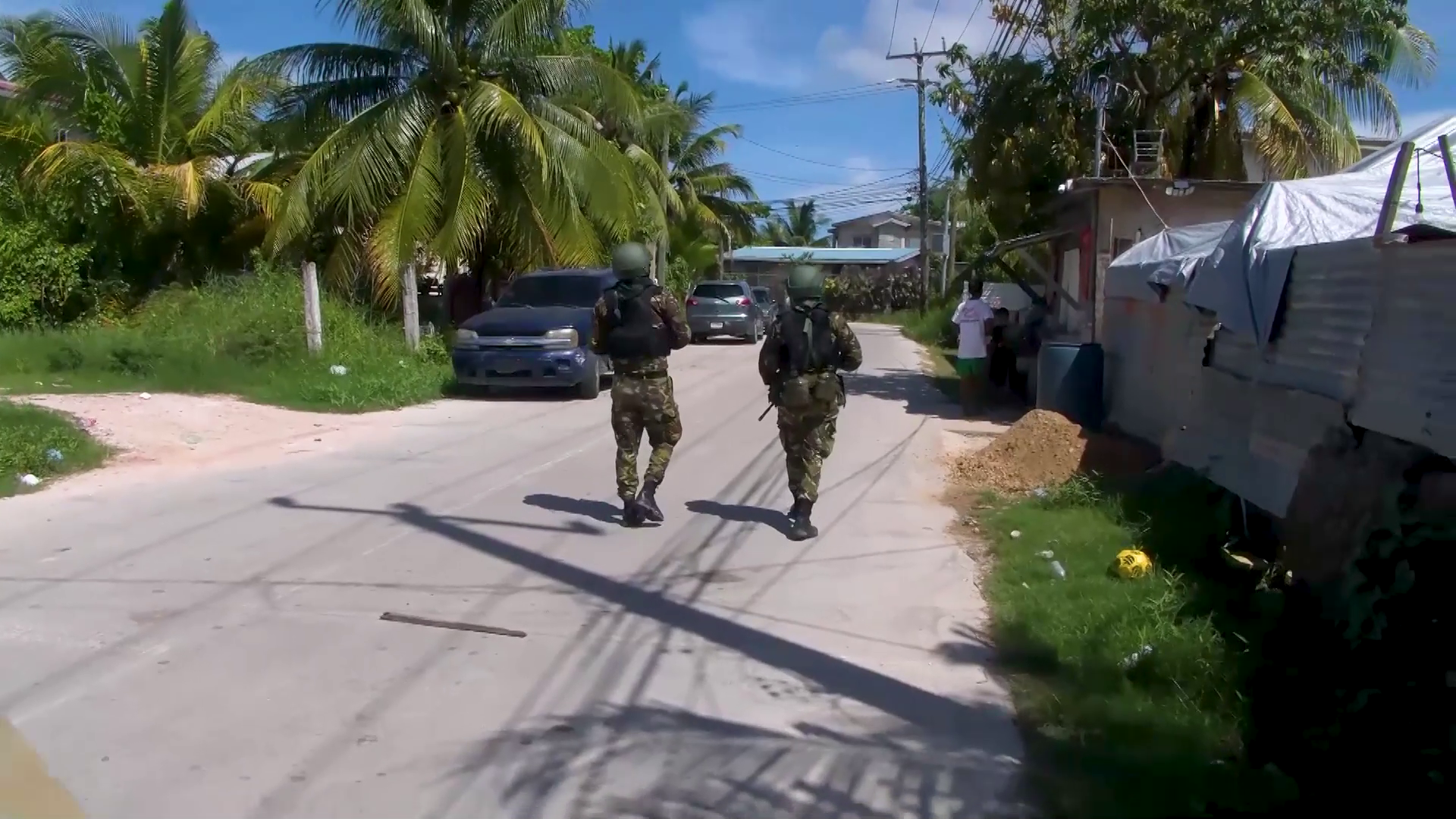
Across the urban landscape of Belize City, armed military personnel, paired with police patrols and fixed security checkpoints, have become a increasingly noticeable presence in recent weeks, sparking widespread public speculation about whether a major new security initiative or a state of emergency has been quietly implemented. But top officials from Belize’s national security apparatus have moved quickly to dismiss those rumors, framing the expanded military presence as nothing more than standard operational support for overstretched local law enforcement teams.
Francis Usher, Chief Executive Officer of the Ministry of National Defense, confirmed in an official briefing that no state of emergency has been declared, and that the deployment of the Belize Defense Force (BDF) and the Belize Coast Guard is part of a long-standing inter-agency cooperation framework to maintain public safety. Beyond the visible infantry soldiers patrolling city streets, Usher explained that uniformed personnel from the Belize Coast Guard are also contributing to security efforts, most notably manning checkpoints along the busy George Price Highway during evening hours when criminal activity tends to spike.
When pressed for additional details on the scope of operational involvement beyond ground patrols, Usher declined to share specific tactical information, but confirmed that both the BDF and Coast Guard are supporting civilian police in a range of unpublicized roles, not just visible street presence. “Our core mission right now is to backfill the police department and support the entire nation,” Usher stated. “Should any crisis emerge that demands additional personnel, our forces are fully prepared and ready to deploy at a moment’s notice.”
Reporters also questioned Usher on how the military selects and rotates personnel for urban street deployments, a mission that differs significantly from the traditional combat and border defense training that most BDF soldiers receive. Usher explained that the force relies on a structured rotation system drawing from both active infantry companies and support units based at Price Barracks. To maintain a consistent 24/7 operational tempo with roughly 20 soldiers visible on city streets at any given time, the total deployment requires between 60 and 80 personnel overall. The rotation cycle splits troops into four groups: those actively on patrol, those waiting to relieve active patrols, those resting ahead of their next shift, and those on scheduled stand-down to avoid burnout.
Despite the official framing of the deployment as routine support, the deployment of military personnel on domestic city streets has drawn internal critique within the BDF. Some service members have pushed back on the mission, noting that their core training focuses on external military operations, not community policing and interactions with civilian residents, raising questions about long-term force posture for domestic security missions.
This report is adapted from a transcribed recording of a live evening television newscast, with all non-standard language from speakers transcribed per official spelling conventions.