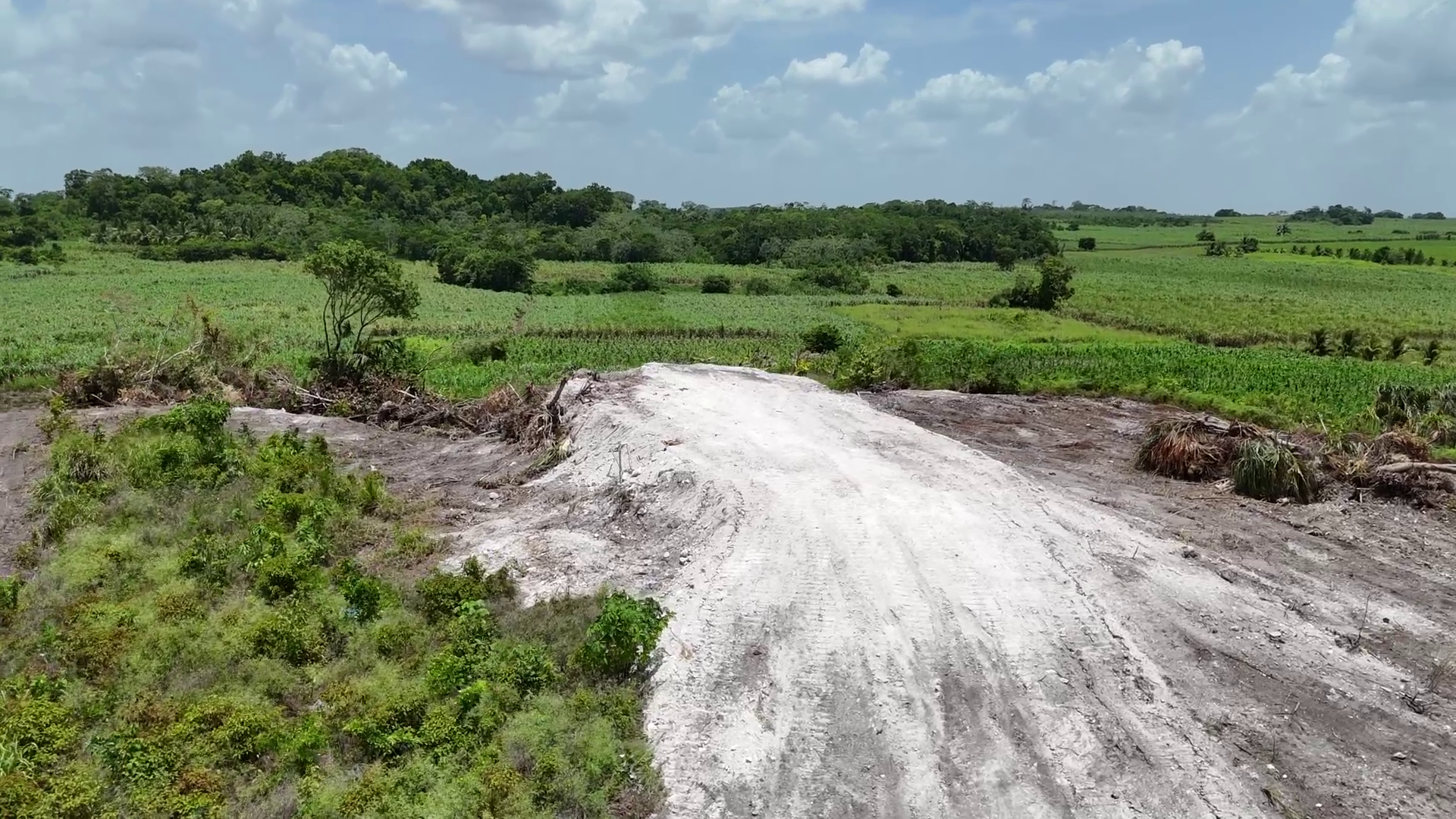
On the northern edge of Belize, just a short distance from Guinea Grass Village, lies El Pozito — an archaeological site holding irreplaceable remnants of the ancient Maya civilization that once dominated this region. For years, the tight-knit agricultural community of Guinea Grass pinned substantial hopes on this patch of land, envisioning a future where conservation of the site would unlock sustainable economic opportunity, much like it had for neighboring communities with well-preserved heritage sites. That vision has been completely destroyed, leaving residents reeling from shock and anger as authorities launch an investigation to identify those responsible for the damage.
Guinea Grass Village Chairman Benito Uk explained that the harm to El Pozito was discovered earlier this month by a team of archaeological researchers conducting routine site checks. The site sits surrounded by sugarcane fields, with a recently sold nearby parcel of land owned by Mennonite farmers adding to the context of ongoing land activity in the area. What makes the destruction even more devastating for locals is that just one month prior, stakeholders including representatives from Belize’s Institute of Archaeology and a research team from the College of East Texas had gathered with villagers to outline a development plan. The proposal laid out how proper preservation and sustainable tourism development at El Pozito would deliver long-term benefits to the entire community, creating new jobs and alternative income streams beyond the village’s traditional reliance on agriculture.
The potential of this vision was already proven just a short distance away at the Lamanai archaeological reserve, managed by the Programme for Belize. Edilberto Romero, the organization’s executive director, noted that the Lamanai model demonstrates how protected heritage sites can transform local economies. Each year, the reserve injects more than $1 million into surrounding communities through employment, tourism revenue, scholarship programs, and sustainable timber operations. Most of the reserve’s staff are hired directly from nearby villages, creating a cycle of shared benefit that has lifted livelihoods while preserving cultural heritage. That same opportunity was expected to come to Guinea Grass through El Pozito — until the destruction.
Beyond economic loss, the damage to El Pozito represents a profound cultural blow to all Belizeans. The Northern Maya Association of Belize released an official statement Wednesday condemning the destruction, emphasizing that El Pozito is far more than a collection of ancient ruins: it is a living connection to Maya ancestors, a critical educational resource for future generations, and a core part of the shared national cultural inheritance of all Belize. Uk stressed that the destruction was no innocent accident. The site is clearly marked as protected crown land reserved for archaeological use, and every resident of the area has long been aware of its protected status. “Those responsible did not just damage rocks and old structures,” Uk said. “They robbed an entire community of its future.”
Uk is calling on local residents to come forward with any information that could help law enforcement identify and hold accountable those responsible. The case also shines a light on longstanding systemic vulnerabilities that put Belize’s cultural heritage at risk. For years, conservation advocates have pushed for stronger protections for El Pozito, but successive governments have transferred surrounding land parcels to political supporters in Guinea Grass and nearby August Pine Ridge, leaving the core archaeological site exposed to incremental encroachment and damage.
This report was compiled by Shane Williams, News Five, from northern Belize.