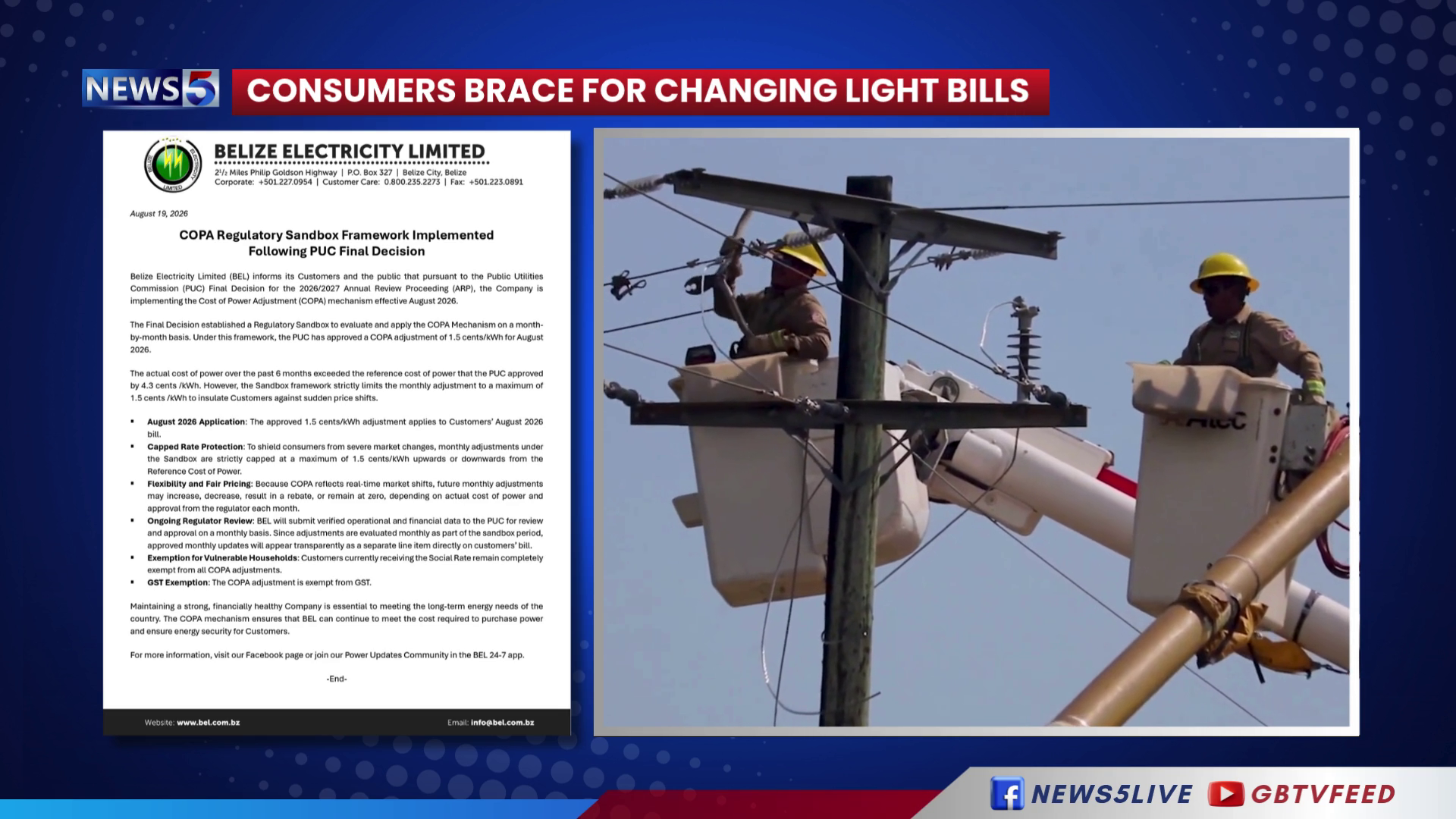
As of August 2026, all Belizean electricity customers except low-income social rate users will see a new variable charge line item on their monthly bills from Belize Electricity (BEL), following approval from the nation’s Public Utilities Commission (PUC). The new mechanism, called the Cost of Power Adjustment (COPA), is being rolled out under an innovative regulatory sandbox framework, with an initial charge set at 1.5 cents per kilowatt-hour for the first billing cycle. The charge was introduced to address a growing gap between the regulated base electricity rate and actual power generation costs, which BEL reports ran 4.3 cents per kWh higher than the approved reference price over the preceding six months. To soften the immediate impact on household budgets already strained by high living costs nationwide, the PUC has capped any monthly rate increase at 1.5 cents per kWh, preventing what would have been a far steeper jump in consumer bills this cycle. Under the terms of the new framework, the COPA adjustment is not fixed: each month, it will be recalculated to reflect actual changes in global fuel costs, supply chain expenses, and other variable inputs that impact power generation pricing. Depending on market conditions, the adjustment could increase, decrease, be eliminated entirely, or even result in a credit issued to consumers, pending formal approval from the PUC each billing cycle. BEL officials emphasize that the new monthly adjustment system is designed to serve two core goals: maintaining the utility’s long-term financial stability while shielding consumers from the far more disruptive sudden large price hikes that come from delaying cost adjustments over multiple years. The company also added that the COPA charge is exempt from the national Goods and Services Tax, and low-income households enrolled in the social rate program will not be subject to the new charge at all. Despite these safeguards, the new pricing model has left many ordinary Belizean consumers with pressing concerns. With the national economy already facing high living costs, households are questioning what the new monthly variable charge will mean for their long-term energy budgets, and whether the system will deliver on promises of greater transparency or simply normalize constant, unpredictable increases to a core household expense. The rollout of COPA has sparked broader public debate: is this a pragmatic, flexible approach to managing volatile energy costs that protects both the stability of Belize’s power grid and consumers from sudden shock, or is it another unplanned financial burden that shifts market risk directly onto the shoulders of ordinary households already struggling to make ends meet? This report is a transcribed excerpt from an evening television newscast, with Kriol language portions transcribed per standard spelling conventions.