As Dominica pours one of the largest capital investments in its national history into expanding global connectivity, a growing contradiction threatens to undermine the island nation’s most ambitious development goal. During this month’s national budget address, government officials confirmed that construction of the long-awaited new international airport remains on schedule for completion in the second quarter of 2028. Already, more than 400 local Dominican workers are employed on the project, with runway construction crossing the 60% completion threshold. An additional EC$250 million has been earmarked for the initiative in the coming fiscal year, cementing its status as the cornerstone of the country’s national development strategy.
Finance Minister Irving McIntyre has framed the airport as a catalyst for broad-based growth, projecting it will draw increased international visitor volumes, expand export capacity, attract new foreign direct investment, and unlock economic opportunity for all Dominican citizens. This vision is strategically sound — yet it sits alongside a growing, underdiscussed challenge that puts that progress at risk.
While Dominica invests billions to open its borders and boost global mobility for people and trade, growing U.S. entry restrictions have severely limited international travel access for a large share of Dominican passport holders. A gleaming, world-class runway can only enable connection if the passports carried by Dominican citizens are trusted to grant access to global markets and destinations. This reality frames the ongoing public debate over Dominica’s Citizenship by Investment (CBI) program as far more than a dispute over government revenue, real estate development or partisan politics: it is a fight for the international credibility and travel rights that every native Dominican is entitled to.
The human cost of strained passport credibility is already emerging. In June, prominent Dominican hotelier Gregor Nassief — recently elected president-elect of the Caribbean Hotel and Tourism Association — revealed that his application to renew his U.S. travel visa had been rejected. Though his existing visa remains valid through August, Nassief has raised urgent alarm over the broader impact of tightened U.S. restrictions on Dominican students seeking overseas education, patients accessing medical care, separated families, local entrepreneurs, tourism industry leaders, and the future of regional air connectivity.
Nassief’s case carries unique weight: a leading Dominican business leader tapped to helm a top regional tourism body now faces uncertainty over his ability to travel to the United States, the Caribbean’s single most important tourism source market. Following the leak of a private letter he sent to government officials, Nassief has now gone public with formal allegations of malpractices within Dominica’s CBI program, including unregulated discounting of citizenship packages and pervasive transparency gaps. He is calling for full independent scrutiny of the program. These allegations deserve full, evidence-based investigation and should not be treated as proven fact simply because they have been raised — but they also highlight a systemic issue that demands national attention, regardless of political affiliation.
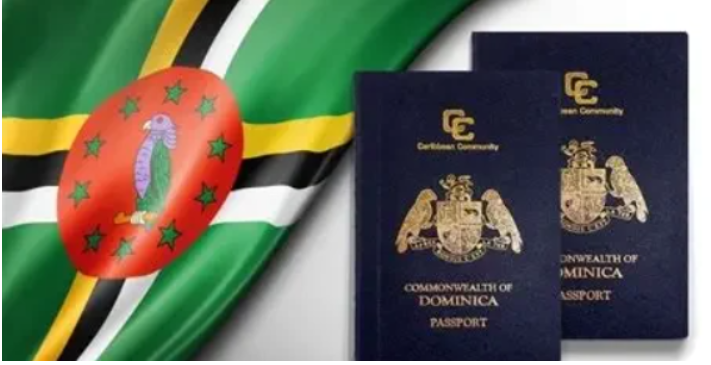
A national passport is far more than a legal travel document: it is a tangible representation of trust between sovereign governments. When an immigration officer in Miami, Bridgetown, London or Brussels reviews a Dominican passport, that document signals the issuing government’s standards for verifying identity, vetting applicants, and granting citizenship. That trust holds tangible economic value for every citizen — and when foreign governments begin to question that trust, the consequences do not fall only on people who acquired citizenship via investment. They impact every person who carries a Dominican passport.
This link between CBI policy and passport credibility was made explicit by the U.S. government during the Trump administration, when Dominica was added to a list of countries facing new partial entry restrictions that took effect January 1. In justifying the inclusion, the White House specifically cited Dominica’s longstanding CBI model that does not require applicants to hold residency in the country, raising concerns that this structure undermines immigration screening and vetting processes.
The U.S. restrictions generally bar entry for eligible Dominican nationals applying for immigrant visas, B1/B2 visitor visas, F/M student visas, and J exchange visitor visas, though narrow exceptions and case-by-case waivers are available. Visas issued before the restriction proclamation took effect were not automatically revoked. Washington has since added an extra layer of scrutiny: since January 21, Dominica has been subject to a U.S. visa bond requirement, which the U.S. State Department made permanent on August 3. The policy now requires eligible visitor visa applicants to post bonds of $10,000, $15,000, or $20,000 if they are approved to proceed with travel.
It is important not to overstate the scope of these measures: the U.S. has not canceled all existing Dominican visas nor barred all Dominican citizens from entering the country. But it would be equally reckless for Dominica to dismiss the clear signal these policies send: Washington has publicly stated it lacks full confidence in the identity vetting and nationality verification standards associated with the Dominican CBI program, and has explicitly tied the restrictions to that longstanding policy.
This creates a critical national interest that goes far beyond the longstanding debate over whether the CBI program generates sufficient government revenue. There is no question that the CBI program has provided critical financing for Dominican development, a reality that matters deeply for a small island economy that is highly vulnerable to hurricane damage and faces persistent structural constraints on capital access. No government can lightly walk away from a major, consistent revenue stream. But a full accounting of the program’s costs and benefits must include the hidden costs imposed on the broader population, not just the revenue it generates.
If gaps in CBI program oversight erode international confidence in the Dominican passport, that cost is spread across every citizen. A Dominican student may lose access to educational opportunities in the U.S. A small business owner may face barriers to meeting customers and attending critical industry conferences. A family may be unable to attend a cross-border wedding, graduation, or funeral. A tourism industry leader may be blocked from meeting airline executives in Miami or New York to secure new routes for the very international airport the country is building.
This contradiction is thrown into sharp relief by the new airport project itself. Dominica is building the airport specifically to capture the economic value of global connectivity: the government projects that easier air access will boost tourism, expand agricultural exports, grow the hospitality sector, and attract new investment. But connectivity works in both directions. It matters that international visitors can reach Dominica — but it is equally critical that Dominicans can access the international markets, universities, family networks and professional opportunities that their future economic growth depends on.
For this reason, reform of the CBI program — where gaps and weaknesses are found — should not be framed as a concession to U.S. pressure. Instead, it should be understood as a defense of a core national asset that benefits all Dominican citizens. If U.S. officials cite deficiencies in identity verification, applicant due diligence, mandatory residency requirements, criminal record sharing, or cross-border information exchange, the Dominican government should demand clear, specific articulation of those concerns consistent with national security protocols. It should then move to address legitimate gaps and negotiate measurable benchmarks for the removal of existing travel restrictions.
This principle should also guide the broader regional conversation around citizenship-by-investment programs across the Caribbean. Current revenue cannot be the sole metric of a program’s success. Governments must also weigh the long-term impact of program design on the international credibility of the citizenship that all native-born citizens hold.
Dominicans should not be forced to choose between national development and the right to global mobility. A well-regulated, transparent CBI program can generate critical development investment without eroding international confidence in the passports carried by Dominicans born and raised on the island. The new airport rising in Wesley is a clear statement of the kind of nation Dominica aims to be: more connected, more accessible, and more fully integrated into the global economy. Protecting the international credibility and strength of the Dominican passport must be recognized as a core part of that same project. Concrete and asphalt can connect Dominica to the world — but that connection only matters if the world continues to trust the document every Dominican carries when they board a plane.