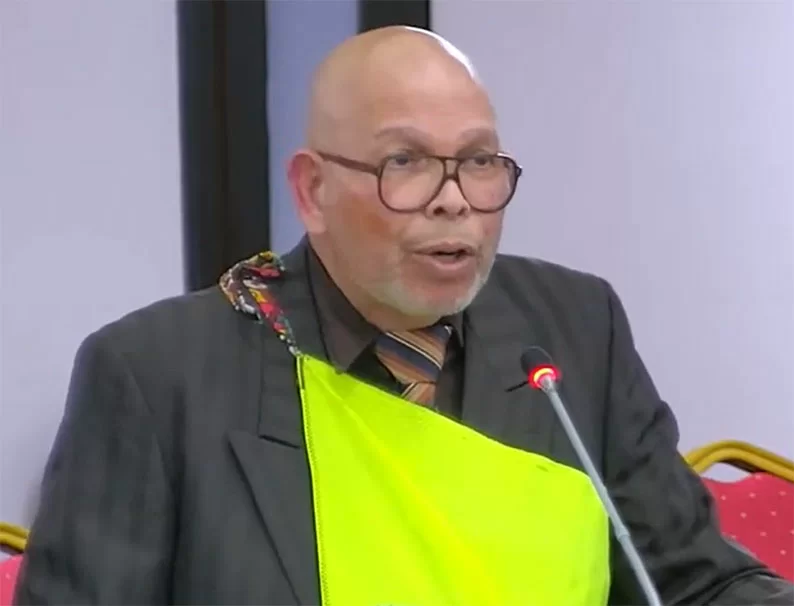
August 19, 2026 — Suriname’s Ministry of Education, Science and Culture has announced a notable improvement in national 10th grade examination pass rates, even as Education Minister Dirk Currie acknowledges persistent gaps between public and private institutions and pressing infrastructure and reform priorities ahead of the upcoming 2026-2027 academic year.
The national pass rate for 10th grade learners climbed 4.7 percentage points this year, rising from 56.7% recorded in 2025 to 61.4% in 2026. While Currie calls this upward trend a positive development, he remains unsatisfied with overall performance, pointing to a significant gap in outcomes between the country’s public and private education sectors. He noted that private schools, which regularly outperform their public counterparts, employ teachers trained entirely within Suriname’s mainstream public education system, a fact that underscores the avoidable nature of the outcome gap. Though Currie acknowledges private schools hold an inherent advantage in their ability to select incoming students, he stresses there should be no major disparity in quality or pass rates between the two sectors, and that all learners in public education deserve access to high-quality learning opportunities.
The release of this year’s results was not without disruption. A technical failure in the computer software used to process examination scores led to incorrect initial outputs when results were first scheduled for publication last Friday. To address the issue, the ministry opted to stagger the release: schools that had already completed internal leader verification and final approval from the Examinations Bureau were allowed to publish results immediately, with 39 schools able to share scores on Friday. Results for all remaining schools were finalized and released by Tuesday morning, bringing the final national pass rate to its confirmed 61.4% figure. Detailed results broken down by district and individual school will be published publicly by the ministry at a later date.
Beyond examination outcomes, the ministry faces multiple urgent challenges as it prepares for the new school year, starting with major infrastructure upgrades across the country. At the request of Vice President Gregory Rusland, the ministry presented an overview of anticipated bottlenecks for the 2026-2027 school opening to government leaders on Monday. A total of 61 public schools have been identified as requiring major renovations, with additional classroom construction needed at several sites. Preparatory work has advanced far enough for 31 of these schools to move into the public tendering process, but Minister Currie warned that actual construction will not begin for some time, forcing the ministry to pursue temporary solutions to keep classes on track.
Proposed temporary measures include converting shipping containers into makeshift temporary classrooms and negotiating shared use of underutilized space at nearby schools. Currie noted that the shared campus option could create additional pressure on student and staff transportation networks, however. Members of parliament have called for greater transparency around the infrastructure program: Parliamentarian Sapoen has requested the full list of 61 schools set for renovation be shared with the National Assembly (DNA) to allow for legislative oversight of the work, and also raised urgent concerns about unsafe conditions at two specific schools — Vredenburg School and a campus on Malangweg — where structurally risky sections of existing buildings still await demolition.
Two major sector reforms are also moving forward in advance of the new school year, starting with changes to vocational education. Minister Currie has already held consultations with relevant labor unions and President Jennifer Simons centered on the possible reintroduction of a specific specialized track within the country’s vocational education system. Before a final decision is made, Currie plans to consult with national industry leaders to ensure any adjusted vocational curriculum aligns with current employer labor market needs. Those industry consultations are scheduled to conclude by Wednesday, with a final public decision expected by Thursday. Other ongoing vocational education policy questions will be discussed with unions in greater detail the following week.
The minister also highlighted a pressing gap in special education access that the ministry is working to address. Currie’s core policy guiding principle is that no learner should be left behind in the national education system, but currently, many specialized special education services are only offered by private institutions, with no comparable public alternatives. This means that household income often determines whether a child can access the specialized support and learning they need. To close this gap, the ministry is currently exploring options to place learners from low-income households that cannot afford private special education tuition at existing specialized institutions, ensuring access regardless of family financial means.
Currie emphasized that all ongoing upgrades and policy changes are part of broader preparations for the 2026-2027 school year, with two core priorities: improving learning outcomes across all sectors, and ensuring all students have access to safe, functional school facilities.