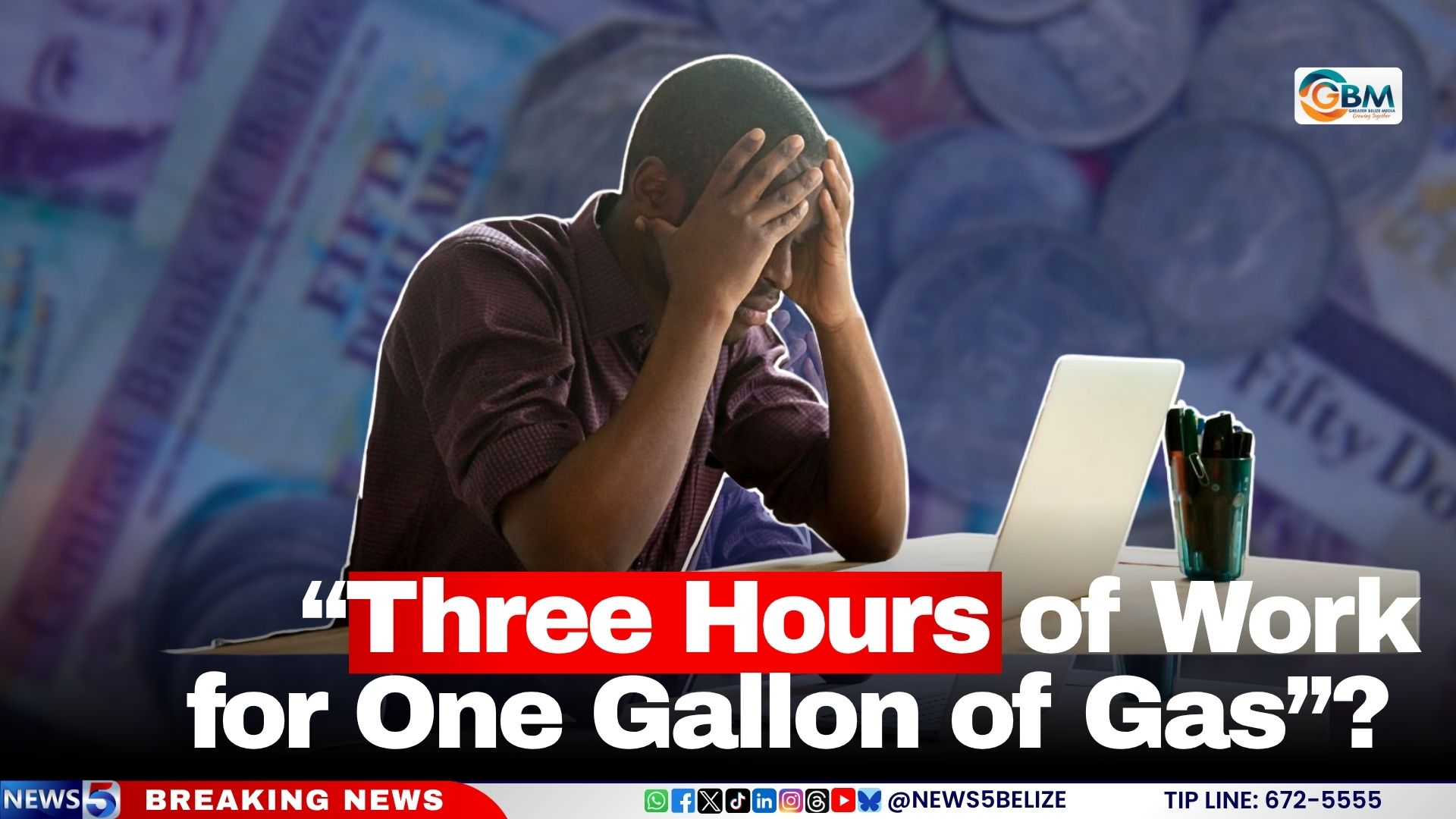
At a press conference held by the National Trade Union Congress of Belize (NTUCB) in Belize City on August 18, 2026, the stagnant $5 national minimum wage emerged as a central point of contention, with union representatives decrying the policy as a failure that leaves working-class families trapped in cycles of financial hardship.
Union Senator Glenfield Dennison led the criticism, highlighting the stark gap between minimum wage earnings and soaring basic commodity costs. He pointed to the crippling reality that a worker currently must put in three full hours of labor just to afford a single gallon of gasoline – a ratio he called indefensible for any working economy.
Dennison warned that prolonged economic desperation pushes vulnerable workers toward dangerous choices, noting that most people prefer to earn an honest living to support their households. But when a full day of work is not enough to cover basic needs, he argued, some people are forced to turn to petty theft just to put food on the table for their children. He went as far as to describe Belize’s current labor and wage landscape as a modern-day slave mill, arguing that working people have seen little to no meaningful economic progress four and a half decades after the country gained independence.
Beyond addressing the inadequate minimum wage, Dennison called on the Belizean government to develop a comprehensive, actionable strategy to expand economic opportunity and ease the crippling financial pressure on working households. He also condemned the widespread practice of politicians using public funds to provide targeted financial assistance to constituents as blatant vote-buying. Dennison criticized the system where families are forced to beg their local representative for help covering basic costs like their children’s school tuition, only to have those favors weaponized for political gain during election cycles.
Fourty-five years after Belize secured full sovereignty, Dennison argued that the country is moving backward rather than forward, leaving working people behind in a system that fails to deliver fair compensation or basic economic security.