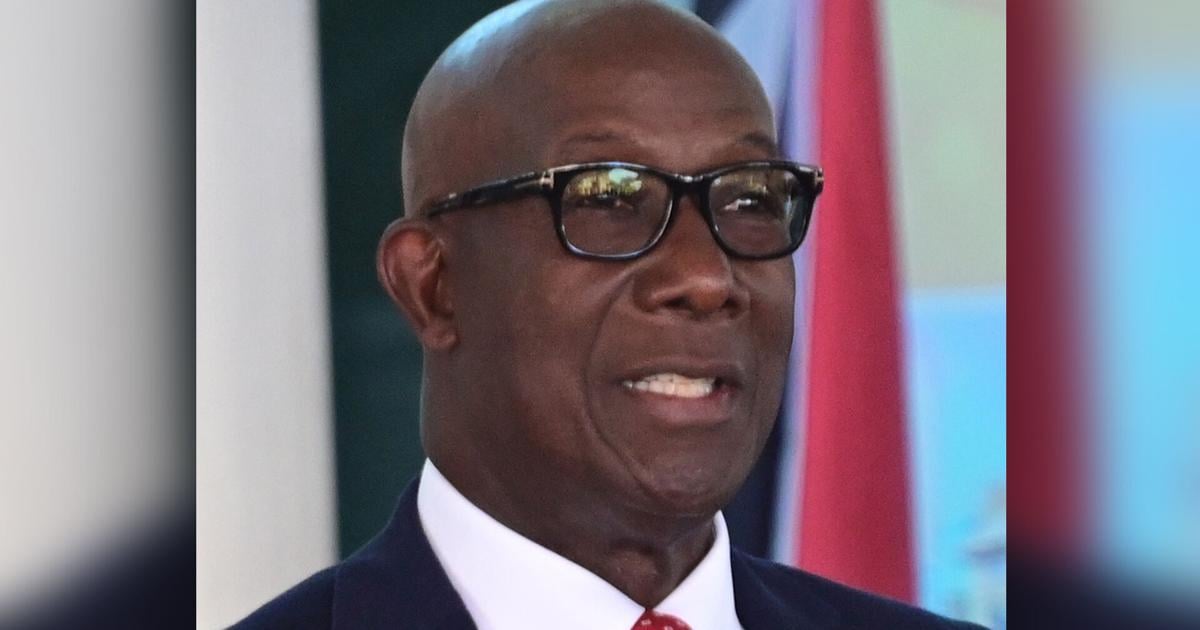
A sharp political conflict has erupted in Trinidad and Tobago over reported United States visa revocations, pitting former Prime Minister Dr. Keith Rowley against sitting Prime Minister Kamla Persad-Bissessar. Rowley has publicly alleged that the U.S. has revoked visas held by both himself and another former Prime Minister, Stuart Young, and he is pressing the current administration to answer for the actions that led to this outcome.
In a public Facebook post published over the weekend, Rowley issued a series of direct questions to Persad-Bissessar. He challenged the prime minister to publicly specify which of the officially listed U.S. visa violation grounds apply to himself and Young, noting that political figures aligned with Persad-Bissessar’s United National Congress (UNC) had previously written to the U.S. government formally requesting the visa cancellations.
Beyond his own case, Rowley raised additional questions about broader visa revocation activity. He called on the prime minister to reveal details about a prior visa cancellation involving a close personal associate of hers, which occurred before Persad-Bissessar’s administration took office. He also demanded transparency around how many additional Trinidad and Tobago citizens the current prime minister and her government have referred to U.S. authorities with recommendations for visa revocation.
Rowley further accused UNC leadership and their affiliated allies of weaponizing visa policy, claiming they have issued repeated threats to ordinary Trinidadian citizens warning that they could lose their U.S. travel privileges for political reasons. In his post, the former prime minister referenced an August 10, 2026 official statement from the U.S. Department of State, thanking U.S. authorities for publicly disclosing the official grounds for visa revocation to what he described as a traumatized local public.
That U.S. State Department release outlines that the U.S. government revokes visas for foreign nationals found to have violated visa terms, committed criminal acts, incited violence against U.S. citizens, defrauded U.S. residents, abused the U.S. immigration system, or threatened U.S. national security. It noted that during the Trump administration, the State Department revoked more than 175,000 visas of foreign nationals matching these criteria. Most revocations stemmed from confirmed criminal activity, with offenses including assault, drunk driving, theft, and drug offenses topping the list, followed by reckless driving, sexual assault, child abuse, fraud, embezzlement, and other serious crimes. The release emphasizes that U.S. visa access is a privilege, not an inherent right, and that ongoing continuous vetting is conducted to protect U.S. communities from individuals who may pose a risk.
When reached for comment by local outlet the Express immediately after Rowley’s post, Prime Minister Persad-Bissessar dismissed his allegations, simply stating that the U.S. State Department’s public release is self-explanatory. As of press time, repeated attempts to contact both Rowley and Young for additional comment have been unsuccessful.
This controversy builds on earlier disclosures from current Attorney General John Jeremie, who told Parliament in June that the U.S. government had revoked visas held by a number of members of what he described as the “1%” elite group in Trinidad and Tobago. Jeremie explained that he initially ignored a journalist’s question about the revoked visas, but later was approached in his parliamentary office by multiple local figures who confirmed their U.S. travel documents had been canceled. He noted that U.S. authorities maintain advanced intelligence gathering capabilities to support these decisions, and stressed that the Trinidad and Tobago government has no involvement in the U.S. government’s independent visa decisions.