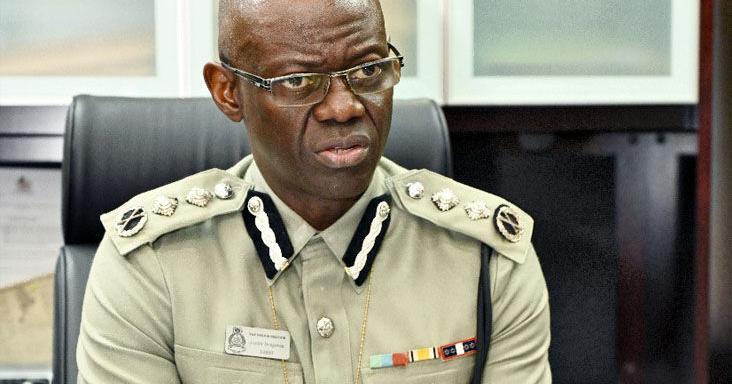
A growing political controversy has emerged in Trinidad and Tobago over the leadership vacuum at the top of the national police service, following the reported departure of substantive Police Commissioner Allister Guevarro from the country. The controversy was ignited after Marvin Gonzales, chairman of the Opposition People’s National Movement (PNM), publicly demanded answers from top government officials about Guevarro’s whereabouts and the lack of clarity around a formal interim appointment.
Gonzales raised the questions during a press briefing held Saturday, following the PNM’s General Council meeting hosted at Balisier House in Port of Spain. He called on both Homeland Security Minister Roger Alexander and Prime Minister Kamla Persad-Bissessar, who also leads the National Security Council, to provide full transparency to the public. Pointing to unconfirmed reports that Guevarro had left Trinidad and Tobago’s jurisdiction, Gonzales pressed for key details: the confirmed location of the sitting commissioner, the exact date he departed, and whether a legally recognized acting commissioner had been put in place to manage the service during his absence. He also questioned whether the Police Service Commission (PSC), the body tasked with police leadership oversight, had followed required protocols to greenlight an interim appointment.
Hours after Gonzales’ press conference, local media outlet Express reached out to Deputy Commissioner of Police Junior Benjamin, currently the most senior serving officer in the Trinidad and Tobago Police Service (TTPS). Benjamin, who previously stepped into the acting commissioner role briefly in October 2025, confirmed that he has not yet received any formal legal instrument appointing him to serve as interim commissioner. While he declined to share detailed comments ahead of a scheduled meeting on Monday – the details of which he also kept undisclosed – he did confirm that he has previously assumed the top role on an interim basis during the tenures of past substantive commissioners Erla Harewood-Christopher and McDonald Jacob. Such temporary leadership arrangements, he noted, are not unprecedented within the TTPS, but he opted to hold additional comment until after his upcoming meeting.
Former Police Commissioner Gary Griffith has become the highest-profile critic of the current situation, arguing that the leadership confusion exposes a critical structural flaw in the national legislation governing interim police commissioner appointments. In a public social media statement over the weekend, Griffith dismissed the current legal requirement that Parliament must convene to approve any acting appointment as “absurd and ridiculous.”
Griffith explained that under current rules, every time the sitting commissioner leaves the country temporarily – whether for official overseas travel, medical treatment, or even a short sick leave – the matter must be brought before Parliament for a formal vote on an interim replacement. He argued this is an outlier in global governance, noting that it is likely the only jurisdiction in the world that requires parliamentary approval even if the commissioner is ill for just 24 hours. To illustrate the risk of the current framework, Griffith offered a hypothetical scenario: if the commissioner falls seriously ill on a Friday night immediately after Parliament adjourns for a two-month break, there is no existing legal mechanism to appoint an interim leader for that entire 60-day window. Compounding this gap, he added, current law does not automatically default the role to the most senior serving deputy commissioner, even though there are three sitting deputy commissioners on the force: Benjamin, Curt Simon, and Suzette Martin. The resulting ambiguity, Griffith stressed, has left both rank-and-file police officers and ordinary Trinidad and Tobago citizens without clear answers about who is currently in charge of the national police service.