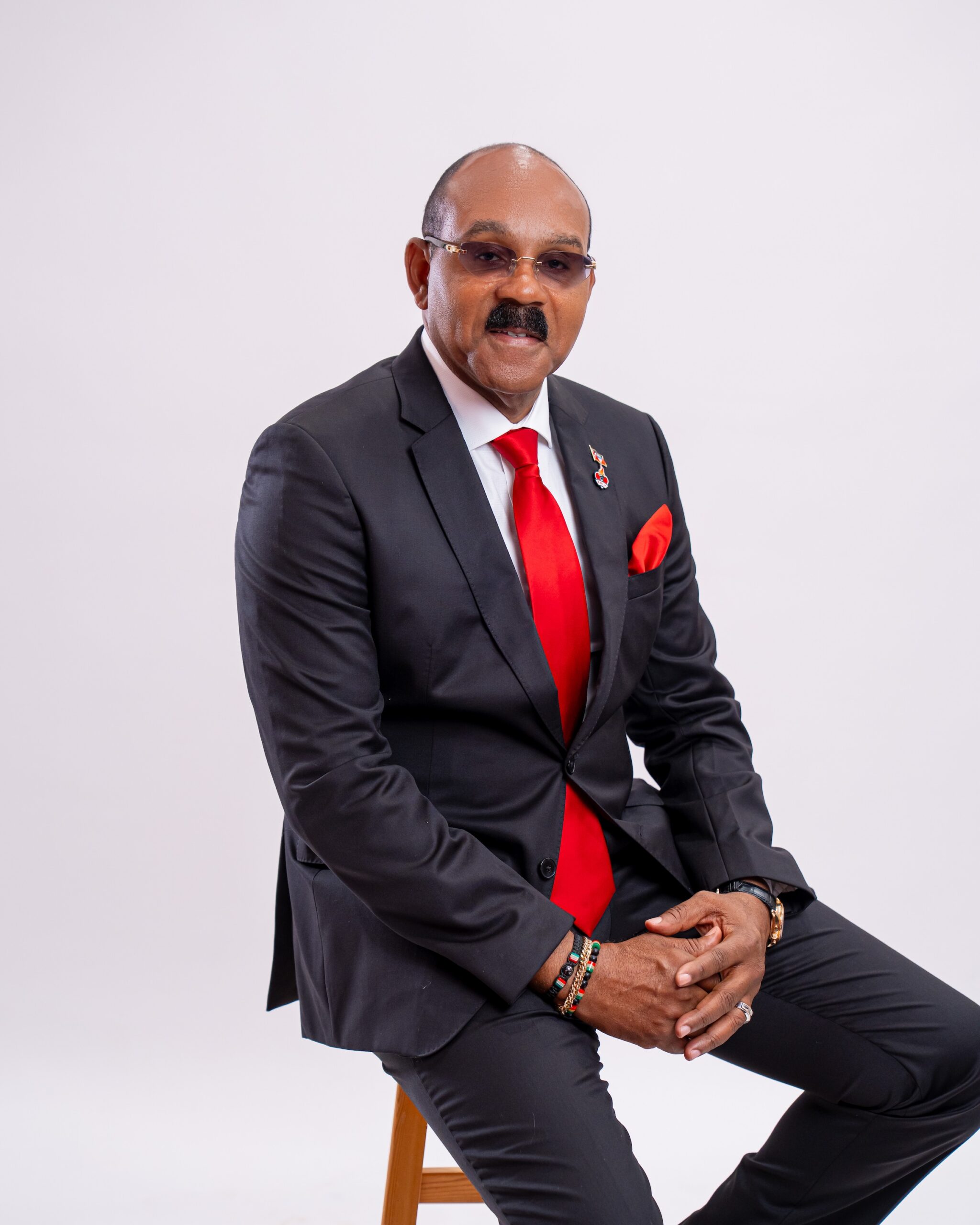
ST. JOHN, Antigua and Barbuda – August 13, 2026 — A growing public dispute over sentencing practices for violent crime in Antigua and Barbuda has entered a new phase, with Prime Minister Gaston Browne pushing forward a concrete, constitutional proposal to address systemic concerns after pushing back against a rebuke from regional Caribbean judicial leaders.
Last week, Browne drew sharp pushback from the Caribbean Heads of Judiciary, who released a joint statement on August 12 criticizing Browne’s earlier public comments about what he described as “unduly lenient sentences” for serious offenses including firearm violence and statutory rape. In his full formal response released Wednesday, Browne reaffirmed his commitment to judicial independence while refusing to back away from his criticism of recurring sentencing outcomes that have eroded public trust.
Browne emphasized that judicial independence, a core pillar of democratic governance, does not shield judicial decisions or justice administration from reasoned public scrutiny, nor does it require elected leaders to remain silent when sentencing outcomes raise urgent questions about public safety, alignment with legislative policy, and public confidence in the rule of law.
The Prime Minister’s original August 10 comments were rooted in widespread alarm shared by law enforcement and the general public of Antigua and Barbuda over repeated lenient sentences in high-stakes cases involving gun crime and sexual offenses against minors. As the elected head of government, Browne noted he carries a non-negotiable duty to protect the welfare of the national population.
Contrary to the Caribbean Heads of Judiciary’s framing, Browne clarified that his remarks did not amount to executive interference in judicial proceedings: he did not attempt to dictate the outcome of any pending case, demand the reopening of decided cases, or encourage any party to disregard court orders. What his comments did do, he explained, was issue a long-overdue warning to the judicial hierarchy that if systemic failures to align sentences with statutory requirements for serious firearm offenses – which carry a maximum penalty of 15 years in prison – are not addressed, the government may be forced to pursue alternate legal remedies to protect citizens. To eliminate any lingering misinterpretation, Browne confirmed his administration has never made any request or taken any action to remove, reassign, or deport any sitting judicial officer, and will fully respect all constitutional and legal frameworks governing judicial tenure and conduct.
This clarification, Browne stressed, does not retract or weaken his criticism of sentencing outcomes and institutional performance; it merely makes clear that his critique targets sentencing policy, not the constitutional protections or personal independence of individual judges. Forceful criticism of sentencing practice, he argued, does not automatically qualify as an attack on judicial independence.
Browne also pushed back on the joint statement’s claim that judicial appeal is the only legitimate lawful avenue to address overly lenient sentencing. While acknowledging that appeal is a proper mechanism to correct individual sentencing errors, he noted it is not the only legitimate tool for democratic societies to address systemic failure in justice delivery. Antigua and Barbuda has already granted the Director of Public Prosecutions the right to appeal sentences since the 2004 Criminal Procedure (Amendment) Act, a power that has been used successfully in the past. But the decision to launch an appeal rests with the constitutionally independent Director of Public Prosecutions, and a single appeal cannot resolve broader, systemic questions around consistent sentencing patterns, alignment with statutory penalties, adherence to sentencing guidelines, repeat offending, court delays, rehabilitation, and inter-agency coordination between police, prosecutors, courts, and correctional services.
Under the principle of separation of powers, Browne explained, Parliament makes legislation, the executive proposes policy and allocates resources, and the judiciary interprets and applies the law. Reasoned public criticism and structured dialogue between these branches, he argued, are fully consistent with this separation of powers, not a threat to it.
This is far from an abstract theoretical debate, Browne emphasized. CARICOM heads have already classified widespread crime and violence as a public health crisis across the region. Without urgent coordinated action from all branches of government, the entire region risks sliding into uncontrolled criminality that would undermine decades of social and economic development. In Antigua and Barbuda specifically, rampant gun violence threatens citizens’ fundamental right to live without fear, harms victims and their families, strains law enforcement resources, erodes trust in public institutions, and puts at risk the stable social and economic environment that supports the nation’s key sectors of investment, employment, and tourism. These severe consequences demand urgent action from every branch of the state.
Rather than dismissing public concern out of hand, Browne argued, stakeholders should rigorously examine sentencing data to identify root causes of misalignment. In line with this commitment, Browne revealed he sent a formal letter on August 12 to Margaret Price Findlay, Chief Justice of the Eastern Caribbean Supreme Court, proposing the immediate establishment of an independent committee to review sentencing practices for firearm offenses and other serious violent crimes, patterns of repeat offending, and the overall operation of Antigua and Barbuda’s criminal justice system.
The proposed review would systematically analyze a robust dataset of past sentences, identify any meaningful gaps between legislative policy and actual sentencing outcomes, investigate the root causes of these gaps, and develop practical, evidence-based reform recommendations. Browne has proposed inviting retired Caribbean Court of Justice President Adrian Saunders to chair the committee, pending his acceptance of the appointment. He has also already consulted with former CARICOM judge Sir Dennis Byron and Godfrey Smith SC, CARICOM’s High-Level Representative on Law and Criminal Justice, both of whom have agreed to support the initiative by contributing the substantial body of existing research on regional criminal justice reform already compiled by Smith and other partners.
Browne framed the proposal as a constructive, constitutional, evidence-based response to an issue of urgent national importance. He extended an open invitation to the Caribbean Heads of Judiciary to support the initiative and help move it forward without delay, noting that judicial independence and institutional accountability are not competing values.
“My Government seeks no control over the decision of any court,” Browne wrote. “It does seek a criminal justice system that is lawful, proportionate, transparent, consistent and effective in protecting the public.”
Closing his response, Browne emphasized that repeated lenient sentencing without compelling extenuating circumstances serves only to undermine public safety and public confidence in the judiciary. The people of Antigua and Barbuda, he argued, are entitled to both an independent judiciary and a justice system that responds proactively and credibly to the threat of serious violent crime – and his administration will continue to work toward delivering both.