Updated Friday, 14 August 2026, 15:13 by Denis Chabrol
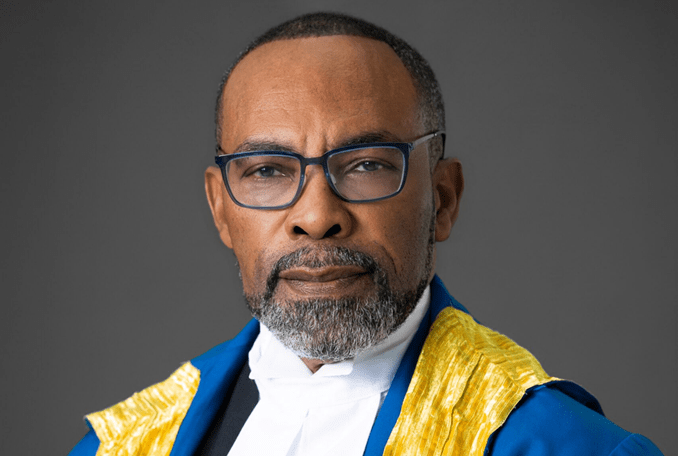
In a formal public statement addressing swirling media reports and internal leaks that have sparked widespread concern across the Caribbean judicial community, Caribbean Court of Justice (CCJ) President Justice Winston Anderson has broken his silence to respond to a series of public allegations against his leadership, while condemning unauthorized disclosures of confidential court materials that he argues threaten the independence of the regional judiciary.
Anderson opened his statement by framing the CCJ as far more than a bureaucratic judicial institution: it is the culmination of decades of tireless work and sacrifice by generations of Caribbean people who fought to build a regional final court rooted in local ideals of justice. This historic legacy, he emphasized, demands unwavering protection from actions that erode public trust.
Against this backdrop, Anderson set out to address each public allegation against his leadership one by one, acknowledging potential missteps while rejecting the most serious claims outright.
First, addressing claims that he fails to consult with colleagues on court governance, Anderson outlined the robust institutional framework for consultation he has maintained since taking office. He noted that he convenes regular full meetings of the judiciary, established the Executive Strategic Planning and Advisory Committee (ESPAC) to guide major strategic decisions—most recently meeting in July 2026—and maintains the Monitoring and Evaluation (M&E) Committee to track progress on the court’s 2025-2032 Strategic Plan, which held a two-day working session in late July. Beyond formal committees, Anderson said he holds regular check-ins with division heads, maintains an open door policy for all staff, and never declines requests from judicial colleagues to discuss court-related matters.
The most high-profile internal dispute addressed by Anderson centers on judicial dress code and the reshuffling of a judicial panel. Anderson explained that from the CCJ’s founding, the court has upheld the longstanding Caribbean tradition of judges wearing formal robes for public hearings, with an informal practice of bench jackets for interlocutory and in-chamber proceedings, and business attire for non-hearing activities. The current dispute arose in December 2025 and April 2026, when a sitting judge appeared for formal hearings in traditional national dress, in deviation from established practice. Anderson’s concerns were amplified after he received private communications from sitting and retired chief justices across the region raising alarm over the lack of uniform judicial attire for the CCJ.
Anderson stated that he attempted to resolve the matter privately with the colleague in June 2026, but was unable to secure a commitment to follow existing court practice, with the judge confirming he would continue to wear either national dress or business attire when robes were not required. In response, Anderson made the administrative decision to remove the judge from the panel for a July 2, 2026 interlocutory hearing in the D’Almada v Trinidad and Tobago case. He stressed that the removal was solely for the dress code violation, and had no connection to the judge’s judicial opinions, internal deliberative stances, or the substance of the case. The judge was retained for the full substantive hearing of the matter, when formal robes are required, Anderson confirmed.
To resolve the broader policy issue, Anderson instructed court officials to draft a formal judicial dress code for consideration by the Regional Judicial and Legal Services Commission (RJLSC), which codified the existing practice of robes or bench jackets for judicial functions. Anderson said he repeatedly offered opportunities for full judicial consultation on the draft before RJLSC consideration, but colleagues ultimately requested to combine the discussion with a broader governance meeting held July 25, 2026, and he shared a formal written response to all raised concerns days later.
Anderson acknowledged that critics argue he handled the dress code dispute too assertively, but defended his actions as necessary to protect institutional consistency. As the apex court for a diverse region, Anderson noted that any precedent of individual judges setting their own dress rules creates unresolvable questions around what qualifies as acceptable national dress across different Caribbean jurisdictions. Until the region reaches a collective decision on changing the status quo, Anderson said it is his duty as president to prevent unilateral changes to longstanding convention. Moving forward, he plans to consult all national courts across the Caribbean on the dress code policy to build a regional consensus.
The most serious allegation Anderson addresses is the claim that he manipulates judicial panel composition to secure pre-determined case outcomes—an accusation he called wholly untrue, irresponsible, and malevolent. Anderson explained that panel assignment has always been an administrative responsibility of the CCJ president, exercised exclusively to support orderly, efficient, and impartial justice, never to influence case outcomes. He reaffirmed that the panel change in D’Almada v Trinidad and Tobago was solely tied to the dress code dispute, and noted that the full court unanimously granted leave for the substantive hearing after the interlocutory session, with the judge in question set to participate in the full bench hearing when robes are required.
To eliminate any lingering public doubt around panel assignment, Anderson announced a new policy going forward: every CCJ judge will sit on every panel, unless a judge opts out for a legitimate conflict of interest or other justified reason and is formally excused.
Anderson also rejected entirely public claims that he attempts to influence judicial judgments to sway case outcomes. He emphasized that judicial independence is the foundational principle of the CCJ, protected by the court’s founding documents and the judicial oath of office, in line with the Bangalore Principles of Judicial Conduct. Addressing claims of internal pressure in the high-profile *Mohamed v Minister of Home Affairs* case, Anderson explained that robust, frank debate over legal reasoning is a normal and healthy part of appellate judicial deliberation, and that the final judgment in the case won unanimous support from all seven sitting judges. He noted that the CCJ’s practice of not publishing dissents in original jurisdiction cases, a standard norm for international courts of this type, has no connection to suppression of judicial opinion, and all judges retain full independence to rule on cases according to their own reading of law and evidence.
Turning to public scrutiny over his private discussions with Guyana’s president and leader of the opposition regarding the decades-long impasse over substantive appointments to the offices of Guyana’s Chancellor and Chief Justice, Anderson clarified that his position aligns with longstanding stances taken by previous CCJ presidents. For more than 20 years, Guyana’s two highest judicial offices have been held by acting appointees, a situation that successive CCJ leaders have criticized as inconsistent with Guyana’s constitutional guarantee of judicial independence, since prolonged acting appointments create structural vulnerabilities that undermine judicial security of tenure.
Anderson stressed that he has no personal or political preference for any candidate for the roles, and his only concern is upholding the constitutional principle that the head of the Guyanese judiciary should enjoy the full tenure protections intended by the country’s constitution. He explained that during an official 2025 visit to Guyana for a judicial swearing-in, he held routine courtesy calls with all major political stakeholders to discuss the impasse, and held separate private follow-up discussions in October 2025 in good faith to encourage progress. While those talks did not produce a breakthrough, Anderson said his actions were motivated solely by a commitment to judicial independence, not any desire to interfere in Guyana’s domestic affairs. He did acknowledge in retrospect that a public stance, consistent with the approach taken by his predecessors, may have been a better course of action.
Amid the public focus on internal disputes, Anderson reminded Caribbean residents that the CCJ has continued to deliver core judicial services over the past year of his presidency. Since taking office July 6, 2025, he has worked to build on the strong foundation left by his predecessors, advancing administrative reforms, expanding public outreach, delivering judgments in both appellate and original jurisdiction cases, supporting regional integration through interpretation of the Revised Treaty of Chaguaramas, and expanding engagement with regional and international stakeholders. All of these advances, Anderson emphasized, are the product of collective hard work by the entire CCJ judiciary, management, and staff, to whom he extended his gratitude.
In closing, Anderson reaffirmed the CCJ’s unwavering commitment to discharging its constitutional mandate independently, fairly, and with full integrity, to serve the people of the Caribbean and uphold the historic legacy of regional judicial self-determination.