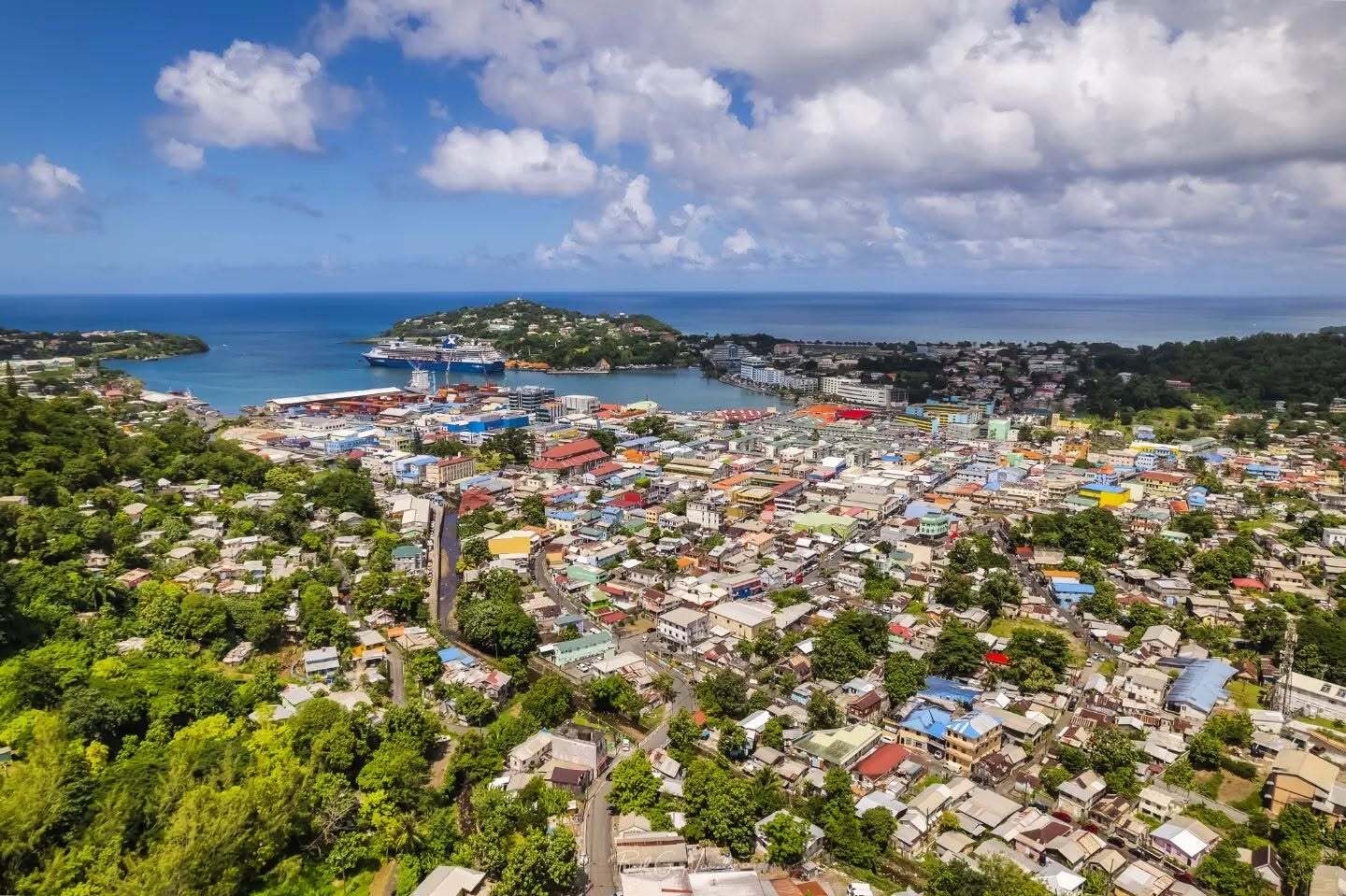
For over 20 years, the proposal for a North-South Link Road has circulated among policymakers and communities in Saint Lucia, conceived to resolve one of the island nation’s most persistent transportation challenges: creating a reliable, efficient travel corridor between the northern and southern ends of the island that bypasses the heavily congested capital city of Castries.
Despite decades of discussion and planning, however, the ambitious infrastructure project has yet to move past the conceptual phase. As Infrastructure Minister Shawn Edward confirmed in an exclusive interview with St. Lucia Times on the sidelines of a Parliament session Tuesday, the project remains in early stages even as it has been elevated to a top government priority, drawing new interest from private firms eager to explore development and financing options.
First formally evaluated in 2001, the North-South Link Road idea gained broader public and policy attention over the subsequent 10 years, with the Caribbean Development Bank once funding a comprehensive feasibility study to map potential routes and analyze the project’s viability. The planned corridor would run along Saint Lucia’s northeastern coast, connecting the northern town of Gros Islet directly to the southern community of Dennery, eliminating the need for all north-south traffic to cut through the capital’s crowded urban streets.
Edward framed the project as a response to a long-recognized critical need for improved interregional connectivity on the island. If completed, officials project it would become one of the largest public capital infrastructure projects ever undertaken by the Saint Lucian government, delivering a wide range of projected benefits: reduced average travel times between the island’s two ends, eased traffic congestion within Castries, unlocked new economic development opportunities across the underdeveloped northeastern coast, and provided a critical alternative evacuation and travel route if existing primary roads are disabled by hurricanes, landslides or other natural disasters common to the Caribbean.
Still, converting the decades-old concept into a paved highway has faced significant, long-standing barriers. Earlier feasibility assessments concluded that construction costs would be prohibitively high for the island nation, while environmental advocates raised serious concerns over the potential ecological damage the northeastern route could cause, as it would pass through several ecologically sensitive coastal and inland areas.
Edward’s recent comments signal a renewed push from the current administration to re-examine the project, after multiple previous iterations stalled out over the past two decades. To date, the government has received interest from several private entities, with the minister confirming he has held direct meetings with representatives from four to five firms, alongside formal correspondence from additional groups partnered with local Saint Lucian business interests.
For now, the project remains anchored at the concept stage, with its future trajectory hinging entirely on two core factors: securing a viable financing structure that addresses the project’s historic cost challenges, and selecting a development proposal that aligns with the government’s priorities. Edward emphasized that the North-South Link Road holds a spot on his ministry’s and the current government’s official priority list, and he expects to release a far more concrete update on the project’s path forward, including details on financing frameworks, within the next few months. When pressed on whether Saint Lucians can expect tangible construction progress during the current government’s term, Edward declined to commit to a firm timeline, noting that additional assessments and negotiations will be required before any definitive commitments can be made.