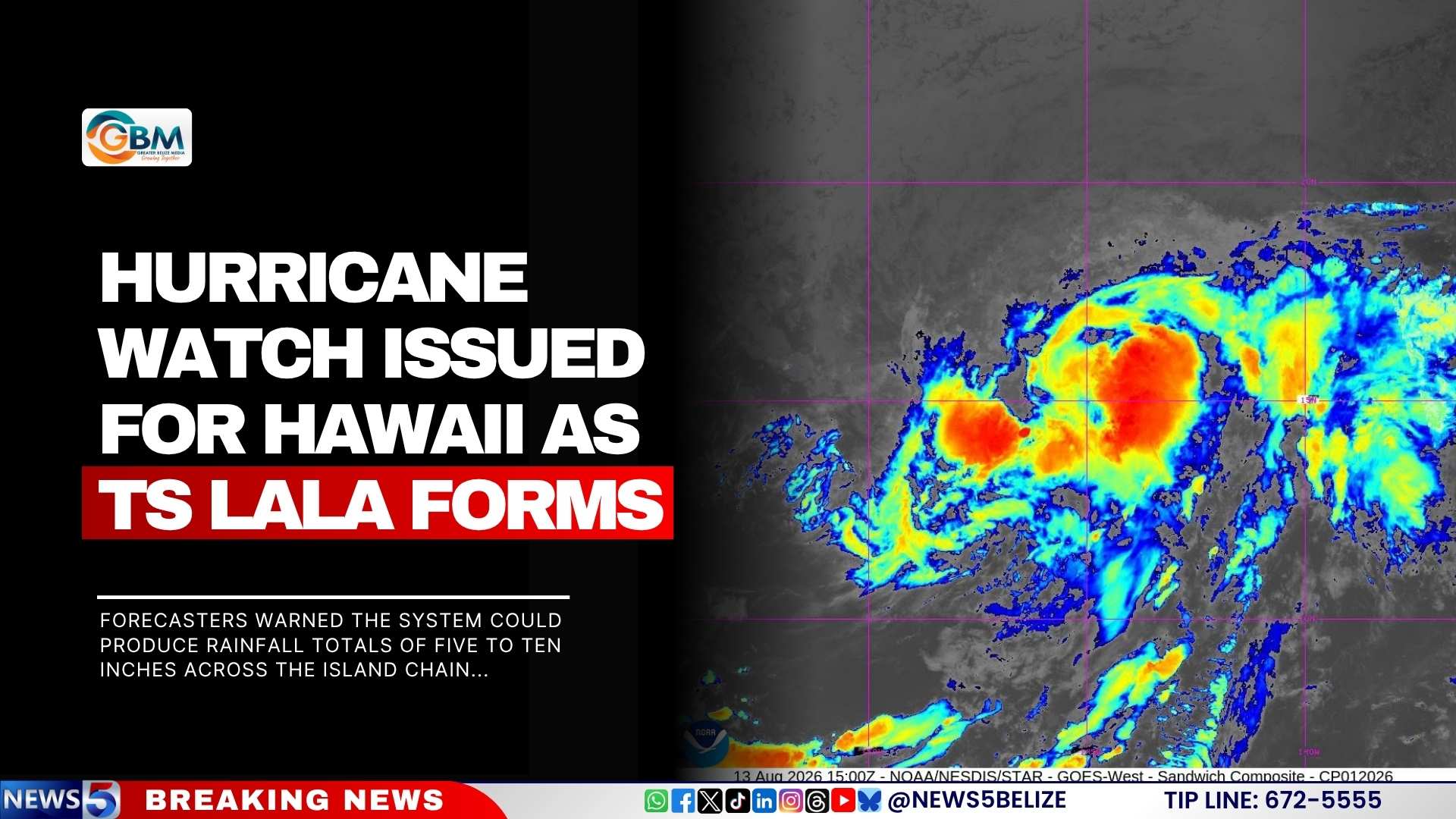
On August 13, 2026, U.S. weather officials confirmed that Tropical Storm Lala has organized into a named tropical system over the central Pacific Ocean, triggering an official hurricane watch for Hawaii’s largest island, the Big Island, ahead of the storm’s expected arrival this coming weekend. Forecasters from the U.S. National Hurricane Center (NHC) outlined that Lala will begin bringing inclement weather to the entire Hawaiian island chain starting late Friday, with hazards including intense rainfall, gusty high winds, and life-threatening surf conditions along coastal areas.
As of the latest NHC advisory, the newly formed storm was positioned approximately 700 miles east-southeast of the Hawaiian Islands, with maximum sustained winds holding at 40 miles per hour – the minimum threshold for a tropical storm – and tracking steadily westward toward the island chain. Current long-range forecast models indicate Lala will continue to gain strength as it traverses warm Pacific waters, and could reach Category 1 hurricane intensity just as it approaches the Big Island. NHC officials note that a hurricane watch is issued 48 hours in advance of expected hazardous conditions, signaling that hurricane-force winds are a distinct possibility in the watch area.
The primary hazard posed by Lala, forecasters emphasize, is extreme rainfall that could trigger widespread flooding and dangerous mudslides across hilly and mountainous areas of the islands. Precipitation projections call for total accumulations of 5 to 10 inches across most of the island chain, with isolated parts of the Big Island potentially seeing as much as 20 inches of rain over the multi-day event.
In a separate development in the Pacific on Thursday, a second tropical system, Tropical Storm Hernan, also formed far from any populated landmasses. As of the latest update, Hernan was located roughly 1,460 miles west of the southern tip of Mexico’s Baja California Peninsula, with maximum sustained winds of 45 miles per hour. The storm is tracking west-southwest across open ocean, and forecasters confirm it currently poses no threat to any coastal or island land areas.