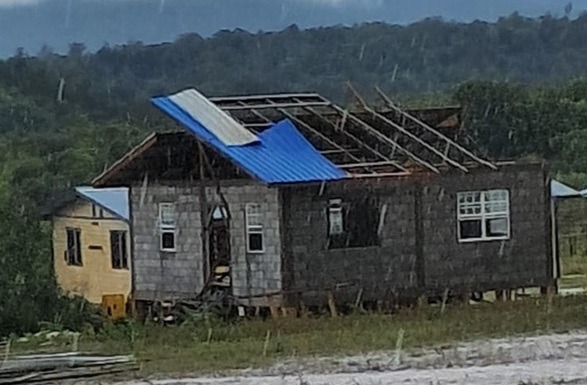
On Wednesday, 12 August 2026, Guyana’s national disaster management body, the Civil Defence Commission (CDC), launched a coordinated cross-sector response to storm damage after severe high winds swept through the remote community of Arau, located in Region Seven. The extreme weather event left a trail of destruction, damaging multiple residential properties across the village.
Preliminary damage counts released by the village’s lead representative, the Village Toshao, indicate that at least 15 homes have sustained damage, with most impacts concentrated on building roofs and external structural components. In an official statement released Wednesday evening, the CDC emphasized that these initial figures remain provisional, as full on-site damage assessments are still ongoing to confirm the full scope of harm to private residences and public community infrastructure.
As an initial intervention to support affected households, the CDC has announced plans to deploy an immediate stock of emergency building materials to help families secure their damaged properties. Further relief packages and targeted assistance will be allocated once the assessment team delivers its final findings, and the agency confirmed it is ready to set up temporary emergency evacuation shelters if conditions require it. CDC officials added that the response team will maintain constant monitoring of the situation and publish new, verified updates as more information is collected from the affected area.
The entire assessment and relief operation is being centrally coordinated by the CDC, with critical support from a network of national and local stakeholders. These partners include the Guyana Defence Force (GDF), the Guyana Police Force (GPF), the Region Seven Regional Democratic Council, and elected Arau Village leadership. According to the CDC’s statement, the GDF has already deployed trained personnel and key logistical resources to support the response effort, while local and regional officials are working on the ground to relay real-time information from the community back to the central response command. This collaborative, multi-agency assessment process will allow the CDC to identify high-priority needs and secure any additional resources required to help displaced and affected residents get back on their feet.