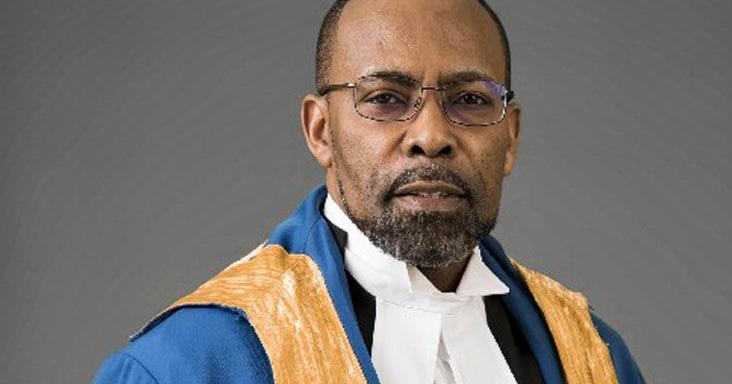
A senior sitting judge of the Caribbean Court of Justice (CCJ) has raised urgent alarms about authoritarian leadership practices at the regional judicial body, warning that unaddressed misconduct could validate long-held public and political skepticism and put the court’s very future at risk.
Justice Arif Bulkan, a Guyana-born judge on the CCJ bench, made the remarks in a series of leaked internal emails exchanged among court judges in June 2026, as tensions over the leadership of court president Justice Winston Anderson boiled over into open conflict. A majority of the court’s judges have already leveled multiple serious allegations against Anderson, ranging from imposing unilateral judicial dress codes to “panel fixing” and improper attempts to sway the final outcomes of pending cases. Most critically, the majority accuses Anderson of running the regional institution in an overtly authoritarian and dictatorial style that undermines core judicial norms.
In his email, Bulkan specifically addressed longstanding distrust from regional political leaders, including Trinidad and Tobago Prime Minister Kamla Persad-Bissessar, who has publicly questioned the CCJ’s integrity. Bulkan explained that the core concern driving this skepticism is the risk that a single judge could override the majority position of a full judicial panel, imposing their own preferred legal outcome against the consensus of fellow justices.
He emphasized that the entire design of the appellate judicial process is built to prevent exactly this kind of overreach: appellate panels require multiple judges to independently review cases specifically to ensure rigorous deliberation, draw on a wider range of professional experience and expertise, and guard against individual bias or improper influence. “If a president could overrule a majority there is no need for a panel,” Bulkan wrote. “If one could simply say, I am doing X, even though four or five feel otherwise, the safeguard of the appellate process vanishes.”
Bulkan went on to note that this exact fear has been the primary barrier holding most Caribbean nations back from formally adopting the CCJ as their final appellate jurisdiction. Multiple countries have rejected accession in public referendums, with both voters and leaders including Persad-Bissessar openly questioning whether a regional judicial body can uphold consistent integrity and impartiality.
According to Bulkan, a recent incident related to the handling of the high-profile Mohamed case has become the “back-breaking straw” that forced him to speak out. The unilateral process Anderson attempted to impose in that case, he argued, directly validates the worst fears of the CCJ’s critics. “If we were to continue along this anti-democratic path, the very survival of this institution will be threatened,” he warned.
Beyond questions of judicial outcome integrity, Bulkan also called out toxic working conditions within the court, criticizing Anderson’s failure to maintain a collegial, respectful environment for all judges. He argued that healthy institutional culture requires recognizing fellow justices as equals, taking their concerns seriously, and creating space for open dialogue and input, rather than dismissing dissenting views out of hand.
Local media outlet Trinidad Express has reached out to Prime Minister Persad-Bissessar via WhatsApp to request her response to the leaked allegations, asking whether the claims from sitting CCJ judges have altered her position on the court and its leadership. As of publication, no response has been issued.