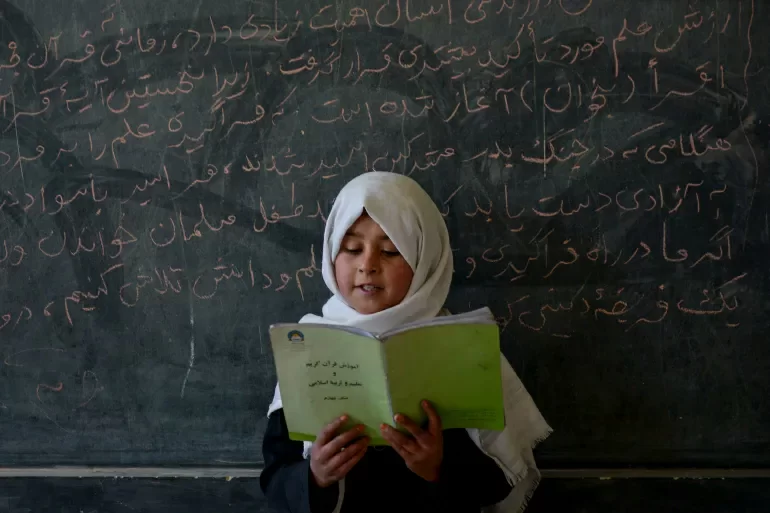
Afghanistan stands alone in the 21st century as the only country on Earth that enforces a total ban on secondary and university education for girls and women, a growing humanitarian crisis that the United Nations Educational, Scientific and Cultural Organization (UNESCO) has warned is accelerating at an alarming rate.
In its latest assessment of the country’s collapsing education sector, UNESCO confirms that roughly 2.4 million Afghan girls are currently locked out of secondary education. That number has already risen by 200,000 over the past 12 months, and the agency projects that without an immediate reversal of Taliban restrictions, the total number of excluded girls will climb to nearly 4 million by 2030.
The sweeping education bans were implemented shortly after the Taliban retook full control of Afghanistan in 2021, following the full withdrawal of U.S. and allied international military forces. In March 2022, the group banned adolescent girls from accessing secondary schools, and just nine months later, in December that same year, it extended the ban to bar women from enrolling in universities.
These restrictions are part of a broader rollback of women’s rights across the country that the United Nations has formally labeled “gender apartheid”. The policy reach extends far beyond barring female students: the Taliban has also banned women from working as teachers for male students. UNESCO forecasts that this rule will create a shortage of more than 11,000 qualified female teachers by 2030, and the United Nations has already documented that the ban has left a shortage of qualified instructors that forces male students to learn from untrained male staff.
The education bans have compounded a long list of pre-existing crises that have left Afghanistan’s education system on the brink of collapse. Nearly half of all Afghan schools lack basic infrastructure including clean drinking water, functional sanitation facilities and heating, and more than 1,000 schools have been forced to close permanently over the past five years due to repeated natural disasters that have devastated communities across the country.
The damage already extends to primary education, where more than 2 million children of all genders remain out of school entirely. Currently, 90% of 10-year-old children in Afghanistan cannot read a simple, age-appropriate text, pushing the country’s national literacy rate down to just 37%.
Despite widespread global condemnation and repeated calls to reverse the ban – including appeals from a number of Muslim-majority nations – Taliban leaders have refused to roll back the policy, framing the restriction on girls’ education as an internal Afghan matter that is not open to international negotiation.