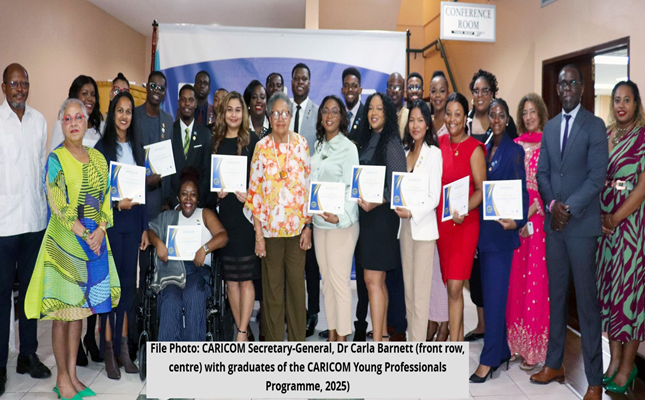
On August 12, 2026, as the global community observes International Youth Day, Caribbean Community (CARICOM) Secretary-General Dr. Carla Barnett has issued a formal message honoring young people across the region and affirming the bloc’s commitment to centering youth needs in regional development strategy.
This year’s International Youth Day theme, “Different Contexts, Common Aspirations”, frames the discussion around the diverse experiences of Caribbean youth. Young people across CARICOM’s 15 member states hail from distinct national, cultural and community backgrounds, yet Dr. Barnett notes that their core ambitions are largely universal: access to high-quality education, stable and dignified employment, personal safety, improved public health outcomes, equal opportunity to advance, and a meaningful seat at the table for policy decisions that shape their lives.
These shared aspirations are pursued against a backdrop of overlapping systemic challenges that disproportionately impact youth across the Caribbean. Rapid shifts in the global digital economy, the growing frequency and severity of climate-linked natural disasters, soaring regional living costs, persistent rates of violent crime, and rising public concern over youth mental health have all created headwinds for young people seeking to build their futures.
Despite these barriers, Dr. Barnett emphasizes that youth have long been foundational to progress across the Caribbean, driving growth and change in regional economies, cultural production, athletic excellence, public governance, and grassroots social movements. Today, that legacy continues through youth leadership in emerging sectors: from small business entrepreneurship and digital innovation to sustainable agriculture, community climate action, volunteer service, creative industries, and local civic leadership.
CARICOM formally recognizes that intentional youth investment is not an afterthought, but a core requirement for inclusive regional growth and long-term sustainable development. When young people’s lived experiences are excluded from policy design, Dr. Barnett argues, resulting initiatives fail to address the actual needs of the region’s largest demographic, leaving critical potential untapped.
To address this gap, CARICOM has updated its regional Youth Development Action Plan, a landmark framework that centers four priority areas where youth need targeted support: entrepreneurship development, environmental sustainability, digital transformation and technology access, and expanded mental health services. The revised plan also introduces clear, measurable milestones to track progress across member states and ensure accountability for regional action.
Beyond the strategic framework, CARICOM has leveraged existing regional initiatives to connect youth opportunities across borders. Through the CARICOM Single Market and Economy, the CARICOM Youth Ambassador Programme, the CARICOM Young Professionals Programme, and other targeted projects, the bloc is working to break down barriers between education, employment, entrepreneurship, cross-regional mobility, and public service. These efforts also create more consistent, structured channels for youth to engage directly with national governments and regional institutions, ensuring their voices shape policy from the earliest stages.
Dr. Barnett also highlighted a key equity reminder woven into this year’s theme: opportunity remains unevenly distributed across the region’s youth population. Marginalized groups including rural and hinterland youth, youth with disabilities, Indigenous youth, migrant youth, unemployed young people, young women and girls, and youth who are not enrolled in formal education or job training face disproportionate structural barriers that block them from accessing the same opportunities as their peers.
Closing her message, Dr. Barnett called on CARICOM’s young people to continue sharing their ideas, building cross-border collaboration, and leveraging their skills to strengthen local communities and the broader region, as the bloc works toward a shared Caribbean future defined by dignity, equal opportunity, and shared progress.
“CARICOM remains committed to working with you in shaping that future,” she wrote. “Happy International Youth Day!”
The message was published in full by regional news outlet SKNVibes.com, which noted that the text was run unedited as received from CARICOM, and that the views expressed do not necessarily reflect those of SKNVibes, its sponsors or advertisers.