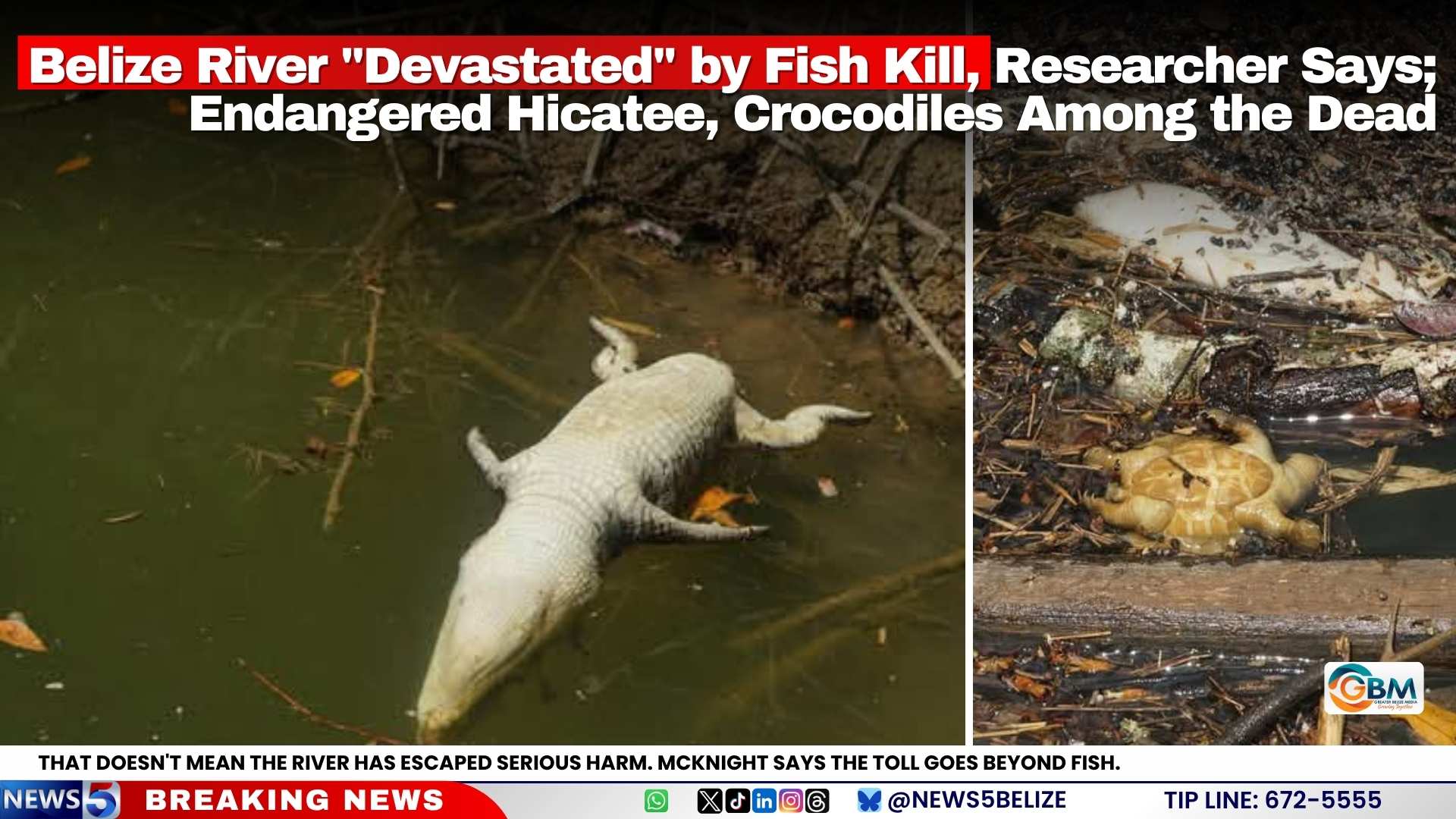
A catastrophic mass wildlife mortality event along Belize’s primary waterway, the Belize River, has left ecologists sounding alarm bells over long-term ecosystem damage, after critically endangered species were confirmed among the thousands of dead animals. As of August 11, 2026, researchers report the worst of the die-off appears to be receding, but the irreversible harm already done threatens to alter the river’s ecological balance for years to come.
Leading the on-site assessment is Dr. Donald McKnight, aquatic ecologist and research director at the Savannah Field Station near the Belize Zoo. McKnight explained that the river’s steady current has helped flush the harmful trigger of the kill through the system, meaning large-scale new deaths have become rare. “We’re still spotting a handful of fresh fish carcasses here and there, but the majority of the dead wildlife died several days ago, and the large-scale die-offs have stopped,” he noted in his on-river briefing.
But the slowdown of deaths offers little comfort to conservation teams, who have documented that losses extend far beyond common fish species. Among the dead are multiple hicatee turtles — a critically endangered reptile that conservation programs have spent decades working to recover — as well as crocodiles. McKnight described the scale of loss as “pretty devastating” for the river’s unique, already vulnerable ecosystem.
Local residents have provided key clues to the potential cause, reporting that the river’s water turned noticeably dark before clearing gradually in recent days. McKnight says this observation rules out a purely naturally occurring event, pointing instead to an external contaminant introduced into the river’s flow.
“Algal blooms, one common cause of large fish kills, almost never develop in fast-flowing water systems like the Belize River,” he explained. “A bloom could form in a stagnant side channel or lagoon and then spill into the main river, but the water discoloration residents saw suggests an outside pollutant entered the system directly.”
The leading working hypothesis points to agricultural runoff as the most likely culprit, McKnight said, such as an overflow from a pesticide or fertilizer retention pond that sent contaminated water into the river. Other potential causes, including toxic chemical pollution and algal toxin intrusion, have not been ruled out, however. Research teams are currently collecting water and tissue samples and coordinating with environmental authorities to pinpoint the exact source of the mortality event.
Conservation scientists warn the damage will not end with the already confirmed deaths. Predators and scavengers that feed on the contaminated carcasses face secondary poisoning, which could extend the die-off to terrestrial and avian species connected to the river ecosystem. The loss of large numbers of hicatee and crocodiles — both keystone species that shape the river’s food web — is also expected to create cascading ecological impacts that will persist for generations.
The Belize Department of the Environment’s formal investigation remains active as of the latest update. A precautionary public advisory first issued on August 5 remains in full effect, urging residents to avoid consuming any fish or aquatic resources harvested from the affected Belize River Valley region. The advisory also bans the use of untreated river water for drinking, cooking, food preparation, and consumption by livestock or domestic pets.