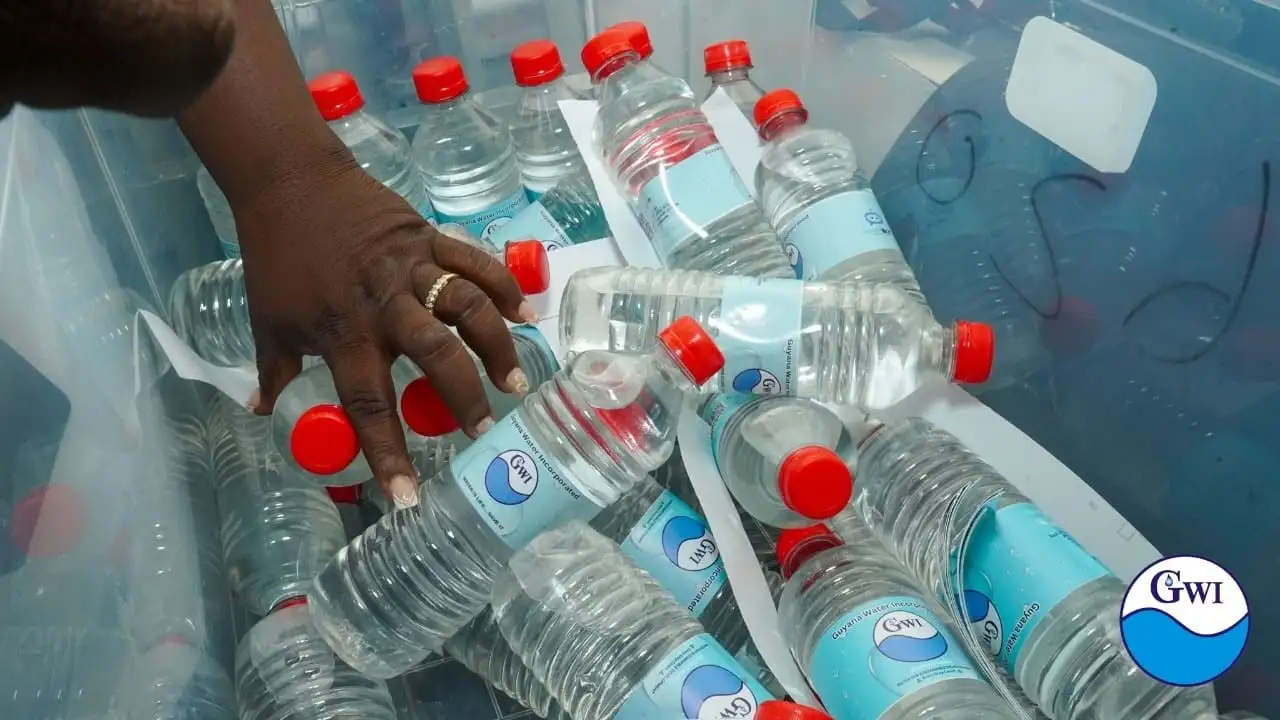
On August 6, 2026, a public debate has emerged in Guyana surrounding the government’s plan to launch a state-run bottled water bottling facility under the umbrella of Guyana Water Incorporated (GWI), drawing sharp criticism from the country’s leading manufacturing industry body and the main opposition party. President Irfaan Ali has pushed back against critics, defending the initiative as a necessary step to fulfill the government’s commitment to affordable, accessible safe water for all Guyanese citizens.
The proposal, which has already been allocated GY$496.3 million in government funding, initially garnered support from the Guyana Manufacturing and Services Association (GMSA). The trade group originally backed the plan as a pathway to cut reliance on imported bottled water, boost local manufacturing, generate new employment opportunities, and strengthen the country’s overall economic resilience. But that support has shifted to fierce opposition now that the project’s structure has come into focus, with GMSA warning that the state-owned venture will directly compete with established private sector businesses that have built up the local bottled water market over decades.
In an official statement released this week, GMSA emphasized that hundreds of millions in private capital have already been invested in the local bottled water sector, with industry players building extensive national distribution networks and creating thousands of sustained jobs for Guyanese workers. Any state-led initiative in this space, the association argued, should be designed to complement and strengthen existing private investment, not undercut or compete against local businesses. GMSA also pointed to a contradiction between the current plan and President Ali’s own February policy announcement, which explicitly called for close public-private collaboration on expanding local bottled water production, including shared industrial infrastructure such as bottle manufacturing to lower industry-wide costs. The group says a standalone state-owned competing venture directly undermines that original collaborative vision.
President Ali rejected these concerns during a press briefing Thursday, framing GWI’s entry into the bottled water market as a matter of public responsibility rather than unfair competition. “GWI is not in competition with anyone,” the president stated, noting that the agency’s core mandate is to deliver safe, affordable drinking water to all Guyanese. He pushed back against private producers, asking why local manufacturers have allowed imported bottled water to capture growing market share in Guyana, arguing that the high cost of bottled water across the region creates a public obligation for the state to intervene to make the product more accessible for ordinary citizens.
The main opposition party, A Partnership for National Unity (APNU), has joined GMSA in criticizing the plan, going a step further to argue that the project misplaces GWI’s priorities at a time when core public water services remain inadequate across much of the country. APNU parliamentarian Ganesh Mahipaul noted in a statement that GWI’s immediate focus should be addressing longstanding systemic issues: unreliable water access, poor water quality, low water pressure, and entirely unconnected communities that lack access to a formal public water distribution network.
“The Government’s first obligation is not to compete in the bottled water market. Its first obligation is to ensure that every household has access to potable water for domestic use,” Mahipaul said. He pointed out that ordinary Guyanese are not requesting the government to sell them bottled water; instead, they want reliable clean water delivered directly to their homes, so they do not need to purchase bottled water at all to meet basic daily needs like cooking, bathing, cleaning, and safe drinking.
While APNU does not reject the principle of state-run commercial ventures in cases where they serve a clear public good and deliver tangible benefits to citizens, Mahipaul said GWI’s current plan raises serious questions about the appropriate role of the state in the domestic marketplace. “Rather than focusing on its core mandate of providing a reliable public utility, GWI appears to be venturing into a commercial enterprise that will inevitably compete with existing local bottled-water producers, many of whom are private Guyanese businesses that have invested significant capital, created employment and contributed to the economy,” he explained. “Government should be creating an environment that supports private enterprise, not using taxpayers’ money to establish a State competitor while its primary public service obligations remain unmet.”
Mahipaul has called on the Ali administration to release full transparency around the project, demanding the government disclose key details including the bottling plant’s location, projected production output, total capital and operational expenses, planned retail price point for the state-produced bottled water, intended distribution network, expected return on investment, and whether independent market analysis was conducted to justify the public expenditure. He added that the Guyanese public also has a right to understand how this multi-hundred-million-dollar project aligns with GWI’s legal mandate to deliver safe, reliable public water services across the entire country.