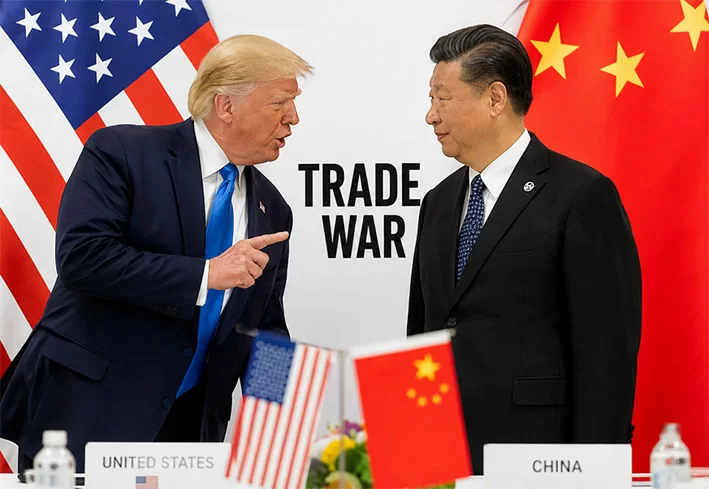
Tensions in the long-running trade and technology standoff between the world’s two largest economies have flared once again, after China unveiled a coordinated package of countermeasures on Wednesday in response to new punitive trade actions imposed by the United States. Beijing’s response includes tightened export controls on drones and related dual-use technologies bound for the US market, alongside formal sanctions on several US entities and companies.
According to China’s Ministry of Commerce, the new measures are a direct and proportionate response to a series of recent hostile trade moves from Washington. These include new restrictions targeting Chinese technology firms, updated stringent regulatory requirements issued by the US Federal Communications Commission, and the addition of dozens of Chinese companies to Washington’s economic blacklist over unsubstantiated allegations of human rights violations in Xinjiang.
At the core of China’s countermeasures is a sweeping overhaul of export licensing rules for drones, drone components, and dual-use technologies that have both civilian and military applications. While exports to the United States will still be permitted, all new shipments will now undergo much stricter case-by-case reviews before approval is granted. In addition, Chinese firms are barred from conducting any new commercial activities with seven US organizations that Beijing says have actively participated in Washington’s anti-China sanctions regime.
Beijing has also suspended all cooperation with US certification bodies that carried out mandatory quality inspections for Chinese goods exported to the United States. A formal security probe has additionally been launched into potential risks posed by certain imported US-made office equipment.
Market and policy analysts broadly view the new set of measures as a clear escalation of the ongoing technology and trade rivalry between the two global economic powers. Unlike earlier phases of the standoff that centered heavily on broad-based import tariffs, both Washington and Beijing have increasingly shifted focus to targeting strategic sectors that hold both economic and national security importance. These cutting-edge sectors include semiconductors, unmanned aerial systems, robotics, telecommunications, and other advanced dual-use technologies.
While China’s latest countermeasures are narrowly targeted and do not amount to a full blanket trade ban on US goods and services, observers note they underscore the continued deepening of economic competition between the two powers. At the same time, both sides have signaled a continued interest in keeping tensions contained ahead of planned diplomatic engagements scheduled for later this year.
For the South American nation of Suriname, the new measures do not carry immediate direct impacts. However, a further deterioration of Sino-US trade relations could drag down overall global economic growth, analysts warn. Over the longer term, a broader slowdown would affect global demand for raw materials, and push up international prices for key export commodities that Suriname relies on for government revenue and foreign exchange, including crude oil and gold. Disruptions to global supply chains stemming from escalated tensions could also drive up costs for imported technology and industrial goods that Suriname depends on for domestic development.