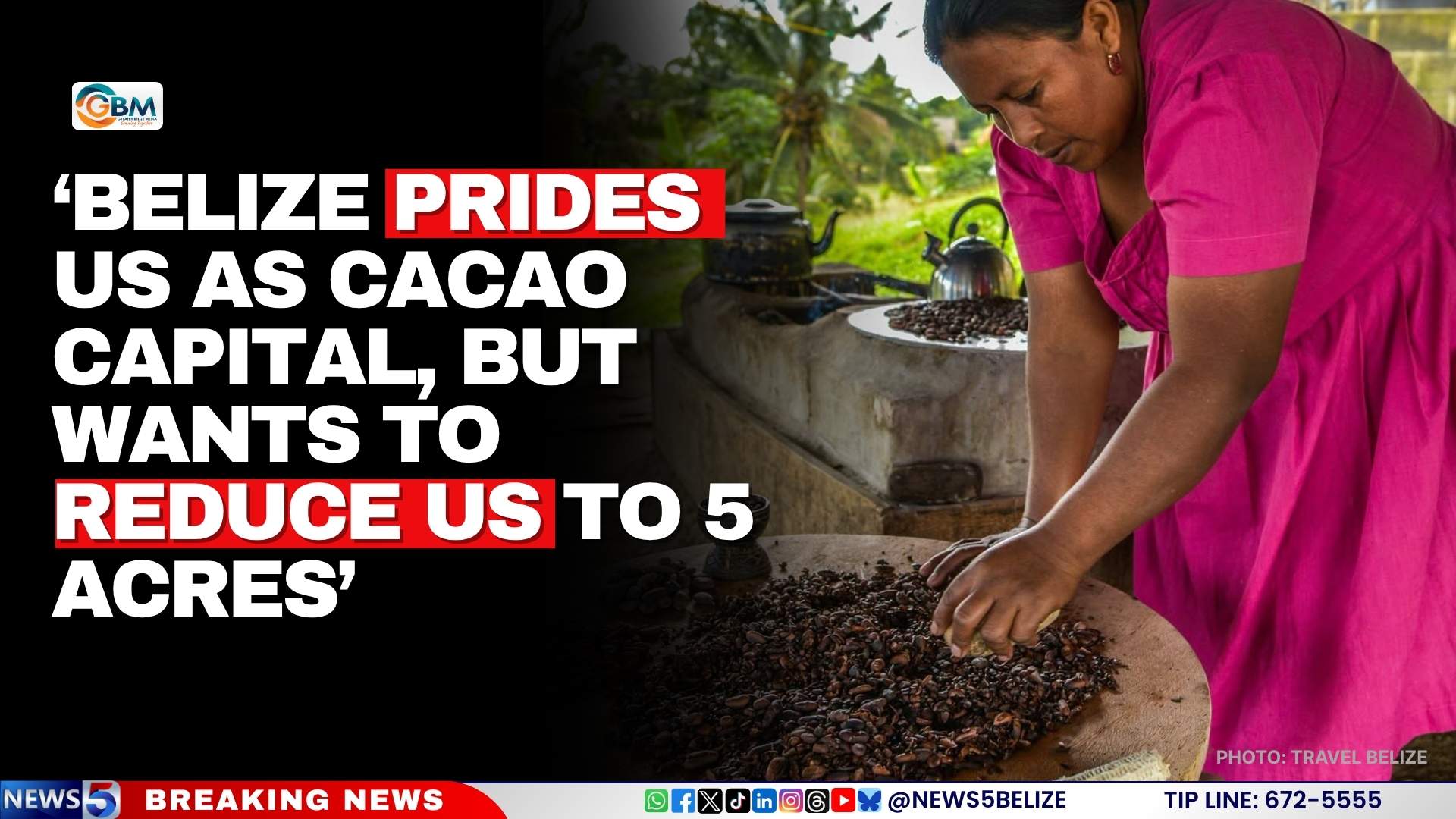
On July 31, 2026, a sharp contradiction has emerged between the Belizean government’s branding of southern Toledo District as the nation’s cacao and chocolate capital, and a proposed land policy that indigenous Maya leaders argue would undermine the very farms driving that booming industry. The conflict came to a head following a Thursday hearing at the Caribbean Court of Justice, where the court is considering longstanding disputes over Maya customary land rights.
Cristina Coc, spokesperson for the Maya Leaders Alliance, broke down the group’s objections in remarks after the closed-door hearing, calling out the government’s contradictory policy priorities. Under the current proposed framework for formalizing Maya customary land tenure, the government would automatically recognize legal ownership of only up to five acres of land per individual community member.
This arbitrary cap ignores the reality of how Maya communities have used and stewarded their ancestral lands for generations, Coc argues. Many indigenous cacao farmers in Toledo hold plots far larger than the five-acre limit, meaning those expanded operations would be left without formal legal protection under the government’s plan. That lack of security leaves farms vulnerable to encroachment, seizure, or development that could wipe out the cacao production the government celebrates in its national tourism and agricultural marketing.
“On one hand, the government touts Toledo as Belize’s chocolate capital to draw visitors and investment, but on the other, their five-acre cap leaves our core production lands unprotected,” Coc said. She questioned the practicality of the arbitrary limit, noting that the five-acre restriction would make it impossible for Maya communities to continue their traditional interwoven practices of fishing, hunting, and large-scale agricultural production that have sustained them for centuries.
The Alliance argues that any approach to recognizing customary land rights that relies on a fixed per-person acreage formula is fundamentally flawed, as it fails to account for traditional collective land use patterns that have been passed down through indigenous generations. Beyond policy disagreement, Coc accused the government of negotiating in bad faith, pointing to the indigenous community’s longstanding contributions to Belize’s national development as tax-paying, active citizens who have a legal and moral claim to their ancestral lands.
The outcome of the Caribbean Court of Justice case, and the final shape of Belize’s customary land tenure legislation, will have far-reaching impacts not only for indigenous land rights but for the future of Belize’s fast-growing cacao and specialty chocolate industry, which has become a key economic driver for the southern part of the country.