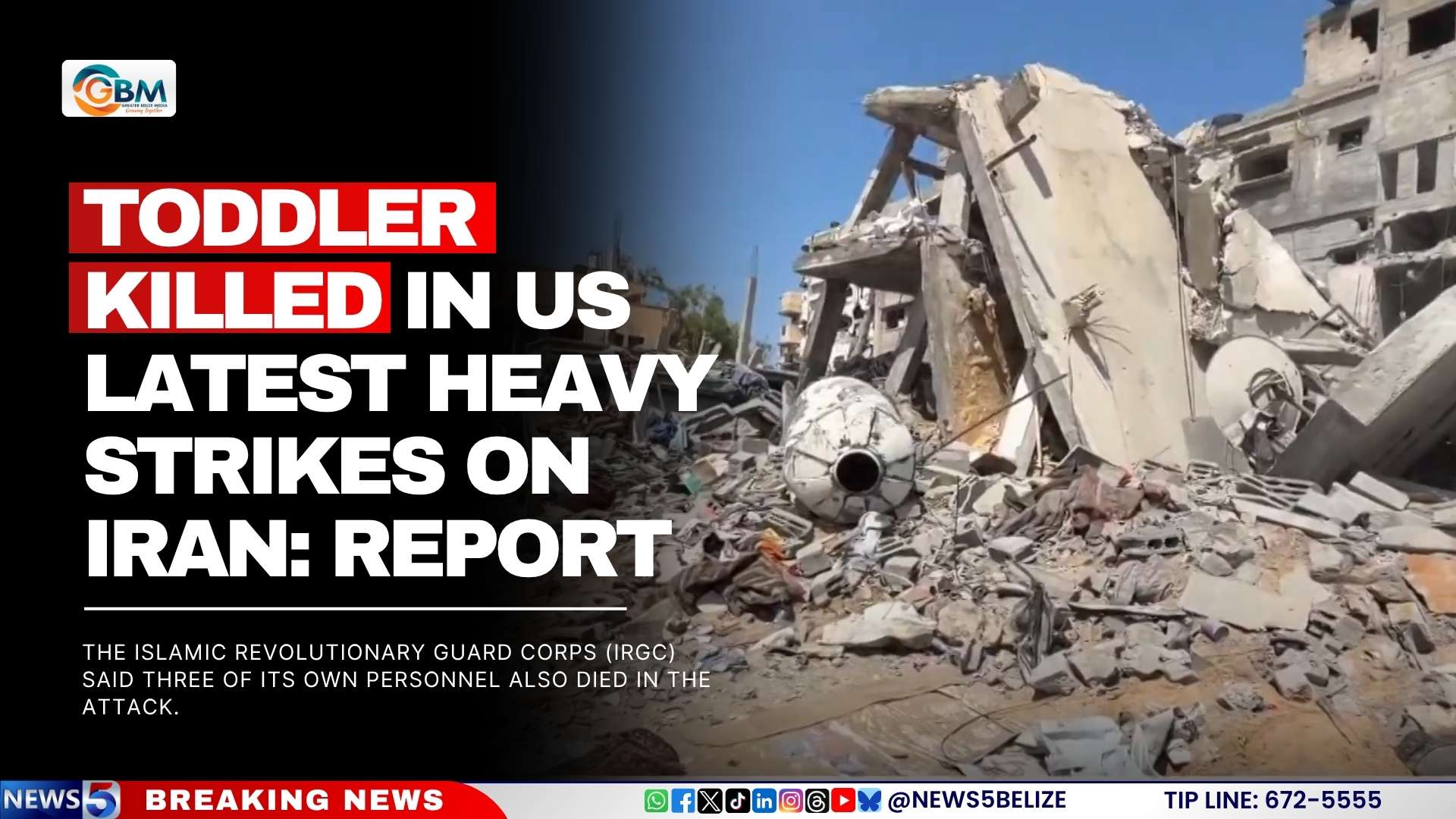
After a five-day lull in military action, the United States has restarted large-scale airstrikes against targets inside Iran, triggering a rapid escalation of tensions across the Middle East that has raised fears of broader regional conflict.
According to Iranian state media reports, the latest round of American strikes hit a residential structure on Qeshm Island, a key strategic and population center off Iran’s southern coast. The attack left a local couple dead along with their two-year-old toddler, marking the latest incident of civilian harm in the escalating confrontation between the two nations. The Islamic Revolutionary Guard Corps (IRGC), Iran’s elite military force, also confirmed that three of its service members were killed in the strikes.
US Central Command (CENTCOM), the American military command overseeing operations in the Middle East, confirmed it launched the “heavy wave” of strikes late Wednesday. The operation was framed as a direct response to an Iranian missile assault on US military personnel stationed in Jordan that occurred one day prior. CENTCOM noted that the strikes targeted approximately 50 IRGC-affiliated sites across Iran, including weapons storage facilities for missiles and drones, military command and control hubs, and coastal defense emplacements that have been a longstanding focus of American intelligence and military planning.
In the hours following the US strikes, Iran launched retaliatory missile attacks that impacted territory in both Jordan and Kuwait, amplifying regional spillover risks. Jordanian military officials confirmed they successfully intercepted multiple incoming Iranian missiles, preventing widespread casualties. However, in Kuwait, local authorities reported one fatality after an Iranian missile struck a building owned and operated by a Chinese company, drawing in a third-party commercial entity to the escalating conflict.
Despite the sharp escalation of military hostilities, diplomatic channels have not been completely severed. Iran’s Foreign Ministry confirmed that ongoing negotiations with Omani diplomats centered on security and shipping access through the Strait of Hormuz are continuing as scheduled in Tehran. The Strait of Hormuz remains one of the world’s most critical maritime chokepoints, with roughly a fifth of global oil shipments passing through the waterway, making its security a core priority for the entire global energy market.
Alongside the new military strikes, the United States has also expanded economic pressure on Iran, announcing new sanctions targeting two Iranian companies. US officials accuse the firms of coercing commercial vessels passing through the Strait of Hormuz to pay unauthorized insurance fees as a condition of transit, a practice Washington has decried as illegal harassment of international shipping.