A planned celebration of Indian Diaspora Day, originally set for August 1 in Port of Spain, has been pushed back to August 8 following widespread public anger across Trinidad and Tobago over what community members and leaders labeled a deliberate insult to the nation’s annual African Emancipation Day commemoration. The controversy has sparked a formal appeal to India’s top leadership demanding a review of the Indian High Commissioner’s conduct in the country.
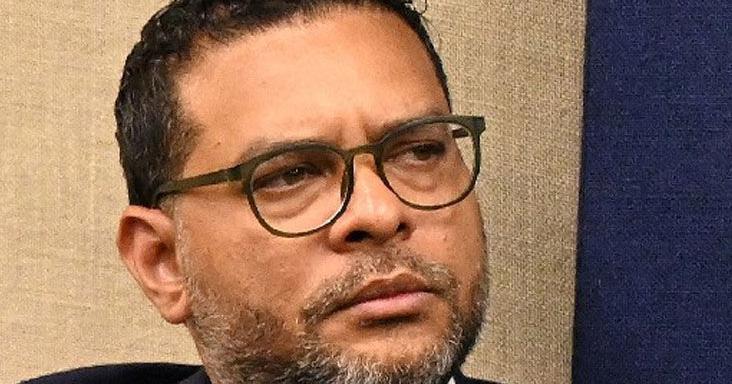
Randall Mitchell, former Trinidadian tourism, culture and the arts minister and ex-member of parliament, penned an official letter addressed to Indian Prime Minister Narendra Modi, copied directly to the Indian High Commission in Port of Spain, calling for urgent action to address the scheduling misstep. In the letter, Mitchell demanded that High Commissioner Dr. Pradeep Singh Rajpurohit be instructed to immediately move the event away from the date of Emancipation Day, and issue a formal public statement acknowledging the deep cultural and historical significance of the observance to all Trinbagonian people. He also called on Indian authorities to launch a full review of the High Commissioner’s decision-making to assess whether he remains fit to effectively represent India in the dual-island nation.
Public backlash began almost immediately after the Indian High Commission published its initial invitation for the open house celebration, targeted at local Indian community and diaspora members, to be held at the mission’s Victoria Avenue location. Hundreds of residents took to social media to voice their anger and frustration over what many framed as a profound act of cultural insensitivity toward Trinidad and Tobago’s large Afro-Trinidadian population and the country’s long history of multicultural coexistence. Multiple online commentators went so far as to claim the overlapping schedule was a deliberate snub against the national commemoration.
Mitchell also publicly called out the mission’s vague wording in its announcement of the rescheduled event. In a Facebook post addressing the change, the High Commission captioned its update noting the open house had been moved to August 8 “in view of August 1 being a public holiday.” Mitchell pushed back against this framing in his own social media response, writing: “A Public Holiday??!!!!??? It’s African Emancipation Day! You’ve been here long enough to know this. Thanks for rescheduling and deleting your offensive post, though.”
Local news outlet The Express reached out to the Indian High Commission for comment on the controversy, but the mission declined to issue any public statement addressing the backlash or the allegations against it.
In his formal letter to Prime Minister Modi, Mitchell emphasized that he was writing as both a citizen of Trinidad and Tobago and a former cultural affairs leader to express his profound disappointment with the mission’s original scheduling choice. He stressed that August 1’s African Emancipation Day is far from an ordinary public holiday: the date marks the formal abolition of chattel slavery, honoring the hundreds of thousands of enslaved Africans whose forced labor formed the economic foundation of modern Trinidad and Tobago.
The observance, Mitchell explained, commemorates one of the darkest chapters of global human history, while paying tribute to the struggle, sacrifice and resilience of generations of Afro-Trinbagonian people who were stripped of their fundamental freedom. “For many citizens, it is a solemn national observance before it is a celebration,” he wrote.
Mitchell underlined that diplomatic missions accredited to foreign states hold a core responsibility to understand and respect the host nation’s history, cultural traditions and key national commemorations, noting this expectation is a foundational principle of global diplomacy. He clarified that the controversy does not stem from the Indian High Commission’s right to host events for the local Indian diaspora — every diplomatic mission holds that right and responsibility, he acknowledged. Instead, the offense lies in choosing the one national holiday that carries unique historical and emotional weight for a large segment of the Trinbagonian population.
“There were 364 other days on which such an event could have been held without creating the appearance that the significance of African Emancipation Day was being overlooked or diminished,” Mitchell wrote. Whether the scheduling conflict was intentional or accidental, he added, the choice demonstrates a serious lack of cultural awareness and sensitivity toward the host nation and its people.
“By choosing to host an official diaspora event on this solemn national day, the High Commission has unnecessarily introduced a source of division where there should have been national reflection,” Mitchell said. He added that the most troubling consequence of the decision is the risk it poses to social cohesion in Trinidad and Tobago, a deeply diverse multicultural society made up of people of African, Indian, Indigenous, Chinese, European, Syrian-Lebanese and many other ancestral backgrounds.
Trinidad and Tobago has spent generations building a foundation of mutual respect and understanding across its diverse communities, Mitchell noted, and that hard-won harmony cannot be taken for granted. “It must be protected through sensitivity, respect and good judgment—particularly by foreign diplomatic missions,” he wrote.
African Emancipation Day, he underscored, is one of the few national observances that calls on all citizens, regardless of background, to reflect on the enduring legacy of chattel slavery and the ongoing importance of national unity, human dignity and equal justice. Mitchell emphasized that India and Trinidad and Tobago share a generations-long, deeply meaningful bilateral friendship, and that this relationship deserves diplomatic representatives who appreciate the history of both nations and exercise sound judgment when handling matters tied to national identity and historical remembrance.
“This decision falls well below that standard and risks undermining social cohesion in a multicultural society where racial harmony must never be taken for granted,” Mitchell wrote. “It is precisely because of the seriousness of that risk that I believe this matter warrants immediate intervention by the Government of India.” He closed his letter by expressing trust that the Indian government will treat the issue with the seriousness it deserves and take appropriate steps to preserve the long-standing warm friendship between the two nations.