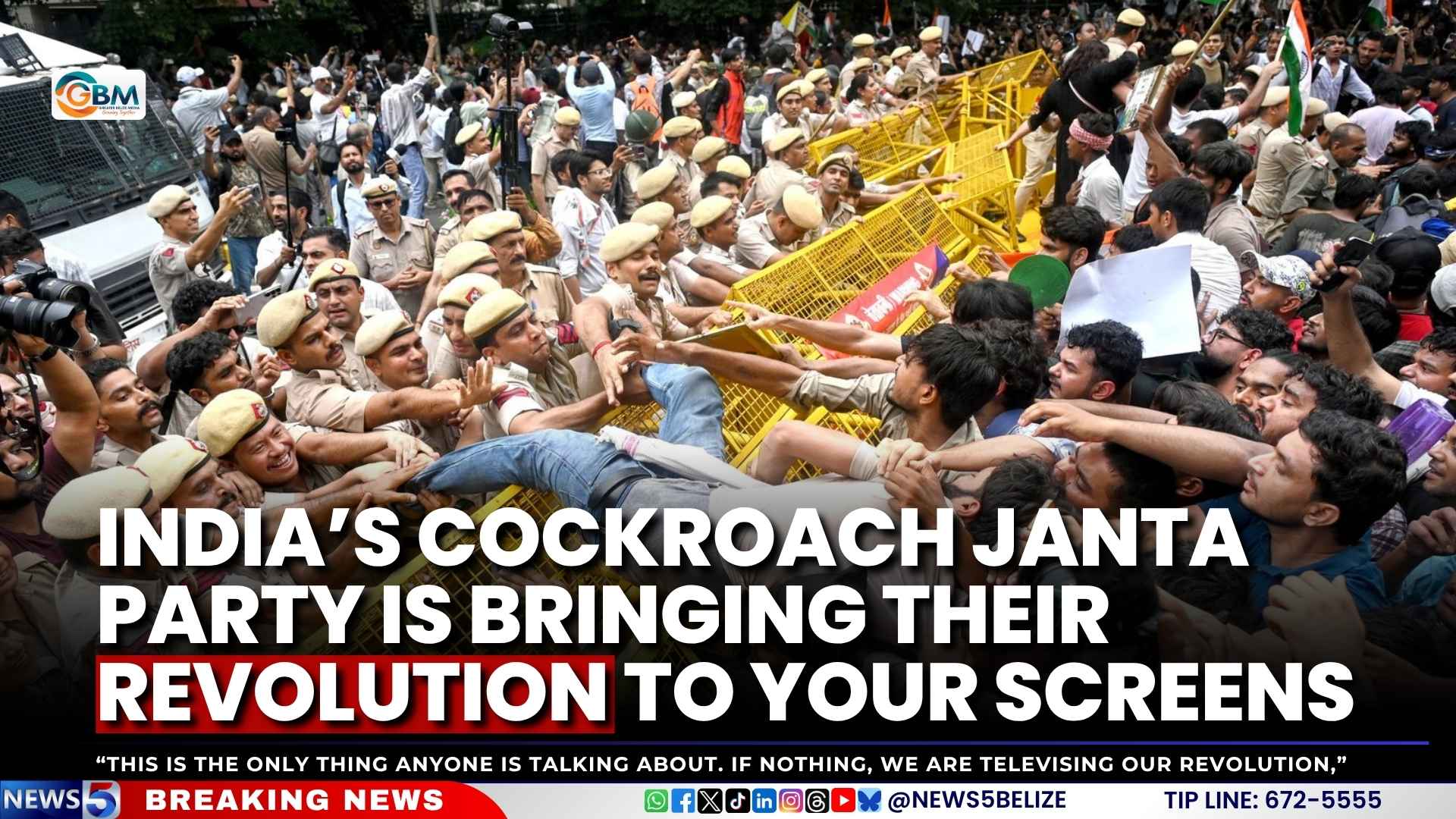
In an unprecedented fusion of digital activism, youth culture and grassroots protest, India’s Cockroach Janata Party (CJP) is redefining 21st century political resistance by bringing unfiltered footage of alleged government and security force brutality against demonstrators directly to global public screens.
The movement, driven largely by Generation Z organizers, has flooded social media platforms with a diverse range of content — from meticulously edited video exposés to viral memes and shareable GIFs — designed to keep demands for systemic change at the forefront of public discourse and maintain pressure on ruling authorities to address protester grievances. Unlike traditional protest movements that rely on institutional media coverage, CJP supporters have built their own independent distribution network, ensuring accounts of state violence cannot be suppressed or distorted.
“This is the only thing anyone is talking about right now,” said 19-year-old Singh, who participated in a mass demonstration Wednesday. “If nothing else, we are televising our revolution on our own terms.”
Protest tactics have been shaped heavily by global pop culture, creating a shared visual identity that unites a diverse base of young demonstrators. Some participants have turned out to marches wearing homemade superhero costumes, while many others have adopted iconography from the hit Japanese manga *One Piece* — a symbol that has become a common marker of youth-led uprisings across the globe. This cultural integration is no accident: organizers say meme and pop culture references have become a unifying force that cuts across regional and class divides in India’s fragmented protest landscape.
“In the middle of all the chaos, we collectively decided that if we wanted to rebel effectively, we needed a unifying language that everyone could connect with,” explained 18-year-old activist Yashvi Kumar. “That language is memes. They’re what bring us all together.”
The commitment to exposing alleged state violence has come with significant personal risk for young CJP supporters, many of whom continue to document crackdowns even when facing direct danger. Teen activist Avanshika Singh has navigated clouds of tear gas that left her eyes stinging and burning to run through city streets, capturing smartphone footage of the chaos that unfolds during crackdowns. “The entire country today feels the sting of batons and tear gas with us,” she said, emphasizing that the documentation work ensures remote supporters cannot disconnect from the realities on the ground.
The most recent wave of unrest followed a July 20 march to India’s parliament building that shut down major corridors of central New Delhi, as demonstrators occupied key roads and blocked access to official government buildings. According to reporting from Al Jazeera, security forces responded with excessive force at the protest site at New Delhi’s Jantar Mantar, deploying tear gas and baton charges that targeted women and child demonstrators. Reports confirm more than 100 student protesters were injured in the crackdown, which was carried out with explicit authorization from Prime Minister Narendra Modi’s sitting government.