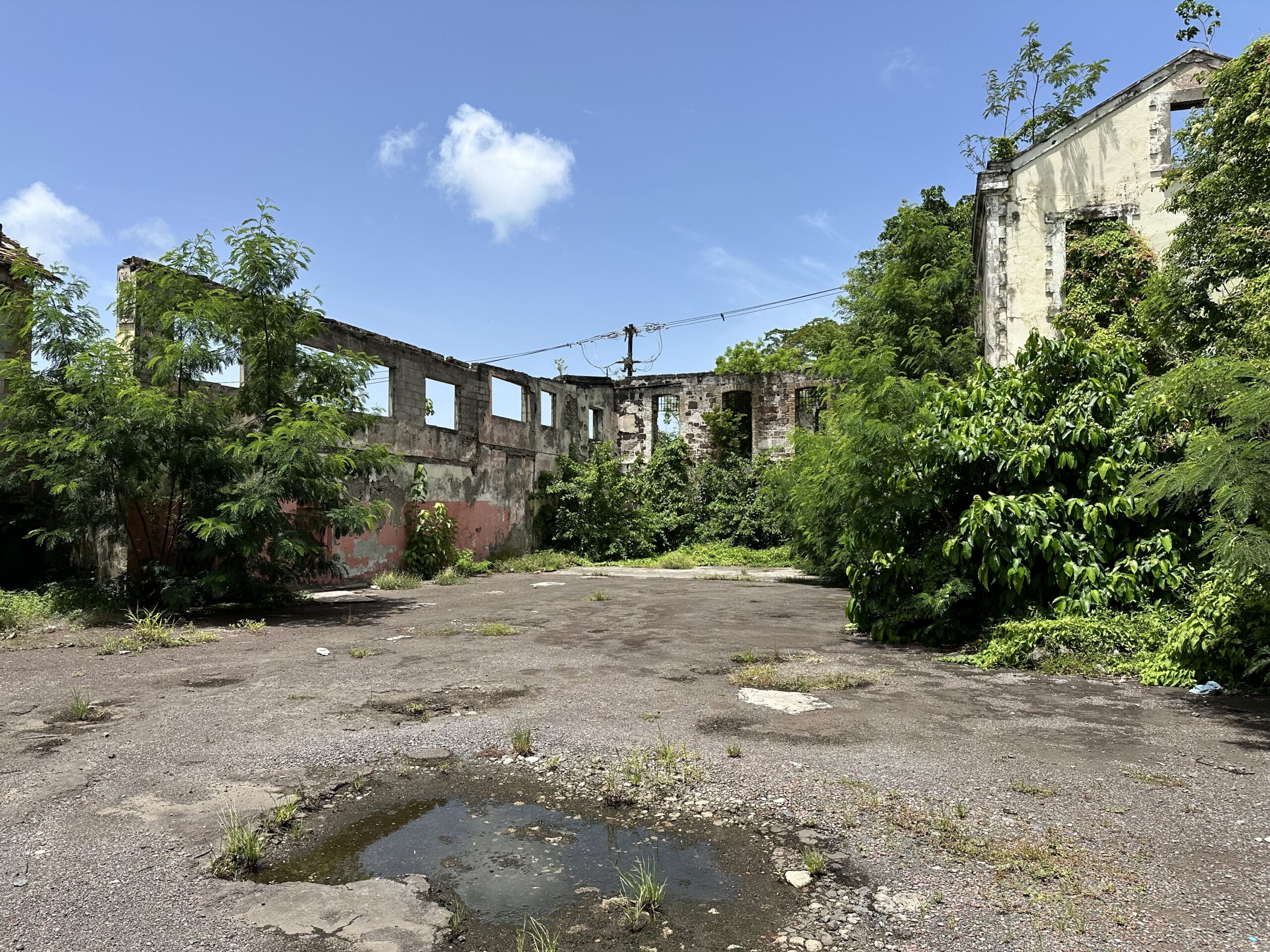
A heated debate over the future of one of Grenada’s most historically significant landmarks has emerged, with the Grenada National Trust (GNT) formally calling on national authorities and statutory bodies to pause ongoing irreversible demolition work at the historic Drill Yard. The organization is pushing for an independent, conservation-focused structural assessment before any further action is taken, arguing that prioritizing public safety does not have to come at the cost of permanently erasing the nation’s cultural heritage.
Speaking on the GNT’s behalf, First Vice President Dr. Ezra B. Matthias emphasized that the trust does not oppose securing hazardous areas to protect the public. “Public safety is our top priority too. We are not asking for an unsafe site to remain open and accessible to the public,” Matthias clarified, framing the organization’s position as a balanced alternative to rushed demolition.
Instead of immediate full demolition, the GNT proposes a structured, multi-faceted review that evaluates heritage value, structural integrity, archaeological potential, and public safety risks before any irreversible changes proceed. The trust’s core recommendations include immediately fencing off dangerous sections of the site, fully documenting and salvaging one-of-a-kind historic materials before they are destroyed, and retaining any portions of the original structure that can be stabilized safely. “Informed decisions must be made before we face losses that can never be reversed,” Matthias noted, stressing that no final determination on the site’s future can be made without independent input.
Matthias explained that while the National Insurance Scheme (NIS) has cited engineering advice that supports full demolition, the GNT carried out its own independent desk review in partnership with the International National Trusts Organisation and global heritage conservation specialists. After examining NIS engineering reports, draft demolition plans, official planning approvals, and all related technical documentation, the GNT published its own formal conclusions and policy recommendations.
The GNT acknowledges the real safety concerns raised by the NIS, including unstable masonry, falling debris, and the risk of total structural collapse. However, the organization points out that there is currently no independent verification that the site cannot be rehabilitated and preserved for future generations. To address immediate safety risks while the assessment is completed, the GNT proposes interim measures: perimeter fencing, controlled restricted access, clear public warning signage, temporary structural stabilization where feasible, selective removal of only immediately hazardous loose materials, and professional oversight of all activities during the review period.
A key point of contention in the debate is the lack of early stakeholder engagement. Matthias confirmed that the GNT was never formally consulted during the planning stages for the demolition. The organization only became aware of the project after concerns were raised by the Grenada National Museum (GNM) and other heritage groups. While a meeting between the NIS, GNT, the Willie Redhead Foundation, and GNM was held on 1 July 2026, that meeting took place after demolition work had already commenced on the site.
When contacted by NOW Grenada for comment on the future of the Drill Yard property, the National Insurance Board (NIB) declined to answer questions. Acting Executive Assistant Davionne Phillip confirmed that the board would not be issuing a statement on the matter at this time, noting that any future public updates would be released through official channels if the board chooses to do so. Requests for comment sent to Alva Browne, Permanent Secretary in the Ministry of Infrastructure and Physical Development, on 15 July 2026 also went unanswered as of the publication of this report.
Dr. Matthias argues that for a site of Drill Yard’s national historical importance, all key stakeholders – including the GNT, GNM, Willie Redhead Foundation, and heritage representatives from the Planning and Development Authority – should have been formally included in the decision-making process before demolition was scheduled. The Drill Yard is far more than a collection of old buildings: it is deeply woven into Grenada’s historical narrative, with connections to the 18th-century Palais de Justice, the island’s early prison system, military history, the transatlantic enslavement system, the post-emancipation apprenticeship period, Fedon’s Rebellion, the development of public administration, and even early cultural development as the location of Grenada’s first calypso tent.
Beyond its historical value, Matthias added that the restored site could become a core node in a growing heritage tourism circuit connecting Fort George, the Grenada National Museum, Market Square, Young Street, and other iconic historic landmarks. This would generate long-term educational, cultural, and economic benefits for local communities and the nation as a whole.
The GNT also points to existing national legislation that mandates heritage protection: the 1967 Grenada National Trust Act and the 2016 Physical Planning and Development Control Act both establish clear legal frameworks for the conservation of historic sites, and Matthias says these legal mechanisms should be fully applied before any demolition proceeds.
Responding to Grenadians who argue that public safety must take absolute precedence over heritage preservation, Matthias said the GNT shares that core value. “They are right that public safety must come first. No heritage site is worth a human life,” he stated. “But public safety does not automatically require the total erasure of our shared history. A serious, responsible country can do both: protect the public and safeguard our heritage. This is not a choice between safety and preservation – it is a question of whether we will follow a disciplined, lawful, professional process before destroying a site of national significance.”
Matthias emphasized that the outcome of the Drill Yard debate will set a critical precedent for heritage protection across the entire country, extending far beyond this single property. The GNT is calling for the adoption of a formal national standard that requires securing unsafe sites, consulting all relevant stakeholders, conducting thorough independent conservation assessments, documenting heritage assets, salvaging significant historic materials, and preserving all sections of structures that can be safely retained before any irreversible demolition decisions are made.