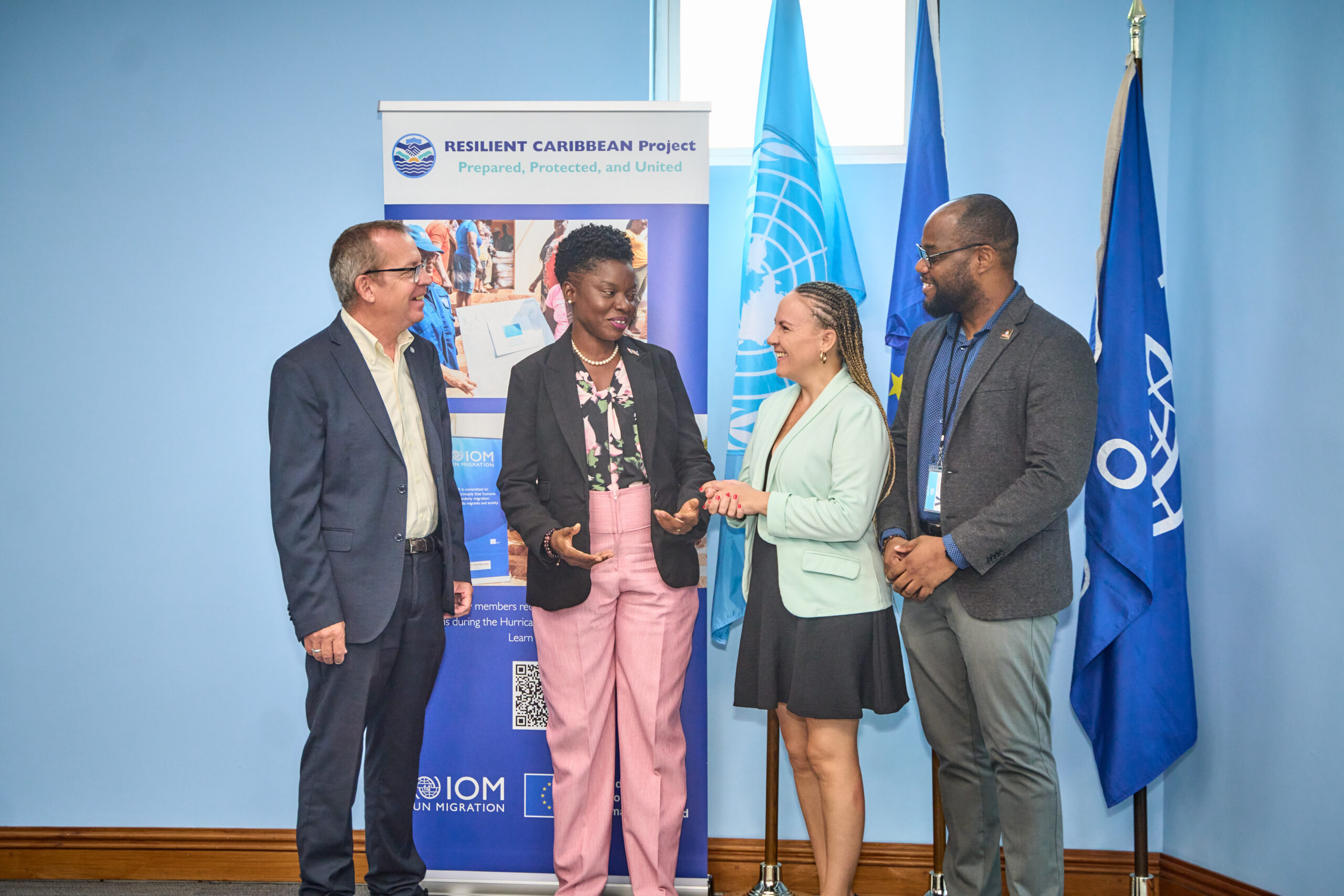
As climate-fueled natural disasters grow increasingly frequent and destructive across the Caribbean, regional and international officials have emphasized an urgent need to reinforce the region’s emergency shelter infrastructure through trained workforces, enhanced cross-agency coordination, and more disaster-resilient facilities. The call to action was delivered Monday during an advanced emergency shelter training-of-trainers workshop hosted at the UN House in Barbados.
The event is backed by Resilient Caribbean, a joint disaster resilience initiative funded by the European Union’s Civil Protection and Humanitarian Aid Department (ECHO). The project is executed by the UN International Organisation for Migration (IOM) in formal partnership with the Caribbean Disaster Emergency Management Agency (CDEMA), the region’s leading coordinating body for disaster response.
Virginie Andre, disaster risk management programme manager for the European Union Delegation to Barbados and the Eastern Caribbean States, explained that effective disaster preparedness goes far beyond the traditional focus of stockpiling relief supplies and drafting evacuation routes. “Preparedness is about more than emergency supplies or evacuation plans. It is about trained people, clear responsibilities, strong coordination [and] how can we respond rapidly, effectively and with dignity when communities need them most,” Andre said during the workshop opening.
Andre noted that the Resilient Caribbean project forms a core component of a broader, refreshed strategic partnership between the European Union and Caribbean nations focused on boosting overall disaster resilience. The collaboration gained new momentum starting in 2025, when a high-level dialogue between Mia Mottley, then-Chair of the Caribbean Community (CARICOM) and Prime Minister of Barbados, and the President of the European Commission reinvigorated joint work on disaster risk reduction.
“Both sides had agreed to place greater emphasis on ‘anticipation, preparedness [and] resilience, not only responding once disaster occurs,’” Andre said. She added that this renewed partnership has already begun delivering tangible progress, with multiple new regional programs in development to upgrade weather forecasting, climate data services, cross-border logistics coordination, and local community preparedness across all Caribbean member states.
Dr. Ramona Archer-Bradshaw, Barbados’ Chief Education Officer – whose ministry oversees the country’s network of emergency shelters – echoed the call for investment in shelter system capacity, highlighting the outsized social role shelters play during regional crises. “Across the Caribbean, shelters provide more than a physical space during emergencies. They offer safety, dignity, reassurance and hope to individuals and families facing some of the most challenging circumstances of their lives,” she said.
Dr. Archer-Bradshaw pointed out that most of the Caribbean’s emergency shelter network relies on public school facilities, which form a foundational pillar of national and regional disaster management frameworks. These facilities provide life-saving temporary refuge for families displaced by hurricanes, flooding, and other climate-driven emergencies that have become more common in recent decades.
She emphasized that running safe, effective shelters requires specially trained personnel who can coordinate limited resources, enforce public safety protocols, and address the unique needs of vulnerable groups – including elderly residents, people with disabilities, and unaccompanied children – in an inclusive, respectful manner.
“This training programme represents an important investment in building those capabilities across our region,” Dr. Archer-Bradshaw said. Participants in the regional workshop will first deepen their own skills in emergency shelter coordination and management, before returning to their home countries to cascade this training to local shelter workers and disaster response teams. “By cascading this training within your jurisdictions, you will contribute to a more prepared and capable region, one where communities are better protected, shelter operations are more effective, and vulnerable populations receive the support that they need when disasters occur,” she added.